
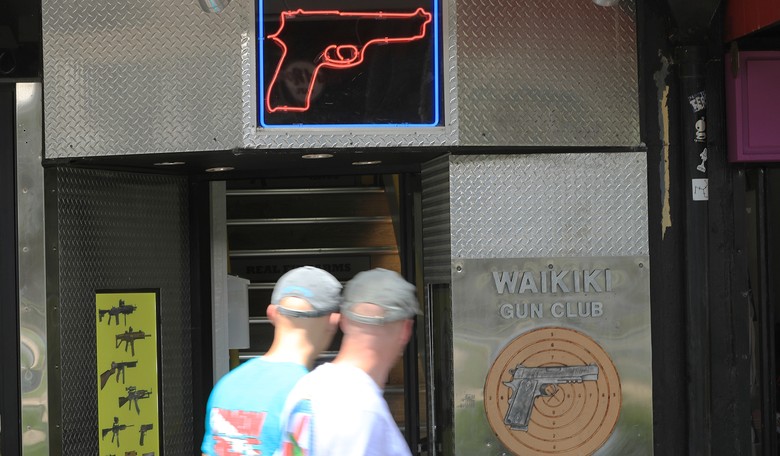
The Supreme Court’s most recent term ended earlier this summer with an important victory for the Second Amendment in Wolford v. Lopez, where a 6-3 majority struck down a Hawaii law that made it all but impossible for the state’s concealed carry permit holders to exercise their Second Amendment rights outside of their homes. The Court held that the statute—which presumptively banned lawfully armed citizens from entering any store or business without express permission from the owner—was inconsistent with any historical national tradition of firearms regulation. The opinion was a small but important step toward ensuring that all Americans enjoy equal and full access to the right to keep and bear arms.
In one sense, Wolford’s immediate impact is quite limited. It has no direct effect whatsoever on lawful gun owners in other states, and Hawaii’s concealed carry permit holders are still subject to an extraordinary number of other severe restrictions on their right to bear arms in public.
At the same time, the Court’s rationale for striking down the law severely undermines the legal footing of other more widely applicable gun laws in future cases. The Wolford majority reaffirmed that the Second Amendment’s central concern is “securing the fundamental right of self-defense,” and that ordinary Americans have a right “to carry arms for self-defense as their go about their daily lives.” Many Hawaiians may, given their long history of disarmament under monarchs and territorial governments, be uncomfortable with this reality. But Hawaii is part of the United States and local attitudes don’t reshape the scope of the Bill of Rights.
Concerned Hawaiians should know, however, that they have nothing to fear and much to gain from embracing the Second Amendment. The most recent report on the issue by the Centers for Disease Control and Prevention acknowledged that almost every study on the issue has found that between 500,000 and several million defensive gun uses occur every year in the United States. An extensive 2021 national survey conducted by a Georgetown professor further substantiated this reality, concluding that Americans used their firearms defensively an average of 1.2 million times a year. Below are just a few examples of successful defensive gun uses that occurred in June, many of which went largely unnoticed by the American public:
June 4, Raleigh, N.C.— An argument between two men who may have been in a domestic relationship escalated to physical violence, with one man striking the other with an ax, then chasing and continuing to assault him as he tried to run away. An uninvolved bystander witnessed the assault and, fearing for the victim’s safety, fatally shot the ax-wielding assailant. Local officials declined to pursue criminal charges against the armed bystander. The victim sustained serious but non-life-threatening injuries.
June 5, San Jacinto, Calif. — While visiting a neighbor with her husband, a woman briefly returned home to charge her phone when she stumbled into an intruder, who fired at her with a shotgun he’d found inside the house. The woman’s husband heard her screams and the gunshots, armed himself with a gun he kept in the garage, and killed the intruder during a shootout. Fortunately, neither the couple nor their teenage daughter, who was home at the time, sustained injuries. Police determined that the intruder had stabbed his girlfriend in an unrelated incident shortly before the break-in.
June 6, Longmount, Colo.— An armed driver protected himself and his wife during a road rage incident, shooting and wounding another motorist who aggressively tailgated them and threatened them by brandishing what appeared to be a handgun. Police arrested the injured road rage suspect, who showed signs of being intoxicated and possessed an airsoft handgun that resembled a real firearm. He now faces charges for felony menacing, reckless endangerment, reckless driving, and driving under the influence.
June 7, Leesburg, Ga.— Attendees of a family reunion had gathered on a front lawn when a man they didn’t know drove by the home, allegedly shouted racial slurs, and argued from his car with some of the people at the gathering before driving off. He returned a few minutes later wearing body armor and opened fire at the group with a rifle. The gunman injured one person before an armed victim returned fire, striking the gunman, who fled. Shockingly, local officials initially charged the gunman with only a single count of aggravated assault and released from jail on a $5,000 bond—though the victims and their attorney have continued to push for more appropriate charges.
June 12, Greenville, N.C.— Police say that a man who’d been shot in a convenience store parking lot was the aggressor in a domestic violence-related assault and now faces a half-dozen criminal charges, including felony stalking. The man allegedly violated a no-contact order issued by a court in a previous domestic violence case, aggressively pursuing the female victim and her male passenger in traffic while repeatedly calling her phone. He then exited his vehicle and punched out the woman’s car window causing it to shatter before one of the occupants shot him in self-defense.
June 14, Palm Coast, Fla. — A man with a lengthy criminal history unlawfully entered the home of a former acquaintance after showing up uninvited, then threatened the woman and her two children. The woman repeatedly ordered the man to leave and warned that she’d shoot him. The man refused to leave and continued advancing toward the woman, who shot him in self-defense. Police arrested the wounded man, who’s being held without bond on the charge of burglary with assault.
June 18, Tulsa, Okla. — Two men—one armed with a knife and the other with a firearm—attempted to rob a victim outside of a convenience store. The victim drew his own gun and shot one of the would-be robbers in the head, critically injuring him and sending the second suspect fleeing.
June 21, Medford, Ore. — Local officials say that a woman won’t face criminal charges for shooting and wounding a naked man who broke into her home while high on a combination of hallucinogenic mushrooms and marijuana, sending her family running for safety. Prosecutors only charged the intruder with criminal mischief, as they believe he was merely scared by hallucinations that “imaginary attackers were chasing him and trying to hurt him” and didn’t intend to burglarize the home. The suspect, however, faces additional charges for unrelated retail thefts he allegedly committed earlier in the day.
June 25, New Orleans, La. — A nine-time felon drank alcohol throughout the day before assaulting his stepdaughter’s boyfriend, pointing a gun at him, and threatening to shoot him. The boyfriend fled outside while the felon stepfather shot at him from the porch, critically injuring him. The boyfriend’s mother and another relative had just arrived to pick the boyfriend up after hearing that he’d been threatened. The male relative returned fire, striking the stepfather at least twice. Police arrived on scene and arrested the stepfather, who faces multiple charges of aggravated assault and aggravated battery, as well as several weapons-related offenses.
June 28, Fort Worth, Texas — An armed Good Samaritan intervened to save a neighbor’s life after hearing her screaming for help as a machete-wielding man dragged her down the street. The good Samaritan confronted the man and told him to stop, then fatally shot him when he moved toward the good Samaritan while still brandishing the weapon.
June 29, Pittsburgh, Pa. — A woman shot a man in the thigh after he assaulted her in a car and then refused to leave her home. The man was later charged with assault for his role in the “domestic altercation.”
These stories are powerful illustrations of ordinary Americans relying on their right to keep and bear arms to protect themselves and others. They also show why Second Amendment victories like that in Wolford matter. When lawmakers impose serious burdens on the right to keep and bear arms, it’s lawful gun owners—not violent criminals—who have the most to lose.