
What are we to make of the ISIS bride who now wants to return to America? Hoda Muthana left her home in Alabama in 2014 to join the terrorist “caliphate” of ISIS in Syria. Now, reportedly thrice-married to ISIS terrorists, twice-widowed, and recently arrived with her 18-month-old son at a Kurdish-run refugee camp in northern Syria, she says she “deeply regrets” joining ISIS, and wants to come back to the United States.
How this plays out under U.S. law is likely to be decided by the legal wranglers in court, based on technicalities of dates and documents. Secretary of State Mike Pompeo has called her a terrorist, described her as having inflicted “enormous risk” on Americans, and released a statement that she is not a U.S. citizen and does not have any legal basis to travel to the United States. President Trump has tweeted that he has instructed Pompeo “not to allow Hoda Muthana back into the Country!” Hoda’s father, Ahmed Ali Muthana, a naturalized U.S. citizen, is now suing Trump, Pompeo and Attorney General William Barr to have Hoda and her son “declared to be U.S. citizens and returned to the United States,” which, according to the complaint, is what she wants, even if that could mean facing criminal prosecution.
The issue of Hoda’s citizenship — and whether she might be legally entitled to reenter the country — apparently turns on the timeline of her father’s diplomatic status at Yemen’s Mission to the United Nations in New York, where he served as a Yemeni diplomat in the early 1990s, before becoming a naturalized U.S. citizen. Hoda was born in New Jersey, in October 1994. The U.S. does not consider children born to foreign diplomats in the U.S. as entitled to American citizenship; but if her father’s diplomatic status was terminated before she was born, then she would have been a U.S. citizen from birth. By her father’s account, he lost his diplomatic status shortly before she was born, ergo she’s a citizen. The State Department said otherwise, in a letter dated Jan. 15, 2016, sent to Hoda at her family’s Alabama address, more than a year after she’d gone to join ISIS in Syria. According to State, U.S. authorities were not officially notified of the termination of her father’s diplomatic status until February 1995, some four months after Hoda was born, ergo she was not born a U.S. citizen, has never been one, and should never have been issued a U.S. passport. It could take a while before we see a court ruling one way or the other.
But there’s another timeline that ought to matter here. Not for legal purposes, but in the broader context of how Hoda Muthana’s story is now playing to the American public. What about the timeline of high-profile ISIS atrocities — the context in which she made her choices?
In the media coverage of this case, all that bloody record of deliberately inflicted human agony seems to have faded into some remote and misty past, summarized in maybe a sentence or two — or symbolized on the TV news by short video clips of ISIS fighters waving black flags and shooting guns, with no obvious target. As far as I’m aware, no media outlet has so far juxtaposed an interview of Hoda Muthana with such signature ISIS footage as videos of American hostages, on their knees, about to be beheaded by ISIS; or that young Jordanian pilot burned alive in a cage.
Instead, we’re invited to focus our attention and sympathies on a young woman in a headscarf, holding her infant son or pushing him in a stroller around a refugee camp, telling her assorted media interlocutors that in joining ISIS she made a “big mistake.” This past week she told ABC News that she regrets joining ISIS, and she hopes Americans will “excuse me because of how young and ignorant I was.”
Was it really nothing but youth and ignorance? Hoda was 20 when she went to Syria to join ISIS — older than many of the victims whose sufferings ISIS was gloating over at the time. She’s now 24, and only now, with ISIS stripped of its caliphate — thanks to others, including members of the American military who risked or gave their lives to fight the terrorists she joined — is she publicly disavowing ISIS. And though in her recent interviews she’s been expressing plenty of regret about the misfortunes ISIS brought to her own life, she’s said almost nothing about what ISIS did, while she urged and cheered it on, to thousands upon thousands who had no choice at all. They are not on camera in these interviews. Many of them are dead.
Nor has the news coverage of Hoda Muthana done much to remind us, at least not in compelling detail, of the savagery, on a staggering scale, with which ISIS butchered, shot, raped, enslaved, blew up, burned alive, drowned, dragged to death, ran down, starved, oppressed, and abused its designated victims in Syria, Iraq, Europe, America, and beyond. In most of the recent coverage of what Hoda now wants, the record of what ISIS dished out has been dealt with in a sentence or two. The rest has been all about the quandaries of Hoda and her family. On Feb. 22, for instance, the Washington Post ran a lengthy article about the “complex questions” raised by the case of this “ISIS bride,” her citizenship and her father’s lawsuit, without making a single mention of the atrocities of ISIS or the zeal with which she joined up. The headline implied that the real villains are Trump and Pompeo: “Rule by tyranny: American-born woman who joined ISIS must be allowed to return, the lawsuit says.” No doubt there are important legal issues in play, but that’s hardly the entire story.
So, in the interest of seeing the fuller picture, let’s take a look at the timeline on which ISIS and Hoda Muthana converged.
Hoda’s interest in ISIS began in November 2013, a year before she left Alabama for Syria, according to an interview she gave online to BuzzFeed in April 2015, from what was then her new home in Raqqa, Syria, via a messaging app called Kik. During the year in which she was preparing to travel to Syria, ISIS was on the rise, and its character was plain to see. It was so grotesque, so sadistic, so sickening, so bloodthirsty that it was all over the headlines and the internet — which is how she was communicating with ISIS.
A full roster of ISIS atrocities would take volumes. So, what follows here is not remotely comprehensive. You can find a longer list in this timeline, which if you print it out would run to 47 pages, though it is also just a partial summing up. The ISIS activities noted below, each of them monstrous, are a small fraction of the horrors that loomed high in the U.S. headlines just before and during the time Hoda hooked up with the group. In some cases, the final casualty numbers vary slightly from the estimates in stories at the time — but not by much. Notes on Hoda are in italics. Information sourced to court documents filed under her father’s lawsuit is marked with an asterisk.
2014
For most of this year, Hoda was still in Alabama, using pseudonyms to communicate with and about ISIS on social media. If she was aware of ISIS atrocities before she left the U.S. — and it’s hard to believe she knew nothing about them — they did not deter her from going to Syria to join ISIS.
- February — From Alabama, Hoda Muthana renews the U.S. passport initially issued for her at her father’s behest in 2005.*
- May — ISIS displays crucified bodies in Raqqa, Syria. Here’s CNN coverage from the time, with a warning about the graphic photos.
- June — ISIS declares its “caliphate” with Raqqa as its capital.
- August — ISIS releases video of captured American journalist James Foley, on his knees in an orange jumpsuit, and beheads him on camera.
- ISIS launches a genocidal attack on the Yazidis in Iraq, besieging tens of thousands of men, women, and children who have fled to the upper reaches of Mount Sinjar, denying them access to food and water in temperatures rising above 120 degrees Fahrenheit. The horrors go on and on, sickening to read about (see this 2016 UN report, “They came to destroy: ISIS Crimes Against the Yazidis,” based on interviews with survivors). Hundreds of Yazidis die on Mount Sinjar before the siege is broken. ISIS captures thousands of Yazidis, separates families, kills the men and older boys who refuse to convert to Islam, and enslaves the women and girls, starving and raping them, setting up a slave market in Raqqa where Yazidi girls as young as five are sold at auction.
- September — ISIS releases video of the beheading of American-Israeli journalist Steven Sotloff
- ISIS releases video of the beheading of British aid worker, David Haines.
- October — ISIS releases video of the beheading of British aid worker Alan Henning.
- November — Hoda Muthana tells her parents she is leaving on a school trip, and uses her university tuition money to buy a ticket to Turkey and travel onward to Raqqa, Syria.
- December — From Syria, Hoda tweets a photo of American, British, and Canadian passports, with the comment “Bonfire soon, no need for these anymore. alhamdulillah.” She marries an Australian ISIS jihadi, who is killed a few months later. While in Syria, she will go on to marry a second ISIS jihadi, bear him a son in 2017, and when that second husband is killed, marry a third ISIS jihadi, whose whereabouts she now says she does not know.
2015
- January — ISIS releases a video of the beheading of a Japanese journalist, Kenji Goto.
- In Paris, terrorists linked to ISIS carry out synchronized slaughter at the offices of the French satirical newspaper Charlie Hebdo and a kosher supermarket, killing 17.
- February — ISIS releases a video of a captured Jordanian pilot Muath al-Kasasbeh, drenched in gasoline, screaming in agony as he is burned alive in a cage.
- March — Hoda posts on Twitter about the death of her first ISIS husband, an Australian, Suhan Rahman, who’d traveled to Syria from Melbourne, and two months earlier had made news in Australia for posting pictures of himself posing with an AK-47, praising the terrorist attacks in Paris, and urging in a social media post: “Let the heads fly and the blood flow.” As Hoda confirms the following month in her online interview with BuzzFeed, she posts on Twitter a photo of her husband’s dead and bloodied body, and eulogizes him with a tweet: “May Allah accept my husband, Abu Jihad al Australi. Promised Allah and fought in the front lines until he attained shahadah [martyrdom].”
- Hoda also tweets from Syria: “Americans wake up! … You have much to do while you live under our greatest enemy, enough of your sleeping! Go on drive-bys and spill all of their blood, or rent a big truck and drive all over them. Veterans, Patriot, Memorial etc Day parades..go on drive by’s + spill all of their blood or rent a big truck n drive all over them. Kill them.”
- April — From Syria, Hoda gives an online interview to BuzzFeed, via a messaging app, in which she writes that “Nothing is forced here.” She describes herself as “content,” says ,”I wanted to marry under an Islamic state rather than the West,” and writes that when she asked her father, a month after her departure, to send her $2,500 to come home, she was not telling the truth: “It was just a test,” she wrote; “It would never cross my mind to come back.”
- August — ISIS captures the city of Palmyra, in Syria, demolishes magnificent ancient ruins, carries out mass executions, and tortures the city’s 81-year-old chief archeologist, Khaled al-Asaad, reportedly demanding that he tell them where to find valuable antiquities, which he reportedly refuses to do. ISIS beheads him in a public square and hangs his torso from a lamp post, placing his severed head beneath it.
- November — In Paris, during three hours of terror, ISIS gunmen and suicide bombers kill 130 people, shooting and bombing in cafes and on the streets, and massacring scores of concert-goers in the Bataclan Theater.
- December — In San Bernardino, California, a husband-wife team of ISIS acolytes guns down 14 of his co-workers at an office Christmas party.
2016
- March — In Brussels, ISIS terrorists, using bombs packed with nails, attack the airport and a metro station, killing 32 people and injuring more than 200.
- June — In Orlando, Florida, shortly after ISIS calls on followers around the world to deliver “a month of calamity for the non-believers,” an ISIS acolyte shoots to death 49 people at the Pulse nightclub.
- July — In the French city of Nice, a terrorist claimed by ISIS drives a 19-ton truck through a holiday crowd, killing 86 and wounding more than 400.
- December — In the German city of Bonn, a Tunisian terrorist who has pledged loyalty to ISIS hijacks a heavy truck, killing its driver, and runs down holiday-makers at a Christmas market, killing 11 and wounding 55.
2017
- March — In London, a terrorist claimed by ISIS kills three and injures dozens, using a car to run down pedestrians on Westminster Bridge and then stabbing to death an unarmed police officer.
- May — In Manchester, England, a suicide bomber claimed by ISIS detonates his bomb at an Ariana Grande concert, killing 22 innocents, including children.
- On May 19, in Syria, Hoda Muthana gives birth to a son [referred to in the lawsuit brought by her father as “Minor John Doe”].*
- June — In London, three terrorists claimed by ISIS drive a van into pedestrians on London Bridge, then go on a stabbing rampage, killing six and wounding more than 30.
- October — In the deadliest terror attack on New York City since Sept. 11, 2001, an ISIS-inspired terrorist uses a rented truck to mow down people on a crowded Manhattan bicycle path, killing eight.
2018
- December — ISIS has lost almost all the territory it seized a few years earlier. The group remains a vicious threat, but the Caliphate is kaput.
- Hoda leaves the severely dwindling patch of ISIS-controlled turf and turns herself over to Kurdish forces, who transfer her to the refugee camp where she is now living.
2019
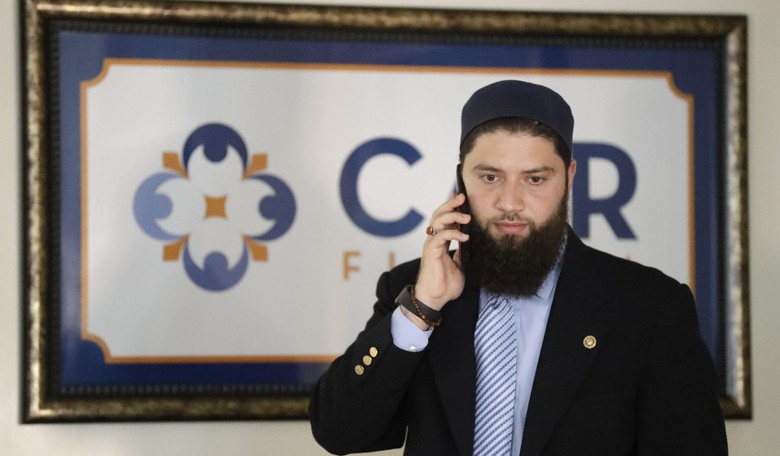
And that brings us to the present, in which, from the refugee camp in Syria, Hoda has been giving interviews to the media. She now professes regret over joining ISIS, and declares her desire to go back to America — where, she now suggests, she might make amends by, variously, potentially facing prosecution, entering therapy, and counseling others. In the U.S., her father, with legal representation by Hassan Shibly, chief executive director of the Council on American-Islamic Relations Florida (CAIR Florida), and lawyers of the Constitutional Law Center for Muslims in America, has been seeking ways to legally send Hoda money and bring her with her son to the United States.
Hoda and her father’s CAIR Florida attorney now say that in Syria her Twitter account was taken over by others. OK, a lot can happen during four years with ISIS, but, if true, was her social media hijacked before or after such activity as the March 2015 tweet she apparently confirmed to BuzzFeed as her own, urging that American veterans and patriots be bloodied, crushed, and killed with trucks?
We can expect to see and hear a lot more from Hoda and her father’s attorneys, and ever less about the barbarisms of ISIS touched on in the timeline above — tempting to want to forget, but in sizing up this ISIS bride, important to remember.