
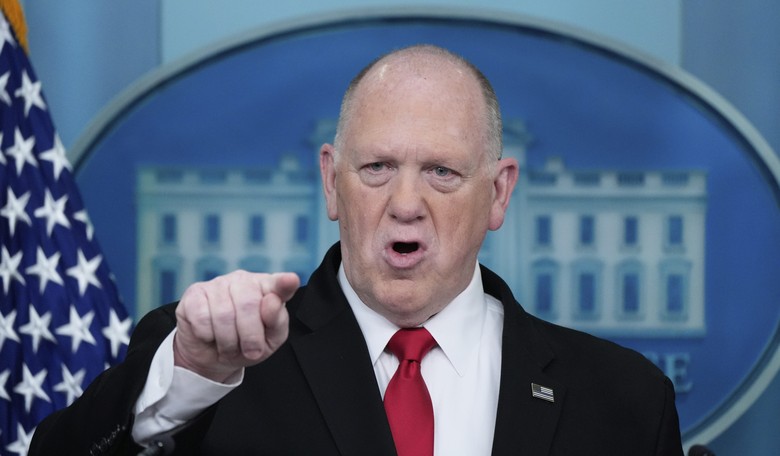
White House border czar Tom Homan is making it clear that he has zero interest in working with New York City Mayor Zohran Mamdani on immigration enforcement. Despite Mamdani's opposition to deportations, Homan says Immigration and Customs Enforcement (ICE) is not stopping and will continue operating in New York City.
In a video that appeared on X on November 21, a reporter asked Homan how he could work with Mamdani.
🚨 LET'S GO! Tom Homan just mic dropped the crap out of Mayor Mamdani Q: How do you work with someone like that?! HOMAN: "WE DON'T." 🔥🔥 "And that question he yelled about how many we're gonna deport? ALL OF THEM!" "And I don't CARE to work with him." "I don't WANT to work with him...he's NOT gonna stop ICE!" "I don't NEED HIM...he MADE his decision? Well, I'VE MADE MINE. We're gonna continue doing operations in New York!" This is how you do it. LEAN IN to mass deportations, and any sanctuary official who wants to stop them can screw off. New York passed a law forcing local police to CUT TIES with ICE. They are not slowing down Keep surging, Border Czar Homan!
— Eric Daugherty (@EricLDaugh) November 21, 2026
The specific disagreement between the two in the video goes back to March 2025. Mamdani was still a New York State assemblyman running for mayor. And during Homan's visit to the state Capitol in Albany, Mamdani yelled at him and confronted him over the arrest of Mahmoud Khalil. Khalil was a Columbia University graduate and green card holder who had taken part in pro-Palestine demonstrations. Mamdani repeatedly yelled about how many New Yorkers federal authorities and ICE would detain and whether he supported the First Amendment or not.
Mamdani's comment is quite interesting because it raises an important legal question and debate about to what extent rights guaranteed in the U.S. Constitution also apply to non-citizens.
And since becoming mayor, Mamdani has continued to maintain his stance of opposing ICE operations. For example, on November 2, 2026, his administration demanded that ICE stop using city-owned parking lots for immigration operations without permission and threatened legal action if the practice continued.
Meanwhile, Gov. Kathy Hochul signed the Local Cops, Local Crimes Act on May 27, 2026, after its passage by the state legislature. It requires local police departments to end agreements that allow their officers to carry out federal civil immigration enforcement. However, these restrictions do not stop ICE agents from enforcing federal immigration law themselves because they primarily focus on limiting how state and local authorities can assist.
New York City has long been known as what they call a sanctuary city, meaning local officials place significant limits on how city workers and police can help ICE enforce immigration laws. But these restrictions make it much harder for ICE to find and arrest people who should not be in the United States.
Should a mayor be able to prevent local police from assisting federal authorities in enforcing immigration law?
Under Article VI of the Constitution, the Supremacy Clause makes federal law the highest law in the country. In other words, when a valid federal law conflicts with a state or local law, federal law wins. A mayor cannot simply ignore federal immigration law because he disagrees with it.
But under the Tenth Amendment, the federal government generally cannot force local police to carry out federal immigration duties. The Supreme Court confirmed this principle in Printz v. United States (1997).
That means Mamdani can generally limit how city police participate in federal immigration enforcement, as long as those restrictions follow applicable law. But he cannot prevent ICE from carrying out lawful federal operations.
Then that opens another can of worms of debate about whether this counts as preventing ICE from doing their duties.
I wish we went back to a society of enforcing common-sense border and immigration laws.