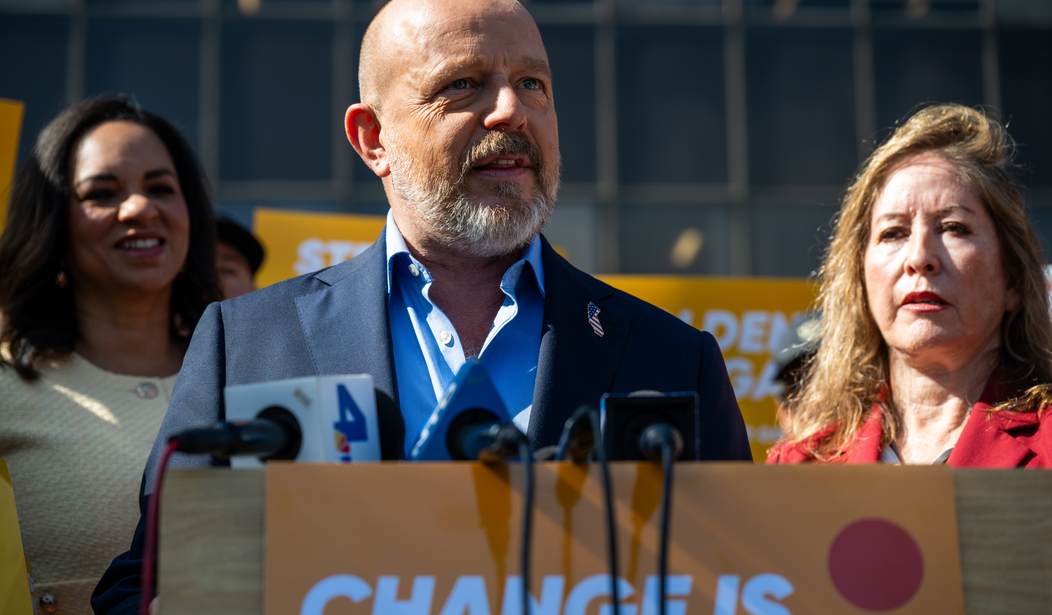

As a young guy in California, my top goal in life is buying a house to move into, but the price of California houses is a major problem for the younger generation because there is a shortage. Currently, two candidates are running in a consequential California gubernatorial race: Steve Hilton and Xavier Becerra.
Becerra’s plan to make houses more affordable sounds appealing on paper because it seems like he has some sort of idea on how to build houses, but it will not work well because the devil is in the details.
Becerra wants more government to be involved in housing development. For example, Becerra wants to create a California Housing Affordability Master Plan, where the plan will give “every department, agency, city, and stakeholder a shared framework to work toward.” Becerra wants to reform the Regional Housing Needs Allocation to introduce greater accountability for jurisdictions that fall short of their housing allocations. Moreover, Becerra wants to enforce housing requirements on cities and penalize those that do not comply.
What makes Becerra think this plan would be suitable in a state so big and diverse, with different cities, different people, different needs, and different resources? What happens if a city does not have the efficient technology or resources, or the required labor force to meet its housing requirements? Becerra will not care about your city, but will only prioritize reaching his housing target. What this means is that building companies in cities are pushed by the government to involuntarily build houses to avoid the penalty, assuming the penalty will be enforced, but will likely need to use inefficient production methods.
For example, a city that does not have an efficient, low-production-cost way of making and transporting new materials for houses (paint, concrete, wood, bricks, etc.) will need to do so by either importing from elsewhere that can, which costs more time and money, or continuing with it locally through the inefficient, high-production-cost way. This is an example of scarce resources for housing and time being wastefully spent. Furthermore, this housing target mandate will more than likely produce many back-and-forth legal disputes between the state and local places, further slowing down actual progress.
Hilton, on the other hand, understands economics. He criticizes “top-down targets,” showing his support for fewer state-mandated housing targets, and wants local participation to be voluntary instead. Hilton understands that not every place in California can build houses efficiently and encourages the market to voluntarily decide where houses ought to be built and how many houses in each place.
Becerra also believes that the government should use taxpayer money to fund housing projects, as he promises “everything will be on the table to close the funding gap – bond measures, state subsidies, public-private partnerships.” Since this is taxpayer money, which the government extracted from the people, there is far lower risk and far lower accountability for the government because that money is not its own that they worked for. This means the government can use it more loosely for its purposes, including operating under political motives, without true financial consequence.
Unlike private lenders who have skin in the game to risk their own business and must be very careful in lending money, the government does not, at least not to the extent private ones do. For example, if funding a house in a certain area costs extraordinary amounts of money or if it will likely fail to finish, the government is much more willing to do so to reach its housing target because of this lack of accountability. This is taxpayer money wastefully spent; if it were not taxed, the private sector would spend these resources much more prudently and efficiently to build more housing.
Although Hilton also supports using government loans to help people buy houses, which I wish he did not, he emphasizes deregulation for building new houses much more, whereas Becerra is way softer on deregulation. For example, Hilton explicitly wants to cap fees for new single-family houses at $50,000, whereas Becerra vaguely promises to “reform fees.”
The California Legislative Analyst's Office found that housing projects requiring an environmental impact report took approximately 2.5 years to receive local approval in its study of the state's 10 largest cities during 2004–2013. Hilton wants to prevent environmental lawsuits from delaying housing, explicitly pointing out the California Environmental Quality Act (CEQA), a historically huge obstacle for new construction in California, whereas Becerra has not named it and vaguely proposes to shorten lawsuit timelines.
Hilton believes in restructuring or eliminating rent control; in an interview on the All-In Podcast YouTube channel, he stated that rent control is a problem, leading to large numbers of rental properties in California due to laws unfavorable to landlords. On the other hand, Becerra will support protecting renters through local rent control. Anytime the government artificially sets a price, like rent, and doesn’t leave it up to the market, it will disincentivize landlords from building new rental units and new housing due to diminished profit incentives. As a result, prices of homes increase even further due to this lower supply of housing.
Hilton is definitely the better candidate because he understands that unnecessary government regulation and involvement in the economy unnecessarily delay the urgent need to supply more housing in California. Not just Hilton, but any candidate who believes in free-market principles and keeping the government as small as it can be is infinitely better on economic policy to address the cost of living than their opponent.