





These past few days the Middle East spotlight has been, for good reason, on Israel, Hezbollah, and Iran.
At the time of writing, things are at a standstill, and no one knows what comes next. After the exchange of fire between Israel and Iran, the latter, notes Israeli journalist Amit Segal, “warned that any further Israeli aggression—specifically ‘including in southern Lebanon’—would be met with ‘much more severe and crushing measures.’”
Despite that, on Tuesday, Israel went ahead and attacked Hezbollah infrastructure in the southern Lebanese town of Tyre. Will Tehran make good on its threat? We can only wait and see.
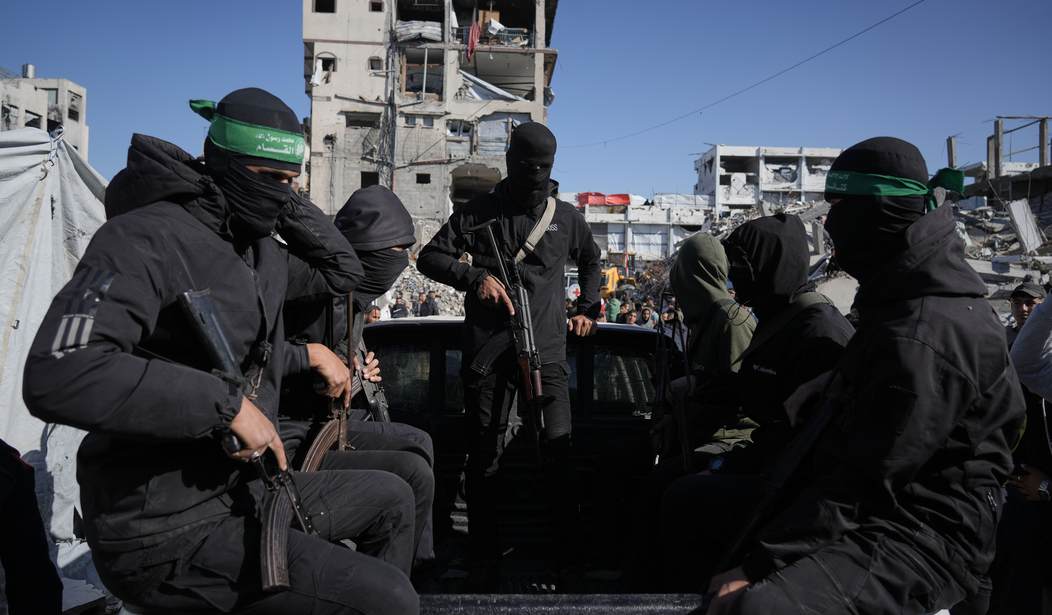
Meanwhile, the veteran and venerable Israeli military-affairs analyst Ron Ben Yishai has filed a report from Gaza that gives—dare we say—an encouraging picture of the current condition of another of Iran’s terror proxies, Hamas.
While Hezbollah is spread throughout Lebanon, Hamas is concentrated in a much smaller space, Gaza. The IDF, which battled Hamas in Gaza for more than two years running since the debacle of October 7, 2023, now controls about 65% of Gaza, and Hamas is in a jam.
Ron Ben Yishai, now 83, spent some time at an IDF outpost in southern Gaza and has a lot of light to shed on the current state of the enclave.
The IDF, for one thing, has been using its presence in Gaza to blow up the notorious Hamas tunnels. Since October 7 the IDF has destroyed about 280 miles’ worth of them, and at present there’s nothing at all that Hamas can do to counteract the process.
The IDF has also, using high-quality intelligence, been “systematically eliminating senior [Hamas] commanders, key military specialists and police officials responsible for maintaining governance.”
While Hamas still has about 20,000 operatives, only about 8,000 are experienced fighters and the rest are minimally trained, lightly armed “young men and teenagers” seeking to bring home some shekels.
And Hamas’s troubles go beyond that. Its popularity in Gaza is drying up, and armed clans living in the IDF-controlled areas—“whose members and families [number] in the tens of thousands”—have lately been seriously challenging its rule.
In terms of Israeli security, the situation is much better than it was on October 6, 2023. Six IDF brigades and 18 battalions now protect the Israeli border communities, compared to much fewer forces in the sleepy, self-delusive days before the catastrophe.
Ben Yishai puts it this way: “The way the IDF is currently deployed and operating in Gaza has almost completely neutralized Hamas’s ability to carry out attacks . . . the threat to communities in southern Israel has been almost entirely removed, at least as long as the IDF maintains its current posture.”
Therein lie many questions about the future of Gaza.
Although grandiose plans were hatched about Hamas disarmament, the terror group—predictably enough—rejects that option. The “international stabilization force” that was supposed to take over in Gaza “has yet,” Ben Yishai notes delicately, “to materialize.”
And the Peace Council that’s supposed to help finance a new, peaceful Gaza “has failed to secure even one-third of the funding pledged by its member leaders.” That, too, is predictable stuff—though it’s been worsened by the Gulf states’ cash-flow problems since the Strait of Hormuz was closed.
IDF commanders, for their part, are sure that only a few weeks would be needed to seize the remaining Gazan territory held by Hamas. “Plans already exist and require only government approval.”
At that point, though, with Hamas neutralized, an old problem would arise: what to do with the two million mostly indigent Gazans whom Hamas has been holding, in effect, as hostages, and who’ve been raised on a murderous hatred of Israelis.
It was the severe, demoralizing difficulty of ruling Gaza that led Israel—with half or more of the Israeli population supporting the move—to disengage from the enclave in the first place, back in 2005. Of course, that didn’t work out well either.
Ben Yishai hopes the international community, or a future Israeli government, will “succeed in formulating a realistic, adequately funded, phased long-term solution for Gaza’s population without endangering Israel.”
It has always been a tall order. For now—unlike Iran, Hezbollah, and the Houthis—Gaza is quiet, and it’s a big improvement.
Editor’s Note: Thanks to President Trump and his administration’s bold leadership, we are respected on the world stage, and our enemies are being put on notice.
Help us continue to report on the administration’s peace through strength foreign policy and its successes. Join PJ Media VIP and use promo code FIGHT to receive 60% off your membership.



Join the Conversation
VIP members get the ability to comment on articles.