


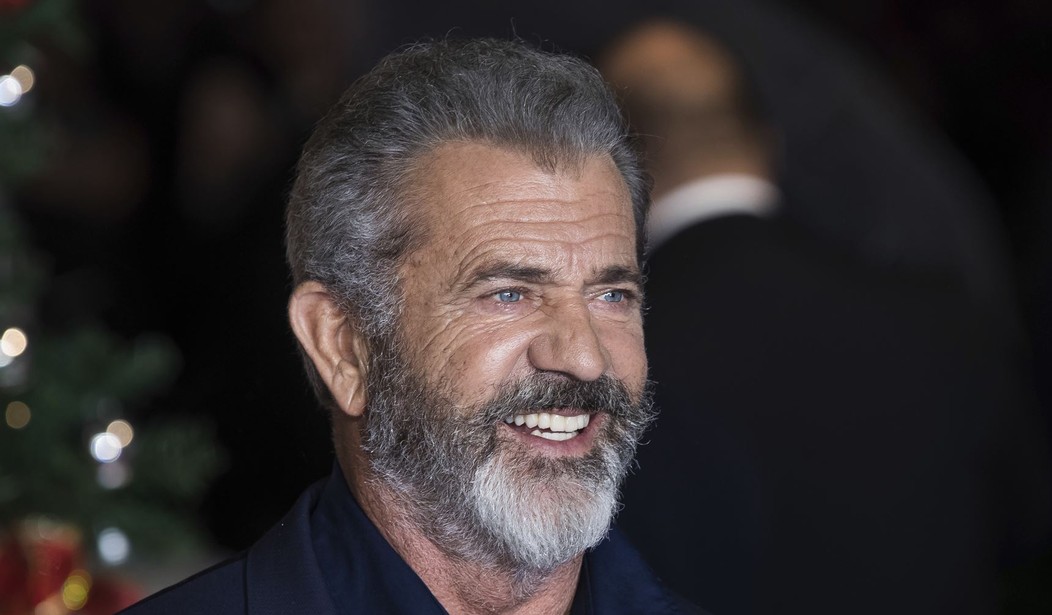
On Tuesday, Archbishop Carlo Maria Viganò posted several photos of himself with Oscar-winning actor and director Mel Gibson on the set of Gibson’s new film, The Resurrection, a sequel to what I consider his masterpiece, The Passion of the Christ. I consider it a masterpiece not only because of its beautiful cinematography, stellar acting, and powerful storytelling, but because it was the film that led me to Jesus. It marked the first time I truly heard and understood the Gospel. Just days after seeing it, I became a Christian. That was 21 years ago.
The photos Viganò shared on social media platform X show him chatting with Gibson, who sits beside him in the director’s chair while working on the film. LifeSiteNews reported that no one knows how long the two men—both diehard Catholics—have known each other, but the Braveheart star openly expressed deep support for Viganò, widely regarded as a traditional Catholic, during one of the archbishop’s most controversial moments in 2024.
This is Archbishop Viganò’s official account, featuring behind-the-scenes photos from the set of Mel Gibson’s The Resurrection. https://t.co/F7H18VhsKh
— John-Henry Westen (@JhWesten) February 17, 2026
Gibson has continued communicating with the archbishop ever since. At the time, Gibson wrote Viganò a private letter supporting him after Pope Francis excommunicated him from the Catholic Church, referring to the archbishop as a “modern-day Athanasius.” In the letter, Gibson wrote, “It really is a badge of honor to be shunned by the false, post-conciliar church.”
The Lethal Weapon actor also supported Viganò in 2023, when the archbishop appealed on behalf of Christians persecuted in Armenia by the Israeli-backed Azerbaijani military, which drove the faithful out of Nagorno-Karabakh. Gibson is producing his latest project, a two-part film, at Cinecittà Studios in Rome. He plans to release Part One on Good Friday, March 26, 2027, followed by Part Two forty days later on Ascension Day, May 6.
The Passion of the Christ did more than leave a lasting impression on its audience—though many viewers, myself included, ultimately converted to Christianity because of the film. Several actors also experienced genuine conversions. Among them were Luca Lionello, who ironically played Judas, and Pietro Sarubbi, who portrayed Barabbas.
Lionello’s conversion stands out because he described himself before filming as an “angry atheist.” By the time production wrapped, however, he asked for confession, according to on-set priest Father John Bartunek. “Apparently, the experience completely transformed him,” Bartunek said. “He baptized his children, sanctified his marriage, and returned to the Church.”
Sarubbi later wrote a book about his conversion, which he says occurred during the moment his character enters the scene and sees Jesus for the first time after the scourging, just as the crowd releases Barabbas.
“When our eyes met, I felt a sort of surge. It was like I was really seeing Jesus. I had never experienced such a thing in all my years of acting,” Sarubbi said. “It made a huge impact. I felt as if an electric current passed between us. I saw Jesus Himself.”
In a media interview, Sarubbi added, “I am not embarrassed to say that during filming I experienced a conversion. All the actors who took part changed a little after this experience, but I learned more from this film than from any conference.”
Help us show support for entertainment that supports Christian, conservative values. Join PJ Media VIP and use promo code FIGHT to get 60% off your membership.