
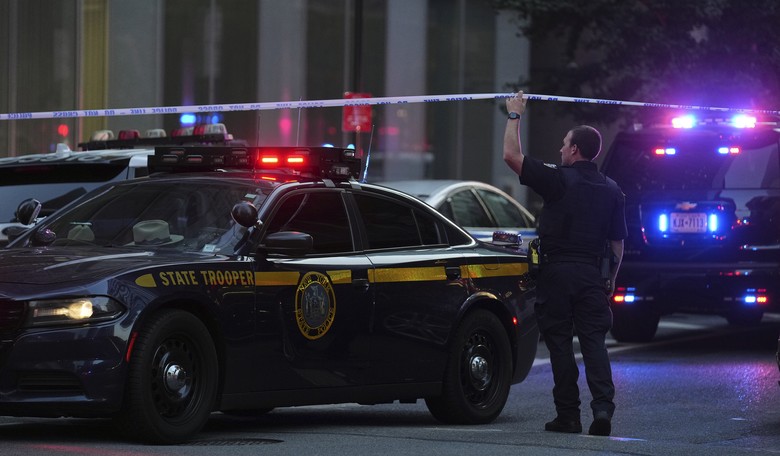
It’s two in the morning, and the call is a car off the road on a stretch you’ve driven a hundred times. You pull up, and the engine is still ticking, one headlight is pointed into the trees, and you turn the radio down so you can hear whether anybody inside is breathing. You don’t know what you’re going to find, and you go anyway.
I spent 30 years working next to people who did that: firefighters who go into the house everybody else is coming out of, medics who pull over for a stranger on the highway, officers who show up because showing up is the job. None of them had a gadget or a catchphrase. What they had was a badge, a partner in the next car, a thermos that went cold around midnight, and an unwritten prayer. Which is why I wrote this comic book. Not because I think kids need more comic books, but because kids need to learn about cops from someone who has worn the uniform.
Let me tell you about a 19-year-old on his first week of patrol. On his first call, a stranger put a phone in his face and called him a murderer. His ticket book was still blank. He hadn’t written so much as a parking citation. The next night, he was on his knees doing CPR on somebody’s grandmother, counting out loud for six minutes that felt like 40.
Kids see the first part. Nobody ever shows them the second.
There’s something else they don’t see. Between 2019 and 2022, while the country was being told that the people in that uniform were the problem, police resignations went up more than 50%. I don’t read that as a statistic. I read it as the sergeant with 15 years on the job, the one who knew which houses had a dog and which ones had a shotgun behind the door.
Hiring has picked back up since then. But the people who spent ten years telling your children the police were the enemy were never the ones who had to show up when your mother went down in the kitchen. The cops did.
I should say something about the bad ones, too, because a cop who won’t admit they exist isn’t worth listening to. In 30 years, I worked around a few men who should never have been given a badge, and here is what the activists won’t tell you: the good cops wanted them gone more than anybody holding a sign ever did. We had to ride with them. That’s worse than marching against them.
I believe in sin, so I’m not surprised when I find it in someone in a uniform. I also believe in grace, so I don’t let it be the whole story. That’s how I can say the hard part and still write the book.
It’s called Bulletproof, and it’s written for readers eight to 12 and for the parent reading over their shoulder. It follows three first responders in one town who share a secret none of them asked for.
Michael Stone leads the team. He goes through the door first, which means he’s also the one who carries it home at night, and the one who does the paperwork afterward, which is the part they leave out of the movies.
Karyn is a paramedic who can feel the fear in a room before anybody says a word. I’ve watched real medics do that with nothing but a steady voice and a hand on a shoulder, the kind of calm that makes a drunk sit down and a sergeant jealous, and it’s a gift that doesn’t come from the training.
Blake is a firefighter who can walk through fire without being burned. I gave him that one because every firefighter I ever met already thought he had it. It makes him the only one on the block who can go back in for the kid who’s still inside.
The first issue puts all three of them in the same bad night, and a kid gets to watch what each of them does with what he’s been given. That’s what gets a 10-year-old to turn the page. How the characters use their powers is why the 10-year-old feels empowered, too. Greater love hath no man than this. I didn’t make that up.
Every child learns what courage looks like from somebody, and the first somebody is usually in the house. A boy watches his father to find out what a man does when things get difficult. A girl watches her mother to find out whether she can be the calm one when everybody else is scared. Most of us are never going to run into a burning building, but we do get up at two in the morning for a sick baby, we go to the hard conversation instead of around it, we show up at the hospital and at the funeral, and we fold ourselves into the tiny chair at the parent-teacher conference. It’s the same muscle.
When your son reads about Stone going through the door, I want him to look up from the page and realize his dad does a smaller version of that every week, and that the smaller version is how you get ready for the big one. No school is going to teach him that. He learns it from you.
None of the three in this book is actually bulletproof, and kids are going to figure that out before their parents do. My nonprofit, InVest USA, has spent years putting vests on officers in towns whose departments couldn’t afford them, thousands of vests in hundreds of communities, so I have a pretty good idea what the word bulletproof means. A vest weighs about as much as a bag of flour, and it covers maybe a third of you. You put it on, you do the training, and still your life is never entirely in your own hands to begin with.
Protection is never a superpower. It’s a vest somebody paid for, on a man who went in anyway, and a God who was there before the vest was.
The first issue of Bulletproof is out now. You can get it on Amazon or ask for it at your local comic shop. Read it with your kids at the kitchen table, and when you get to the page where Blake goes back in, stop there and ask who else would do that.
Tonight, somewhere in America, that two o’clock call will happen. Somebody will say a short prayer, pull on a vest that a stranger paid for, and go through the door. Nobody is bulletproof. We go in anyway.
Related: National Guardsman Shot While Intervening in D.C. Fight