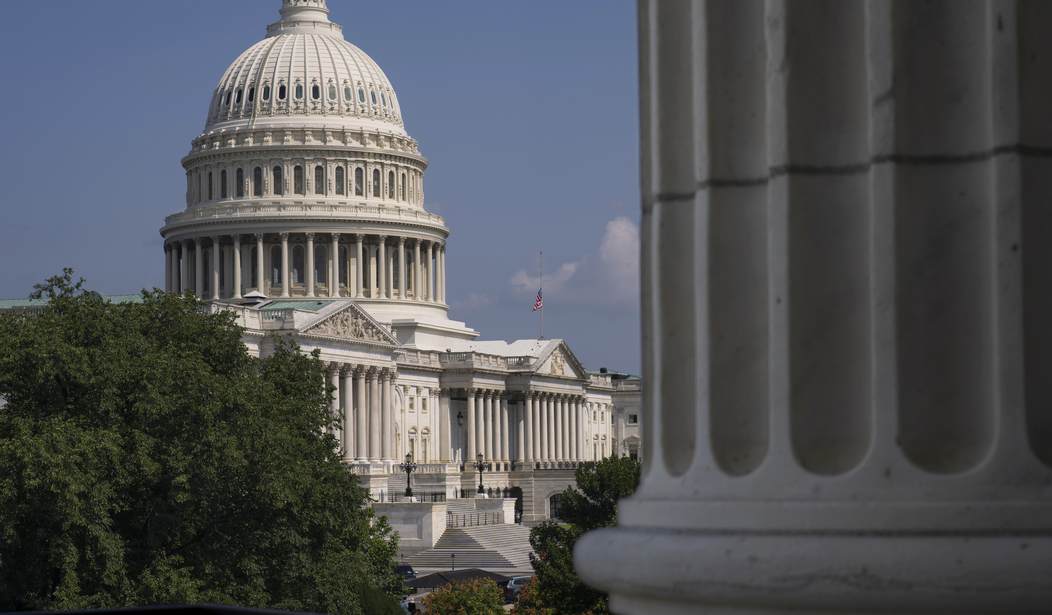

Every politician in America runs on fiscal responsibility. Yes, even Democrats, even though fiscal responsibility is definitely not in their DNA. But you've heard the speeches a hundred times, and so have I. Candidates from both sides of the aisle promise to stop sticking our kids and grandkids with the bill for all the wasteful spending going on. The messaging is compelling and effective. Inevitably, of course, they get to Washington, and somehow the belt never gets tightened.
And they blame the other side.
It would be nice to think this is just because the two parties want to cut spending but are too stubborn to compromise. I don't believe that anymore. The problem runs deeper than any one fight over the budget, and Elon Musk just said out loud what a lot of us have suspected for years.
Let's start with the part everyone already knows. Republicans can't cut spending on much of anything without Democrats having a hissy fit. And the only cuts Democrats ever seem to want are the ones that leave us weaker, like trimming military funding. Still, if the whole mess came down to haggling over what to cut, I think the two sides could eventually work something out. Folks compromise on tougher things than line items every day.
The real trouble is the Washington culture. Washington has grown too invested in the cycle of spending because spending is how politicians prove they're getting something done. Seriously, watch any incumbent run for reelection. When you get past the big-picture messaging about standing up to the opposing party, a big chunk of the pitch is about what he or she brought home to the district or the state: the new bridge, the federal grant. That’s why members of Congress love going to ribbon-cuttings and such. They gotta get the credit for making it happen. In other words, spending more dollars counts as a job well done, and nobody wants to give up the thing that makes him or her look good.
Musk gave us a pretty big hint about how far this goes. Sitting down with Walter Isaacson on the podcast The Builders, Musk said he left the Department of Government Efficiency (DOGE) because almost nobody in power actually wants to cut spending.
"The appetite is not there at the presidency, the House, the Senate, or the judiciary," Musk said. "Basically, no one in authority in the government whatsoever, really, with maybe a few rare exceptions of like the Rand Pauls of the world type of thing, actually wants to reduce spending."
Without a doubt, Sen. Rand Paul (R-Ky.) has been sounding that alarm for years, often all by himself. Musk also explained why so few people join him.
ICYMI: Elon Musk Will Have His Revenge on Democrats, and I Can’t Wait
"If you try to solve the deficit and stop wasteful spending, you make a lot of enemies," he explained. "President Trump likes to be liked. He doesn't like people calling him, being upset about … some funding being stopped."
That’s fair.
Musk left a little room for hope. "Maybe if the president made that his primary goal, we could do that," he said. But he sounds like a man who has given up on the cutting route. He now figures that "AI and robots" are the only real fix for the deficit. "We're not gonna solve it by trying to save our way there," he added. He even admitted he got "carried away" with DOGE and thinks it should have lasted only "a month or two."
DOGE is a perfect example of how big the problem is. For all the good it did, all the savings it created, and the bloat it trimmed, Democrats fought it tooth and nail. In the end, the forces protecting spending are extremely strong. DOGE was never going to shrink the government significantly. Why? Because the folks in charge won't give up the power they use to reward their friends and push their agendas.
That's the truth about fiscal responsibility in Washington.
The promises survive because they win elections, and the practice dies because it doesn't. Saying no takes people who are willing to be unpopular, and that town has precious few of them. Until voters start rewarding the ones who say no, we'll keep hearing the same promise every couple of years and keep watching it get broken.