





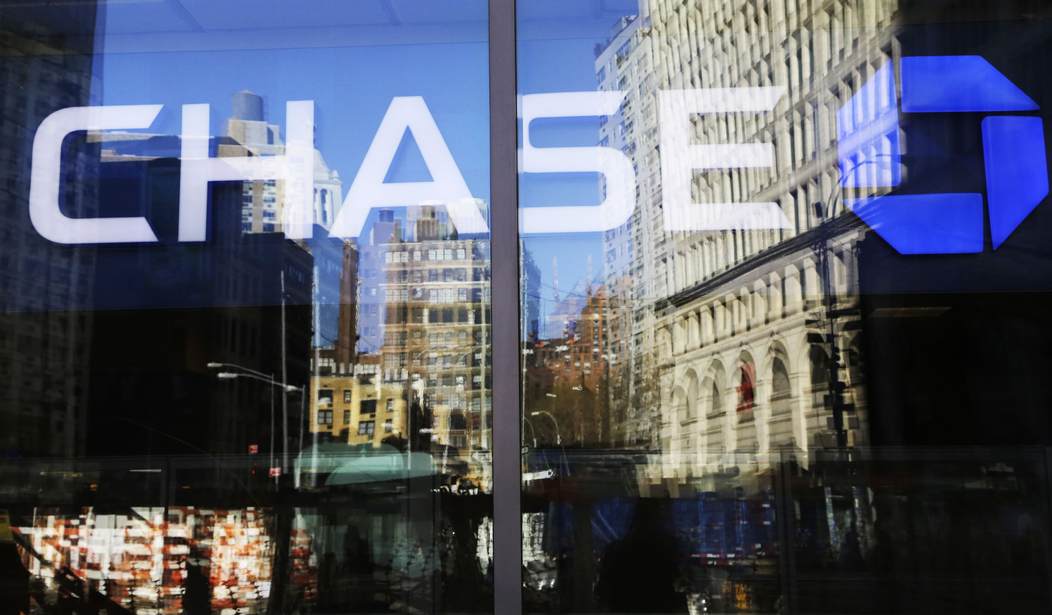
Nine of the country's biggest banks spent five years running an outrageous campaign to cut conservatives, Christians, pro-lifers, and Trump supporters out of the financial system, and the federal government now has the receipts.
The Office of the Comptroller of the Currency (OCC) released its Debanking Review on Wednesday. Miranda Devine first broke the story in the New York Post. The 47-page report, titled "Guaranteeing Fair Banking for All Americans," draws on a hundred thousand complaints and fifty thousand internal bank records from 2020 through 2025. It names JPMorgan Chase, Bank of America, Citibank, Wells Fargo, U.S. Bank, Capital One, PNC, TD Bank, and BMO Bank.
Every one of them hid behind the same excuse: "reputation risk."
What did these banks fear? Bad press, protests, attacks from activist outfits like the Southern Poverty Law Center, and retaliation from regulators and politicians. So they purged anyone who might draw that heat. Christian organizations lost service over their views on abortion, LGBT issues, and traditional family values. Gun makers and retailers, Arctic oil and gas, coal, detention facilities, tobacco, and e-cigarette companies all saw financing dry up.
Let’s start with JPMorgan Chase.
Its payment arm, WePay, shut down a merchant selling Trump and MAGA gear, claiming the products "promote[d] hate, violence, or racial intolerance." JPMorgan's screening system routinely flagged "MAGA," "Make America Great," and "America First" in merchant profiles, websites, and transaction data, and the bank added several of those terms after the Jan. 6, 2021, Capitol riot. WePay also dumped a seller of "conservative/republican t-shirts, hats, etc." after spotting a "Biden-Illegitimate-Tshirt," a "The-Big-Lie-Sticker," and a "Trump-Won" flag.
Another merchant lost payment processing because an event organizer's social media posts called Black Lives Matter "Marxists" and labeled Joe Biden and Anthony Fauci "the enemy." Bank employees ruled those posts "an incitement of hate."
Think about that for a second: Garden-variety political opinions were enough to get an American cut off.
The banks leaned on the SPLC’s bogus hate-group designations again and again. That's the same SPLC federal prosecutors indicted in April on fraud and money-laundering charges for allegedly bilking donors out of millions, and the same group FBI Director Kash Patel has called a "partisan smear machine." WePay closed a religious organization's account after the SPLC branded it an "extremist hate group," and employees described it internally as a "[r]ight wing religious conservative non profit with strong anti LGBTQ rhetoric." WePay also killed an account raising money for a "devout Christian's" legal challenge to anti-discrimination laws.
ICYMI: Here’s Why a Democrat Strategist Is Still Nervous About the Talarico 'Flu' Story
Let’s continue, shall we?
PNC turned down a line of credit for a successful media company after its ESG group noted that one owner's foundation funded Christian conservative groups the SPLC had tagged as hate groups, and that another owner was "a conservative political commentator." The employee who recommended the denial put it in an internal note.
"I think it becomes really difficult to justify aligning ourselves with a company whose owners have built very public personas around opinions very contrary to PNC's beliefs/values," the employee wrote.
Wells Fargo pressured a payment processor to drop a religious nonprofit over its views on same-sex marriage, and it refused loans to two firearms businesses because — get this — employees feared blowback from the Biden administration, anti-gun activists, and members of Congress.
"Under the Biden administration, banks could face greater supervisory pressure to move away from lending to the firearms industry," a Wells Fargo reputation-risk review of a prospective firearms client warned.
Bank of America cut off private prison businesses, citing "changing policymaker attitudes." A few months into the Trump administration, it tried to reopen one of those accounts. So much for principle.
To be fair, the report found that some banks also turned away groups on the left. Capital One refused any partisan entity backing candidates from only one party, which meant rejecting both a "reproductive rights" group and a gun-rights group. Yet the overwhelming weight of the evidence points in one direction.
All nine banks told the OCC they've revised their practices. The OCC says those reforms fall short and that no bank has "fully and publicly acknowledged" its "weaponization of finance against hardworking Americans." JPMorgan, for its part, pinned the blame on WePay and claims the problem is now fixed.
"Today's report provides irrefutable evidence that the nation's largest banks have denied, debanked and discriminated against customers and lawful businesses," Comptroller of the Currency Jonathan V. Gould said, adding that the OCC is weighing further action.
The Consumer Financial Protection Bureau, which has primary supervisory authority over the largest banks, opened its own investigation Wednesday.
"It is appalling that these banks targeted American consumers for their political, social, or religious beliefs that did not align with the Biden Administration or its leftist allies… Many of those targeted were supporters of President Trump," CFPB Acting Director Mark Paoletta said. "These thuggish tactics… have no place in America."
Editor’s Note: Every single day, here at PJ Media, we stand up and FIGHT, FIGHT, FIGHT against the radical Left and deliver the conservative reporting our readers deserve.
Help us continue to tell the truth about the Trump administration and its successes. Join PJ Media VIP and use promo code FIGHT to receive 60% off your membership.
Join the Conversation
VIP members get the ability to comment on articles.