President Donald Trump won the 2024 presidential election for many reasons. Two key issues were the fact that under the Biden-Harris administration, the economy was in tatters, thanks to historic inflation, and our country was being overrun by illegal immigrants, who were making it less safe. Inflation has been brought under control and the border is secure, but boy, is the left fighting hard against Trump’s efforts to deport the illegal immigrants that are here.
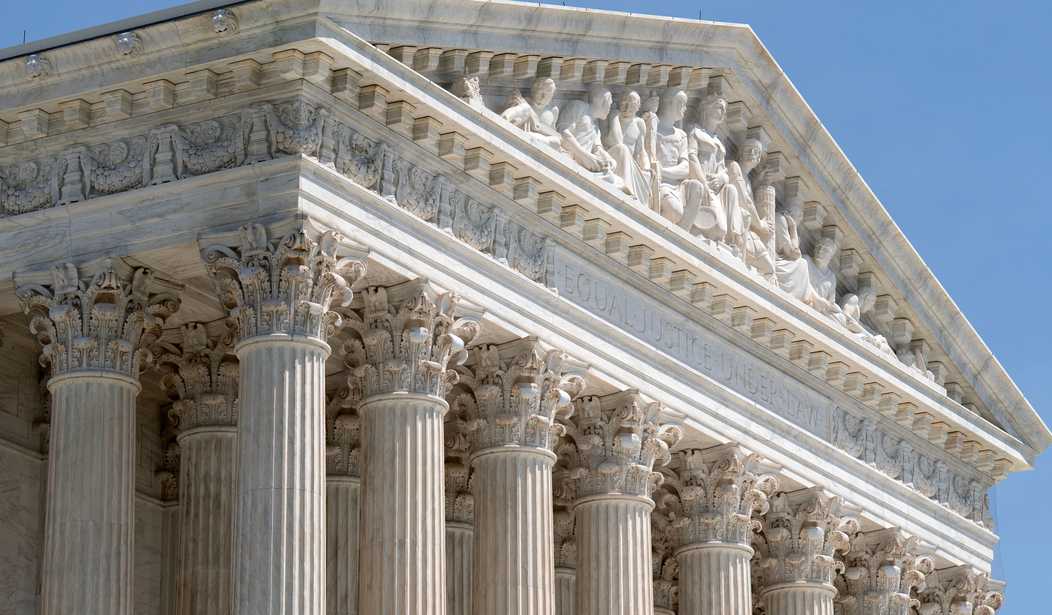
Now, Trump’s deportation efforts rest with the Supreme Court, which agreed Thursday to decide whether the government can hold illegal aliens without bond hearings while their removal cases proceed.
The justices added three cases to their argument calendar for early next year: the administration's no-bond detention policy, a religious zoning dispute, and a fight over military benefits in divorce. The grants appeared on an order list from the court's Sept. 28 conference, its first regularly scheduled one since the summer recess began at the end of June. More orders from that conference should arrive Monday morning shortly before the first oral arguments of the 2026-27 term.
One case in particular could have huge implications, depending on how it turns out. That case is Rhoney v. Barbosa da Cunha, which America First Insight called "Easily the most important SCOTUS case being taken up during the 2nd Trump Admin." The organization added, "This easily could double deportations, or halve them, depending on the outcome."
SCOTUSblog laid out the legal question in its report on the grant.
The case centers on the administration’s policy of detaining noncitizens who have been apprehended within the United States (as opposed to at the border) without the opportunity for a bond hearing while their deportation proceedings move forward. The policy follows guidelines that the Trump administration issued last year, relying on a provision of federal immigration law indicating that noncitizens “shall be detained” for a removal proceeding “if the examining immigration officer determines that” they are “not clearly and beyond a doubt entitled to be admitted” to the United States.
According to SCOTUSblog, the government had never used that provision against people who had already crossed into the country and stayed for years or decades. Those cases fell under a different section of the law, one that lets the attorney general release an alien awaiting proceedings on a "bond of at least $1,500" or "conditional parole." The administration moved interior arrests under the stricter provision so that detention would continue with no bond at all.
ICYMI: Michelle Obama Accidentally Admits That Trans Ideology Is Biologically Absurd
The fight comes down to how to read a 1996 immigration law and which of its detention provisions covers someone who entered illegally and then lived here for years before his arrest. In 2025, the administration adopted a policy that keeps illegal aliens in custody for the length of their removal proceedings. That wiped out the individualized bond hearings many interior arrestees used to get.
Lower courts have split on the question, and administration attorneys told the justices that the division is "disrupting the orderly administration of immigration law." They say thousands of petitions challenging the government's interpretation have swamped the courts.
"The result is an unworkable patchwork of inconsistent immigration enforcement, where aliens present without admission are subject to mandatory detention in some circuits but are entitled to bond hearings and often released in others," lawyers for the administration wrote.
A win lets federal authorities keep a far larger group of illegal aliens in custody, which means ICE knows where each one is when his case ends. A loss sends many of them back onto the streets on bond, and agents may have to find and arrest them a second time once a final removal order comes down. The decision in this case will test whether the United States is a sovereign nation of laws whose people decide who has the right to be in the country. One hopes the court will make the right choice.