Presidential campaigns wrote off certain states long ago. You won’t see Republicans campaigning in California, Oregon, or Washington; nor will you see Democrats campaign in Oklahoma, Utah, or Kentucky. Democrats still hope to flip Texas, but they haven’t made a serious effort there… at least not in a presidential election. Senate elections are a different story. We already know Democrats are trying to flip Texas again this year, and that won’t end well for them, but there’s another red state we should be keeping an eye on.
New campaign finance reports out of one deep-red state show Democrats playing a different game, one that has nothing to do with electoral votes. The money is pouring in from thousands of miles away, and it adds up fast. What do Democrats know that Republicans haven't figured out yet?
Alaska hasn't backed a Democrat for president since 1964, and nobody expects that to change. Democrats know it, too, which is why they don't waste a dime chasing the state's three electoral votes. But the party has figured out that a state can be safely red at the top of the ticket and still winnable everywhere else.
We've seen this movie before. Georgia sent Sens. Raphael Warnock (D-Ga.) and Jon Ossoff (D-Ga.) to Washington. Ossoff now appears poised to win reelection this year. Arizona did the same with Sens. Ruben Gallego (D-Ariz.) and Mark Kelly (D-Ariz.). Red-leaning states elect Democrat senators more often than Republicans like to admit, and every seat matters in the upper chamber.
Alaska is next on the list, and the money proves it.
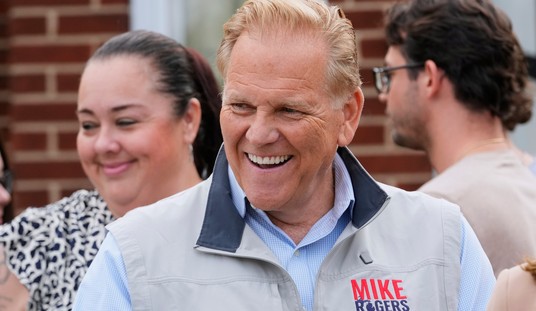
The latest campaign finance data in Alaska's U.S. Senate race show Democrat Mary Peltola outraising incumbent Republican Sen. Dan Sullivan (R-Alaska). Peltola's campaign pulled in $6.9 million since April 1, while Sullivan raised a little more than $2 million. Peltola campaign spokesman Harry Child said the vast majority of her donations are small, averaging $50 per donor, and that much of the money comes from outside the state. Meanwhile, her campaign has been behind an effort to recruit a spoiler candidate who shares Sullivan's name, a stunt designed to confuse voters on the ballot.
ICYMI: Democrats May Be in Big Trouble in Their Maine Senate Do-Over
To be fair, money doesn't always translate into votes. Sullivan won reelection in 2020 despite trailing challenger Al Gross in fundraising by a wide margin. But forecasters are calling this year's race a toss-up, and that alone tells you the seat is in play.
The governor's race tells the same story. Jonathan Kreiss-Tomkins, a Democrat and former state lawmaker from Sitka, has raised more campaign cash than any of the 17 candidates in the field, pulling in $1.8 million since entering the race in February. The majority came from wealthy donors in the Lower 48. His top contributors include six employees of Anthropic, a California-based artificial intelligence company, who collectively gave him $372,000. Tom Begich, the only other Democrat running, reported $1.1 million, third-best in the field, most of it from wealthy Alaskans such as Anchorage donor Justin Weaver, who gave more than $250,000 in recent months, and Anchorage attorney Robin Brena, who gave $275,000.
The 12 Republicans in the race can't keep up. The top-raising Republican, podiatrist and businessman Matt Heilala, reported nearly $1.6 million, but more than $1.4 million of it came out of his own pocket. Former Alaska attorney general Treg Taylor reported $1 million total, with less than $150,000 raised since he filed his last report in February.
Why the gap? Some of it is natural. The minority party tends to raise money more easily, because its donors are hungrier, and the national push to flip seats pulls in cash from out of state. Consider Texas, where donors from outside the state accounted for roughly 50% of what Democrat Senate nominee James Talarico raised during the final stretch of the first quarter of 2026, while his Republican opponent, Ken Paxton, got about 25% of his cash from beyond state lines.
Make no mistake about it, out-of-state donations measure outside interest in an election rather than support within the state, and that dynamic tends to benefit the party out of power.
But that's exactly the point. California Democrats and their deep-pocketed friends have looked at the map and decided Alaska is a battleground worth funding. They'll never win its three electoral votes, and they don't care. A Senate seat and/or a governor's mansion would pay off handsomely for the Democrats, and if Republicans keep treating Alaska as safe, they may wake up to find that out-of-state money turned a red state blue.