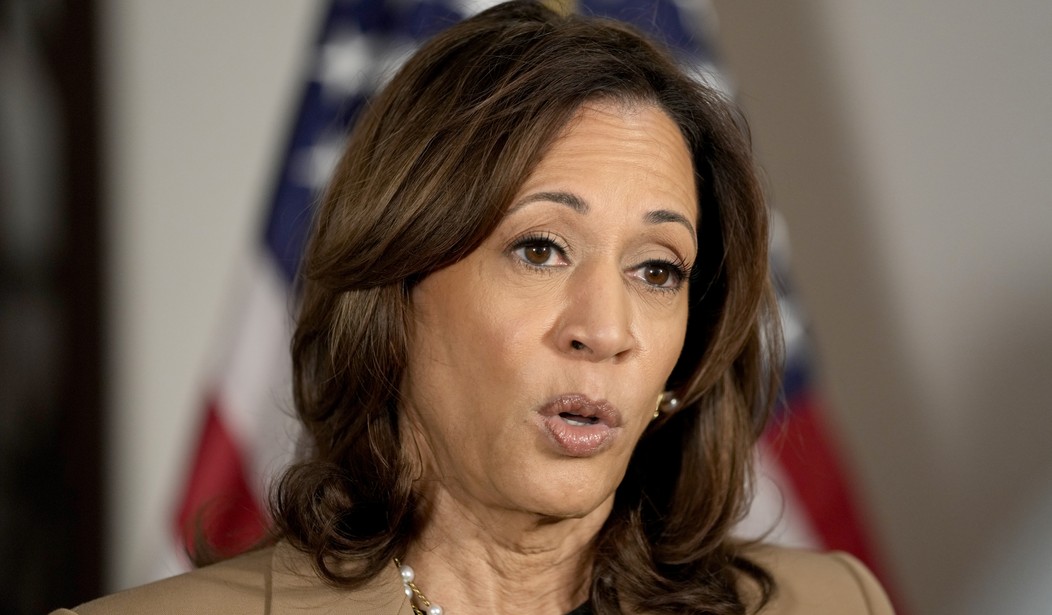
This week, a powerful committee inside the DNC quietly settled a fight that will shape who gets the inside track to challenge Donald Trump's successor in 2028. One potential presidential candidate likely benefits more than any other from how this shook out. That candidate, of course, is Kamala Harris, a candidate so terrible that she lost every single swing state despite raising over a billion dollars in her campaign.
The Democratic National Committee's Rules and Bylaws Committee (RBC) has recommended that South Carolina keep its spot as the first primary state on the 2028 calendar. If the full DNC signs off in August, black voters keep the loudest voice in picking the party's next nominee. And Kamala Harris stands to benefit most.
So why South Carolina?
As you may recall, Joe Biden pushed hard to make South Carolina the leadoff state back in 2024, much to the chagrin of New Hampshire, which, of course, is too white for Democrats to let lead the nation in deciding who the party’s nominee should be. Aside from that, of course, is the fact that South Carolina resurrected his campaign in 2020 after getting trounced in Iowa and New Hampshire.
The RBC's calendar puts South Carolina first on January 22, Nevada on February 1, New Hampshire on February 8, New Mexico on February 15, Michigan on February 22, and Virginia on February 29, with every other state starting on Super Tuesday, March 7. The full DNC votes in August on this calendar, and there’s little reason to believe that the DNC won't approve it.
But what really sets South Carolina apart from the other states that vied for the first-in-the-nation slot is that census data shows that black Americans make up around 25% of South Carolina's population, nearly double the 12% they represent nationwide. That math hands black Democrats outsized influence over the nominee, and in practice, it means a boost for candidates of color.
That candidate is Kamala.
Despite her humiliating defeat in 2024, Kamala remains a top contender for 2028, and South Carolina voting first could hand her the kind of early advantage that builds momentum. Identity politics played a starring role in how the RBC made this call.
The committee split closely between South Carolina and Nevada, arguing it out over a Thursday dinner that ran past midnight. South Carolina won the top spot with 26 of 49 votes after its co-chairs backed the state. Nevada took 19. New Hampshire got four.
Recommended: Did Hakeem Jeffries Prove That Democrats Are Panicking About the Midterms?
True to form, the debate within the committee centered on which voters the party owes more: black voters, its most loyal constituency, or Latino voters, the bloc that drifted from Democrats in 2024. South Carolina's backers argued the party must reaffirm its commitment to black voters, since redistricting and a Supreme Court ruling gutting the Voting Rights Act have weakened their power.
Democrats may have intended to take a principled stand for a loyal voting bloc, but what they may have done is stack the deck for the candidate least equipped to win a general election.
You've gotta admit that it’s hilarious.