





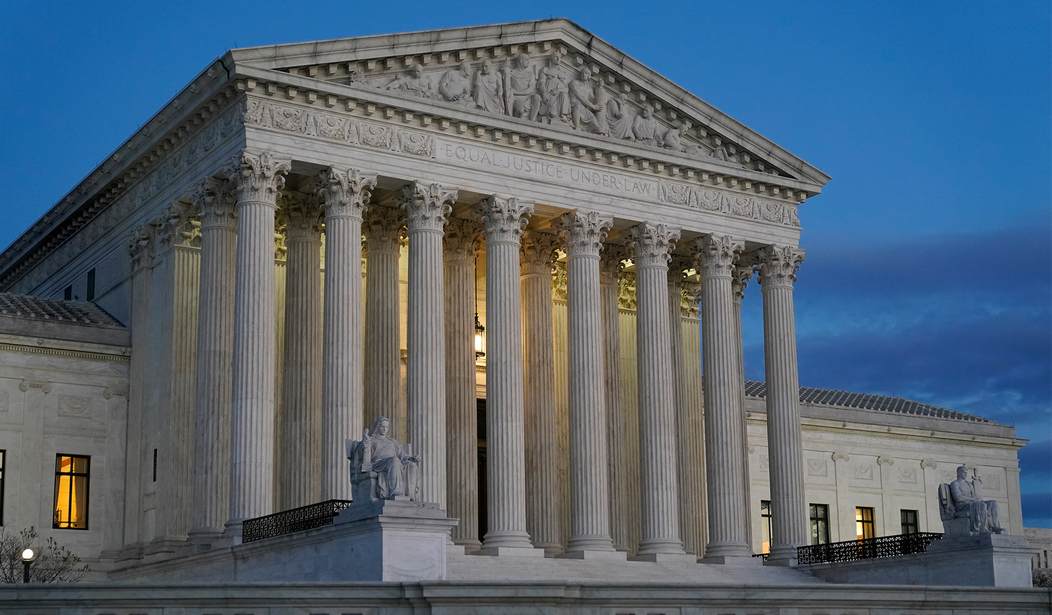
For most of us, Election Day is supposed to mean Election Day. Not Election Week. Not Election Month. On Monday, the Supreme Court decided that it no longer matters.
In a 5-4 decision in Watson v. Republican National Committee, the Court ruled that federal election-day statutes do not stop Mississippi from counting mail-in ballots: “The federal election-day statutes do not prevent Mississippi from counting absentee ballots postmarked by election day but received up to five days thereafter; nothing in the federal election-day statutes requires ballots to be received by election day.”
Mississippi passed that five-day grace period back in 2020 as a COVID-19 emergency measure. Yet six years later, the "emergency" is still here for some reason, and now it has the Supreme Court's blessing.
Federal law has set a single, uniform Election Day since 1845, with Congress extending the same rule to congressional races in 1872. The Republican National Committee, the Mississippi Republican Party, the Libertarian Party of Mississippi, a Mississippi voter, and a county election official all sued, arguing that a state can't quietly turn one day into a week just because counting mail-in ballots is inconvenient. A three-judge panel on the Fifth Circuit agreed with them. The full Fifth Circuit declined to revisit that ruling, over a five-judge dissent, and Mississippi ran to the Supreme Court instead.
Mississippi's lawyer, Solicitor General Scott Stewart, told the justices that states have broad authority over how elections are run and that none of this matters because voters make their final decision by Election Day anyway. Paul Clement, representing the challengers, made the obvious point that when Congress created Election Day, casting a ballot and the government actually receiving it were "so inextricably intertwined" that "no one would have thought of one without the other." In other words, a vote doesn't count until officials have it in hand. That used to be common sense, but it got lost on a majority of the court.
Recommended: Biden's Own Party Heckled Him During a Speech, and Then He Embarrassed Himself
It was widely expected that this ruling would go the other way. During oral arguments, which lasted more than two hours, a majority of the justices sounded as if they agreed with Clement. Then the actual ruling came down, and Justice Amy Coney Barrett and Chief Justice John Roberts joined the Court's liberal wing to hand Mississippi the win anyway.
Justice Samuel Alito dissented, joined by Clarence Thomas and Neil Gorsuch, with Brett Kavanaugh signing on in part. They were right, and it didn't matter.
Here’s what makes this ruling so infuriating: We've already seen what this kind of system produces. Look at the recent Los Angeles mayoral race, where Spencer Pratt held a comfortable second-place finish, putting him on track for a November runoff against Karen Bass. Then the mail-in ballots kept trickling in, Nithya Raman posted a mathematically improbable surge, Pratt's lead evaporated, and two Democrats walked into the runoff instead. That's not an accident. That's what happens when "Election Day" becomes a suggestion instead of a deadline.
More than a dozen other states have laws just like Mississippi's, which means this ruling isn't a one-state curiosity. It's a green light. Expect more late-arriving ballot drops, more "improbable surges," and more races that get decided long after voters went home thinking it was over. This case may have started in Mississippi, but it is going to make elections in America look a lot like California’s.
Election Day used to mean something. After Monday, it doesn't.
Editor's Note: Do you enjoy PJ Media's conservative reporting that takes on the radical Left and woke media? Support our work so that we can continue to bring you the truth.
Join PJ Media VIP and use promo code FIGHT to receive 60% off your membership.
Join the Conversation
VIP members get the ability to comment on articles.