


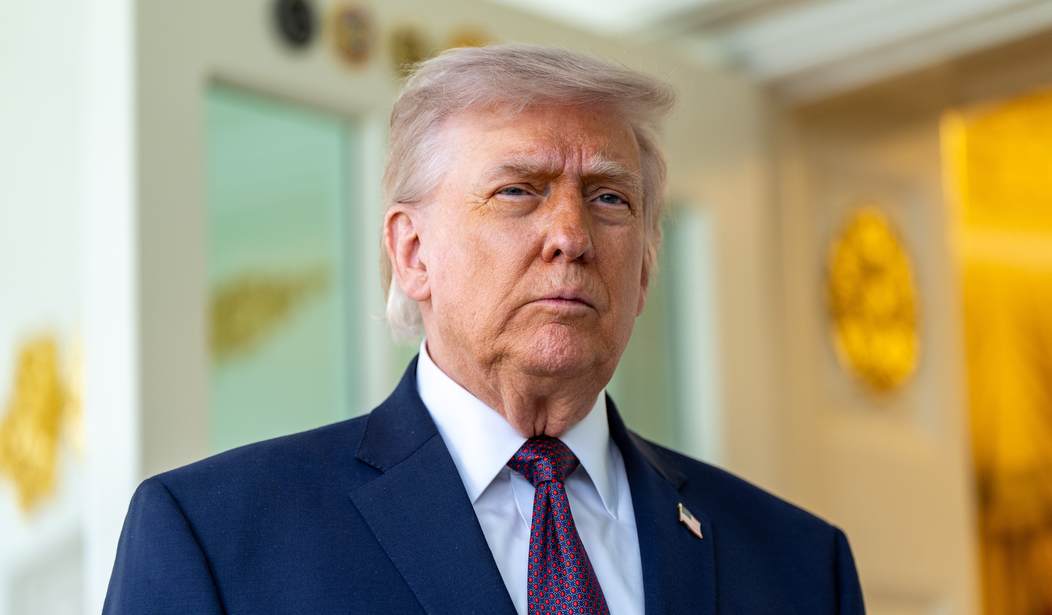
On Tuesday, President Donald Trump formally endorsed Texas Attorney General Ken Paxton in the Republican Senate primary runoff, passing over incumbent Sen. John Cornyn. Several Republicans have expressed disappointment and anger over Cornyn being passed over. But there’s a lesson for the GOP to learn here, and they really need to learn it fast.
“Ken Paxton has gone through a lot, in many cases, very unfairly, but he is a Fighter, and knows how to WIN. Our Country needs Fighters, and also Loyalty to the Cause of Greatness. We can never allow what happened to the United States of America during the Corrupt Biden Administration, to happen again,” Trump wrote.
While Trump is never one to avoid speaking ill of those he feels have wronged him, he was actually quite cordial toward Cornyn. "He is a very good man, and I have worked well with him," Trump said. Just days earlier, Sen. Bill Cassidy, who voted to convict Trump in his second impeachment trial, finished a distant third in Louisiana's GOP primary, effectively ending his Senate career in January. Trump was far less gracious toward him.
ICYMI: Democrats Might Want to Press the Panic Button Over the Midterms Now
“I have worked closely with President Trump through both of his Presidential terms and voted with him more than 99% of the time,” Cornyn said in response to Trump’s endorsement of Paxton. “He has consistently called me a friend in this race. It is now time for Texas Republican voters to decide if they want a strong nominee to help our GOP candidates down ballot and defeat Talarico in November, or a weak nominee who jeopardizes everything we care about. I trust the Republican voters of Texas.”
Several Republicans expressed surprise, having assumed Trump would fall in line behind Cornyn, a 22-year Senate veteran and the unanimous choice of Republican leadership. Senate Majority Leader John Thune and NRSC Chair Tim Scott had both endorsed Cornyn last year. Thune personally lobbied Trump to back his colleague, emphasizing the stakes in the general election. Clearly, it didn’t work.
Sen. Susan Collins said she was "disappointed" and declared Cornyn "an outstanding senator" who "deserved … the president's support." Sen. Lisa Murkowski struck a more alarmed note, saying the Republican Senate majority is now in "jeopardy." They may not be the best messengers, however. In any case, Thune, ever the institutionalist, told reporters he cannot control the president's actions but insisted "one state doesn't determine the outcome of this election,” adding, "I feel very good about where we are."
Political scientist Jon Taylor of the University of Texas at San Antonio had a different take. He said it "makes you wonder how long Thune is going to be the majority leader." Taylor argued the decision boils down to something simpler than strategy: "Trump viewed John Cornyn as not being loyal enough … and he views Paxton as 100 percent loyal."
Earlier this year, Trump was reportedly going to endorse Cornyn, but instead held off on his endorsement, tying it to the fate of the SAVE America Act.
However, the SAVE America Act still hasn’t passed. Republicans have neither nuked the filibuster nor enforced a talking filibuster to make it happen, and Trump's patience ran out.
Cornyn is not without a defense here. He isn't the Senate majority leader, and he did support the bill and was the former Republican whip. The problem is that the majority is supposed to govern. Cornyn, as one of the Senate's most senior Republicans and a longtime institutional fixture, made an easy symbolic target. When Trump looks at a stalled agenda, he doesn't see procedural nuance.
Cornyn may have been a reliable vote, but establishment Republicans have left the SAVE America Act sitting idle in the Senate. Cornyn got caught holding the institutional bag. Paxton, whatever his liabilities, doesn't carry that weight. In the end, Trump isn’t satisfied with a majority alone. He wants an effective majority. If you’re not able to pass something like the SAVE America Act, you’re not an effective majority.