


Democrats got handed a stinging rebuke in Virginia, and their response tells you everything you need to know about how they intend to operate when the rules don't go their way. What's unfolding right now isn't just a redistricting fight in one state — it's a window into a party that has decided the system exists to serve them, and when it doesn't, the system needs to go. And there's one obvious fix hiding in plain sight that Republicans need to push forward on.
Last week, the Virginia Supreme Court struck down the Democratic-engineered congressional redistricting plan in a 4-3 ruling, finding that Democrats violated the state constitution by placing a referendum on the ballot to give themselves a 10-to-1 advantage in the state's congressional delegation. Voters narrowly approved the measure in a special election, but the court found the effort was unconstitutional, invalidating the referendum and restoring the original, fair map.
It was a clean, principled ruling. Democrats' reaction was anything but.
On Saturday, House Minority Leader Hakeem Jeffries and Virginia Democratic House members held an emergency call during which, according to the New York Times, members "vented anger at their defeat at the Virginia Supreme Court." The mood on that call was described as one of "desperation and fury." That's not the reaction of a party that respects democratic institutions. But here’s where things got crazy. Among the options floated in that call was something lifted straight from a banana republic playbook:
One key to the plan would be having Democrats in Richmond lower the mandatory retirement age for state Supreme Court justices, an idea that began circulating among state lawmakers and members of Congress after a column proposing a version of the idea was published on Friday night in The Downballot, a progressive newsletter.
Ms. Spanberger would have to sign off on any legislation that lowered the judicial retirement age. She has not been briefed on the proposal, the people involved in the discussion or briefed on it said. Her spokeswoman, Libby Wiet, declined to comment.
Read that again. When the court rules against them, the plan is to get rid of the court. If that’s not banana republic insanity, I don’t know what is.
Yes, some Democrats pushed back on the idea. But the fact that it was seriously debated at a conference led by the House Minority Leader tells you something important: this is the ideological baseline they're working from. When the guardrails work against them, then nuke the guardrails. Winning is the only principle left.
The problem is that this isn't isolated to just Virginia.
Nationally, Democrats have been telegraphing for years that the moment they reclaim power, they intend to lock it in permanently. Universal mail-in voting, automatic voter registration, accepting ballots long after Election Day, giving felons the right to vote, and, of course, abolishing the Electoral College. All of this is designed to tilt the playing field so far left that they never have to worry about losing again.
Related: The Democrats’ Unhinged Response to the Virginia Ruling Tells You Everything
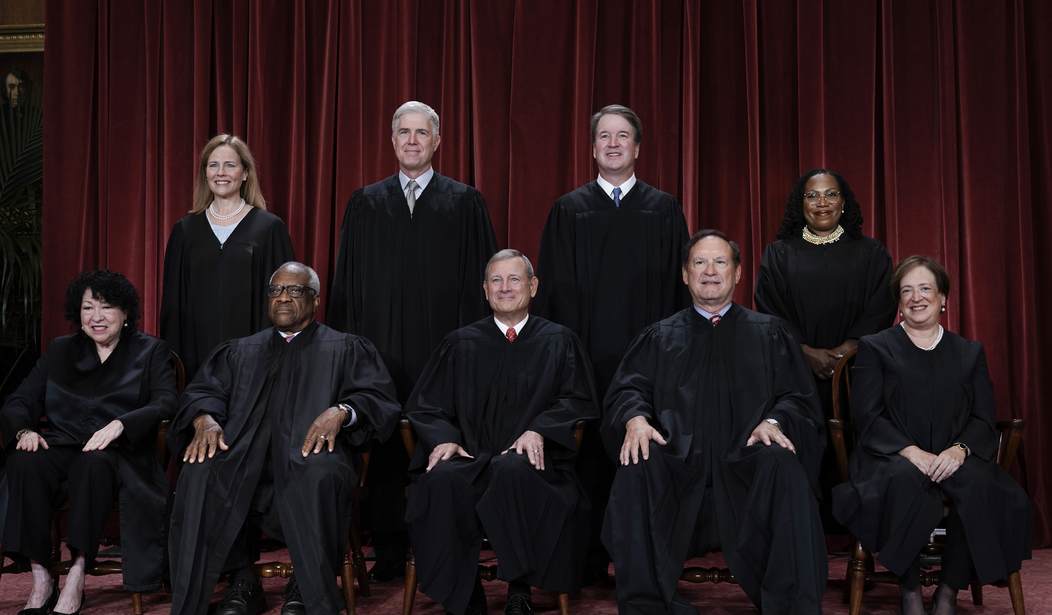
But there’s also the Supreme Court. When the court rules in a way they don’t like, they demand "judicial reform," which really means they want to pack the court with far-left justices.
This isn’t speculation. In 2022, Joe Biden was openly considering the idea, so it’s no coincidence that House Democrats blocked a Republican measure that would have capped the court at nine justices.
Even Ruth Bader Ginsburg saw through this. "I have heard that there are some people on the Democratic side who would like to increase the number of judges," Ginsburg said in 2019. "I think that was a bad idea when President Franklin Delano Roosevelt tried to pack the court." If the progressive icon of the left thought it was a bad idea, there's no principled defense of doing it now. But principle isn't what's driving this.
The Virginia situation isn't an isolated tantrum. It's a preview. Democrats have made clear they believe the ends justify whatever means are available. The only question is whether Republicans will act while they have the chance, or wait until it's too late to stop them.