


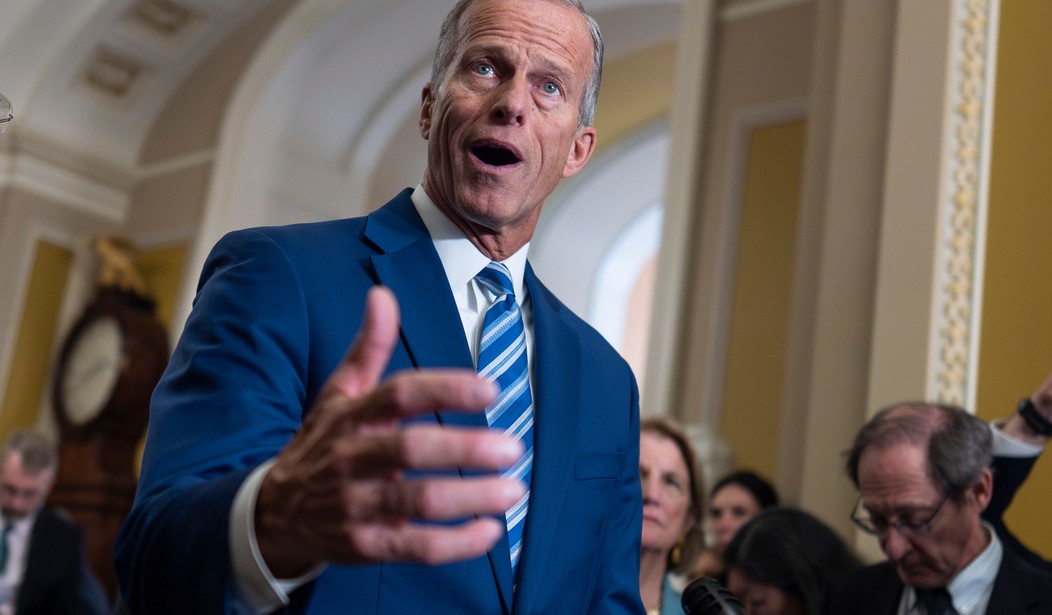
Everyone assumes 2026 is a blue wave in the making. The prediction markets say it. The polls kind of say it. And Democrats are already daydreaming about impeachment. But new exclusive polling from the National Republican Senatorial Committee tells a very different story — one that suggests Republicans have a real shot at holding their Senate majority heading into November. So what's the strategy, and can they actually execute it before it's too late?
The stakes are not small. If Democrats flip the House and the Senate, Republicans lose everything — not just their legislative agenda, but the confirmation pipeline for judges and whatever remaining guardrails exist on a full-scale Trump impeachment circus. And then there’s the possibility of Supreme Court vacancies. If we keep the Senate, we can confirm any of Trump’s picks.
The NRSC knows this, and apparently, they have a plan.
The committee shared exclusive polling with our sister site Townhall, which maps out a viable path to rebuilding the coalition that delivered President Trump's 2024 victory. It comes down to two voter groups: swing voters and infrequent Trump voters, who tend to stay home in off-year elections. Hold those voters, and the Senate stays red.
ICYMI: Will the Swalwell Scandal Take Down a Democrat U.S. Senator, Too?
“That polling shows the cost of living is the overwhelming issue driving the midterms, with 92 percent of swing voters and 85 percent of infrequent Trump voters concerned about it. Of the cost-of-living issues, three major areas stand out: prescription drug prices, housing costs, and Social Security taxes,” Townhall reports. “Majorities in both groups say they are more likely to support candidates who ‘crack down’ on Big Pharma to stop skyrocketing drug costs, prohibit investment firms and large corporations from purchasing residential housing and driving up costs, and eliminate taxes on Social Security.”
The top three flash points driving both groups are prescription drug prices, housing costs, and Social Security taxes. Majorities in each group favor candidates who crack down on Big Pharma, block investment firms from buying up residential housing, and eliminate taxes on Social Security. These aren't fringe positions. They're kitchen-table concerns that line up directly with what Republicans are already campaigning on.
Illegal immigration also factors in, but economically rather than culturally. Majorities in both voter groups oppose taxpayer-funded housing, medical care, and education for illegal immigrants. Pair that with soaring housing costs, and it’s clear which party has the winning message.
Trade education and skilled workforce development are also moving voters. Both groups want candidates who back plumbers, HVAC techs, carpenters, and electricians — and who fight to keep American jobs from being outsourced to China or replaced by AI. Voters even connect expanding the skilled trades workforce to lowering housing costs. That's a genuine 2-for-1, and smart campaigns are already exploiting it.
Republicans are pushing their "Working Families Tax Cut,” which would mean an extra $250 a month. This sounds great for many people who need extra money to make ends meet. The NRSC believes that 2026 won't turn on campaign slogans or culture war flashpoints. It'll hinge on whether voters believe they'll have more money in their wallets each month come November.
That’s all fine and good, but here's the honest problem with all of it. The conflict in Iran needs to end, and gas prices need to fall. An extra $250 a month is a compelling pitch right up until voters realize it's mostly covering what they're already bleeding at the pump. The message is solid. The real-world conditions just have to catch up. If they don’t, it won’t work.