


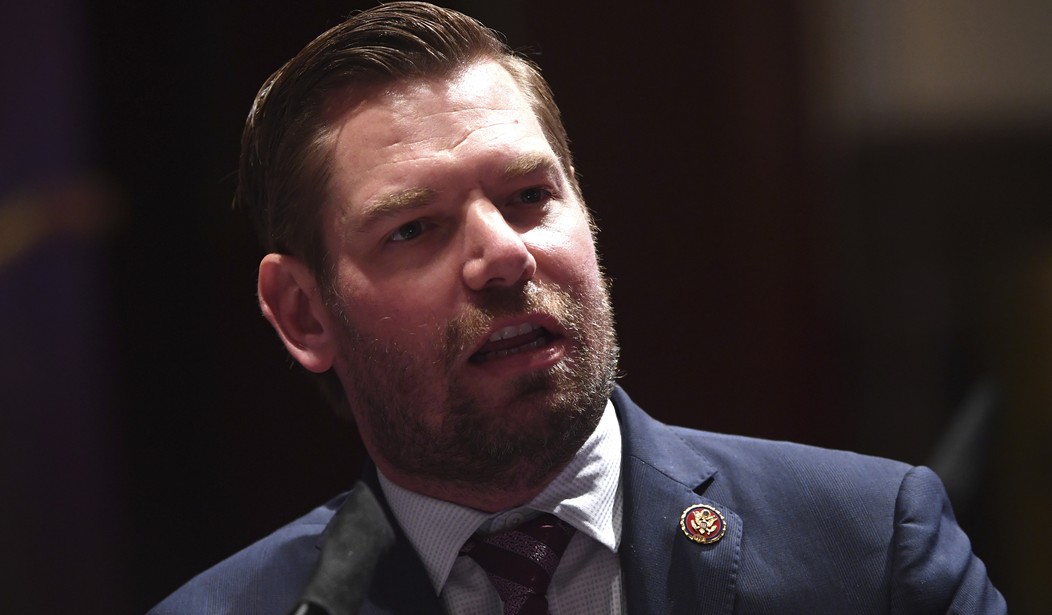
Let’s just settle one thing before I go on: Democrats didn’t throw Rep. Eric Swalwell under the bus on principle. Forget all the rhetoric about “believing women” and all that stuff. It was not a moral decision; it was a political one. Look, Democrats hardly ever turn on one of their own. They will go down with the ship more often than not. So, when they do turn on their own, it’s worth looking at the reasons behind the decision. And the reasons here are quite clear.
Make no mistake about it: what happened to Eric Swalwell in just 48 hours was remarkable. The allegations of sexual misconduct dropped on Friday, and he dropped out of the California governor's race on Sunday. He’d vowed to fight the “false” accusations, but even he saw the writing on the wall. He was finished.
Multiple women came forward with accounts of assault and inappropriate behavior, and those accusations were corroborated. Swalwell’s campaign staffers quit en masse, and endorsements evaporated. It was an epic implosion, made possible by the fact that neither the media nor the Democratic Party attempted to defend him.
As I said, Democrats don't typically devour their own. The party's default posture when one of its members faces serious allegations is to stall, deflect, and wait for the news cycle to move on. The speed and unanimity of the Democratic establishment's response to Swalwell were striking.
So why did the whole machine mobilize so fast?
California's jungle primary is why.
Under the state's top-two system, the two candidates with the most votes advance to the general election regardless of party. Democrats had so many candidates crammed into the race that it was fracturing the liberal vote, while Republicans Steve Hilton and Chad Bianco consolidated theirs. Multiple polls showed Hilton and Bianco leading, and the DNC had been quietly pushing lesser-known candidates to drop out and consolidate support. Swalwell, despite his reputation for being a sleazebag — more on that later — had name recognition and was the Democratic frontrunner. He wasn't going anywhere on his own — until the allegations dropped and the party had its opening.
If he stayed in, Democrats faced two ugly scenarios. First, the possibility that two Republicans would advance to the general election, or that Hilton, the Republican frontrunner, and a federally investigated Swalwell would share the general election ballot. Neither was survivable. With him out, the Democratic vote has a real shot at consolidating around a stronger candidate before the primary.
ICYMI: The Biden Admin Knew of COVID Vaccine Stroke Risk and Covered It Up
I’ve said before, but this situation mirrors the way Democrats ousted Joe Biden back in 2024. And it’s true. After the June 2024 presidential debate against President Donald Trump, the fiction that Biden was cognitively capable collapsed, and Democrats knew Trump would win in a landslide if Biden stayed in. So they forced him out in an attempt to salvage the election. And then Trump won in a landslide anyway.
Democrats had been managing the problem for years, keeping the lid on and running interference for as long as they could. Once Biden became a liability they could no longer control, they pushed him out before it was too late.
Swalwell's exit followed the same playbook. The allegations were very serious, detailed, and corroborated, which made him electoral poison. So, keeping him in the race threatened the party's shot at winning an election. This wasn’t accountability; it was political maneuvering, plain and simple.