


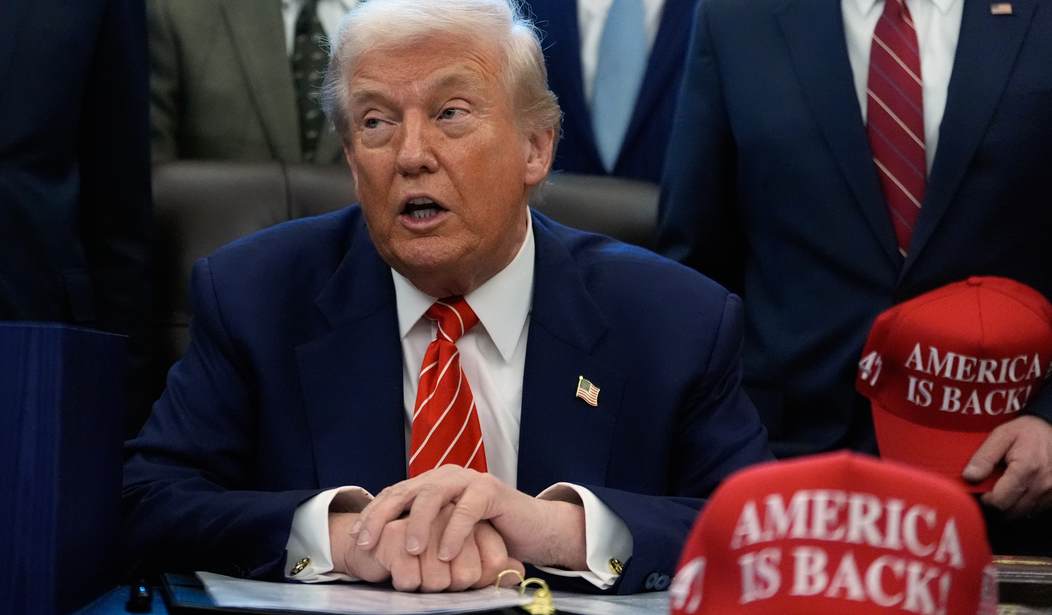
President Donald Trump sat down with Tom Llamas on NBC Nightly News to talk about immigration enforcement, crime, and what he sees as a new approach to helping American cities. Llamas asked whether there was “a shift in immigration enforcement” under his administration, specifically after events in Minneapolis. Trump’s answer made it clear that he wants a system in which the federal government steps in only when invited.
“Well, one thing I say to my people,” Trump began. “You know, we do a good job, we don’t get credit for it. I say they have to ask, and they have to say please.”
When Llamas asked who would ask, Trump clarified, “The mayor or the governor. I don’t wanna go and force ourselves into a city, even if their numbers are terrible.”
That line captured his view in a nutshell: local officials should take responsibility first. Trump offered an example from Louisiana. “I got a call from Jeff Landry, governor of Louisiana. He said, ‘We have a big problem. Could you go in and help us with—well, let’s see, certain sections, I mean, to be honest with you.’” Trump emphasized he was invited in, saying, “Beyond their famous, beautiful city, certain sections of the state. We have done—not only in New Orleans. We’ve done a really great job in Louisiana. But I was called. I wanna be called.”
ICYMI: Democrats Just Gave Away the Real Reason They’re Fighting Immigration Enforcement
He pivoted quickly to Chicago, a city that has long been a favorite Trump target. “Chicago, we could solve the Chicago crime,” he told Llamas. When pressed about which cities might be next, Trump said, “We have five cities that we’re looking at very strongly. But we wanna be invited.” He described how sometimes his team would “call the governors and say, ‘Are you going to…’” before trailing off into his usual refrain about wanting to help—but on local officials’ terms.
Llamas pushed him for names. “Are they cities like Chicago—Philadelphia?” Trump replied confidently, “We would—we could straighten out the crime in Chicago. We’ve already brought it down 25% just by being there.” He continued, “We could have Chicago be a safe city just like D.C. is a safe city. Just like all of these places that we’ve gone to. And I look forward—you know, I didn’t campaign on that. I campaigned on law and order, but I didn’t think I’d be going into individual cities and making ‘em safe.”
NOW - Trump says he is adjusting his mass deportations policy to only go into cities if the mayors or governors "ask" and "say please," adding, "I don't want to go and force ourselves into a city, even if their numbers are terrible." pic.twitter.com/xji3FfEl42
— Disclose.tv (@disclosetv) February 5, 2026
The idea is straightforward: federal help comes when cities ask for it. Trump frames it as restraint and respect, a way to enforce accountability while still taking credit for the results. This is an interesting twist.
But is this a sustainable approach? I’m torn. On one hand, if blue cities and states want to live in the chaos they’ve created, that’s on them—they can lie in the bed they’ve made and decide if it’s really what they want. I guess you can say that’s democracy in action. On the other hand, if you care about law and order, letting crime fester until someone says “please” feels reckless. Trump’s new strategy, at the very least, satisfies a short-term public relations problem, and maybe that will be enough. At some point, things will be bad enough that, in theory, even the bluest of cities will realize they messed up.
Hopefully.