I don’t believe politics is capable of producing moral purity. At best, it can limit damage. When faced with genuinely tragic choices where every available option entails injustice, I default to a kind of moral Occam’s Razor, what I call the Rule of Least Harm: prefer the path that minimizes irreversible harm. This is not a formula, and it offers no guarantee of righteousness. It is a concession to human fallibility, not a claim of moral authority and certainly not of perfect wisdom. A world that demands perfect justice from its institutions will always end up licensing cruelty in the name of progress.
Human beings are fallen, and so are the civilizations they build. Perfect fairness is no more achievable at scale than moral purity is in a single soul. The machinery may be larger and the language more refined, but the raw materials are the same: limited knowledge, mixed motives, and power that almost always outrun wisdom. Expecting flawless justice from such materials is not hope. It is a category error.
This is why political decisions so often feel unsatisfying, even when they are necessary. In a broken world, governance does not present clean moral options. It presents collisions between goods that cannot all be preserved and duties that cannot all be fulfilled. And simply refusing to choose does not avoid harm; rather, it obscures responsibility.
Definitions
By harm, I mean something narrower than the word is often allowed to mean today. Harm is death. It is permanent bodily damage. It is the irreversible loss of agency or future possibility. Harm is what cannot be undone, repaired, or meaningfully compensated for over time.
Least does not imply precision or certainty. It is comparative and situational, judged with incomplete knowledge and under constraint. It does not promise the best outcome, only a less destructive one. This is not moral confidence. It is moral humility.
Irreversible does the most work. The more permanent an outcome, the stronger the burden required to justify it. Temporary suffering, however serious, still leaves room for recovery, repentance, and grace. Irreversible harm closes those doors entirely. Once inflicted, it cannot be recalled, only mourned.
This principle applies only in moments of genuine tragedy, where no outcome is innocent. It is not a demand to act, and often, restraint itself is the least harmful choice. It does not tell us what is good. It helps us recognize what is catastrophic and hesitate before choosing it.
Judging Harm Under Uncertainty
In the cases where the rule of least harm matters most, the facts themselves are often disputed. We are not choosing between clear goods and evils, but between competing assumptions about reality. In those moments, the question is not only what we believe, but what follows if we are wrong.
To implement the rule in this case, we have to ask twice. We ask what harm results if the first assumption is correct, and then what harm results if the competing assumption is correct. This does not settle disagreement. It clarifies risk. Some errors can be endured. Others cannot be undone.
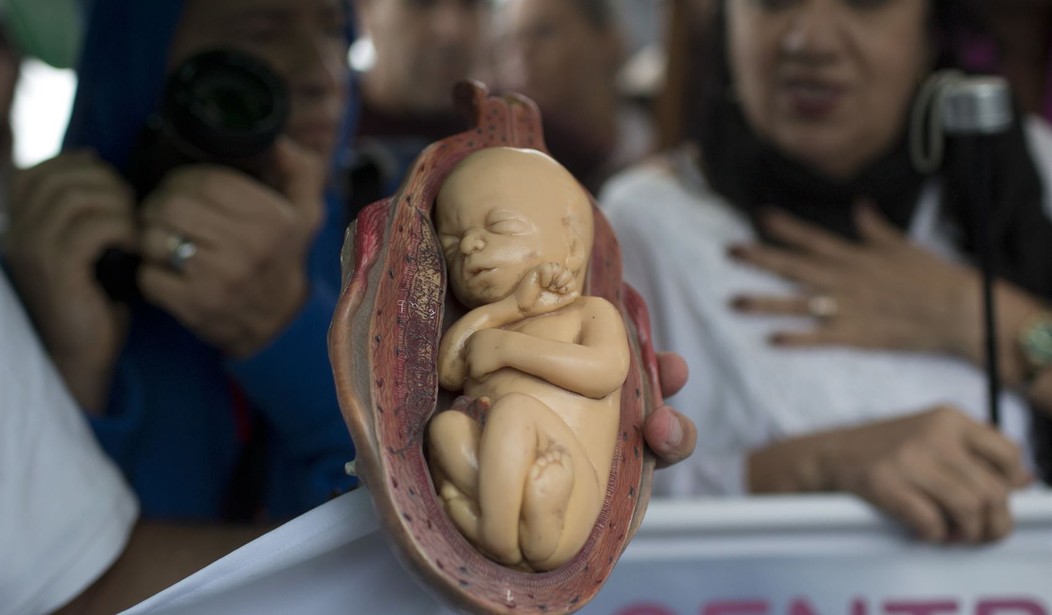
Abortion makes the asymmetry visible. If the fetus is a full human being, abortion ends an innocent life. That harm is total and irreversible. If the fetus is not a full human being, requiring pregnancy to continue imposes a grave burden, but not annihilation. One mistaken assumption forecloses every future possibility. The other does not. Under uncertainty, that difference matters.
Other Tragic Choices in Practice
Consider the state’s role in family life. Parents make imperfect decisions. Some cause serious harm. Most do not. Most cause something less: missed opportunities, emotional pain, outcomes that fall short of ideal. If the state intervenes whenever parenting is imperfect, it replaces one flaw with another or several others: bureaucratic authority, broken bonds, and damage that cannot easily be repaired. Here again, irreversibility is the line. Intervention is justified when a child’s future agency is at serious risk of being permanently destroyed, not when it is merely being shaped imperfectly.
The same logic applies to criminal justice. Punishment is necessary. A society that refuses to restrain violence will not remain a society for long. But punishment that permanently eliminates the possibility of restoration when lesser measures would suffice creates new harms without undoing the old ones. A system that treats every failure as final may feel morally clear, but it does so by destroying futures it cannot replace.
Modern moral politics rejects this posture. It insists that injustice is not tragic but fixable, that the right system can eliminate unfairness rather than merely constrain it. In doing so, it trades humility for certainty and restraint for urgency. Harm is redefined broadly, permanence is discounted, and coercion is justified as compassion.
That cruelty is usually not malicious. It is procedural. Systems built to enforce moral outcomes have no mechanism for forgiveness, only compliance. They judge without restoring and punish without concluding. Once moral purity becomes the goal, permanent damage becomes acceptable collateral.
Grace as the Counterweight
Grace stands in quiet opposition to this entire project.
Grace begins with the admission that moral purity cannot be produced by laws, systems, or force of will. It does not deny sin or wrongdoing. It names them plainly. But it also refuses the idea that failure must be final. Where politics can only prohibit or punish, grace forgives. Where institutions can regulate behavior, grace restores persons.
This is why grace and restraint belong together. A world that leaves room for grace must also leave room for imperfection, recovery, and mercy. It cannot demand flawless outcomes without erasing the possibility of redemption. Least-harm reasoning creates that space by limiting how much damage we permit ourselves to do when acting in the name of justice.
The state cannot redeem. It can only arbitrate. Grace does what politics cannot: it heals without pretending the wound never existed. And it allows space for you to admit you did your best, even when you fail.
None of this resolves tragedy. It was never meant to. A broken world does not offer clean moral exits, only narrower paths through which we try to pass without destroying more than we must. The rule of least harm does not make us righteous. It reminds us that our power is limited, our knowledge partial, and our responsibility real.
In a world that cannot be made fair, wisdom lies not in demanding purity but in refusing to make things worse while insisting that even the broken are not beyond redemption.