
Predicting the future ain’t our thing. That goes double for our own inventions, and triple for the people who build them. The engineers who strung together ARPANET wanted university researchers to share scarce computer time. Nobody in that room pictured a teenager in Ohio doom-scrolling at 2 a.m., or a foreign troll farm stirring up an American election. Henry Ford set out to put a car in every working man’s driveway, and he got that. He also got suburbs, strip malls, drive-thru divorce lawyers, and the slow death of Main Street, none of which appeared in any Model T sales brochure.
The builder knows every bolt in the machine, and that’s exactly what blinds him. He judges his creation by what he meant it to do, while the rest of us find out what it actually does. Every Silicon Valley wunderkind who swears he can see exactly where artificial intelligence takes us should keep that in mind, because the man holding the blueprint has never been the one who decides what gets built on it.
The public did what the public always does. It ignored the instruction manual and the people screaming "RTFM." (I'll let some of you guess what RTFM stands for).
Ed Driscoll over at Instapundit offers a decent example:
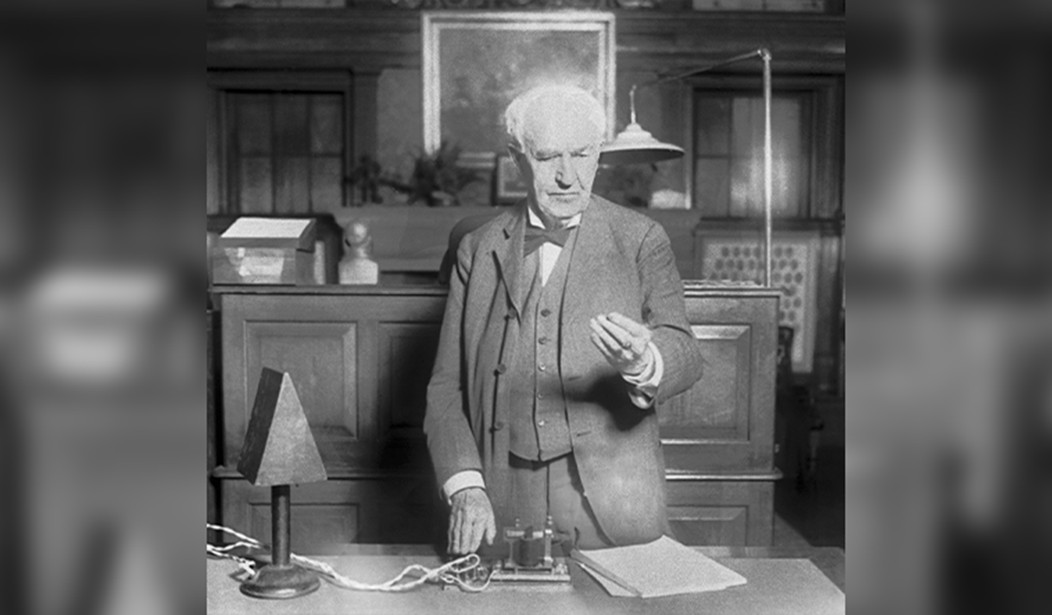
THE PEOPLE WHO INVENTED AI ARE THE WORST PEOPLE TO ASK ABOUT ITS FUTURE: “Edison invented the phonograph in 1877. To him, [Marc] Andreessen says, the use was obvious. Every family would buy a record player and a library of discs with sermons from the great preachers of the time. Then the machine went on sale. ‘Immediately, of course, it’s music. It’s ragtime, and swing, then it’s jazz. And Edison’s just completely horrified.’ ‘If Edison didn’t know what the phonograph was going to get used for, the idea that Joe AI entrepreneur is going to be able to forecast the economic implications… No. That’s not going to happen.’”
Andreessen has it right, and the paper trail backs him up. In June 1878, Edison wrote a piece for the North American Review called “The Phonograph and Its Future,” where he listed what he thought the machine was for. Dictation came first. Next came talking books for the blind, and then elocution lessons. Music showed up at No. 4, behind the business memo. Ten years later, Edison was still pitching it as an office machine and insisting it was “not a toy.” By 1891, meanwhile, about 1,000 coin-operated phonographs were playing tunes in arcades for anyone with a nickel.
I said as much in the comments over there, and the example that came to mind was sitting right in front of me, because I happened to be listening to the great jazz organist Jimmy Smith at the time.
Laurens Hammond built his organ for churches and concert halls. It was a pipe organ substitute for congregations that couldn’t afford pipes. It was respectable, sensible, and Sunday-morning.
Then along came Don Leslie and his rotating speaker cabinet, which used the Doppler effect to make the Hammond growl, swirl, and breathe. Hammond hated it. He declined to market it when Leslie demonstrated it in 1940, and according to one account, he had his engineers change the organ’s connectors so they wouldn’t fit a Leslie. One Hammond veteran recalls that in Laurens’ day, a dealer who sold Hammonds couldn’t sell Leslies. The old man considered the key click a flaw. Today, players pay good money for that click.
He lost anyway. The Hammond-and-Leslie combo became the sound of jazz, then soul, then rock and roll. Jimmy Smith, Booker T., Jon Lord, Gregg Allman, and every bar band with a strong back and a pickup truck. Hammond had built a church organ. The world turned it into a roadhouse blaster and a back breaker. I helped lift a few of those things from the truck to the stage back in the day, and lemme tell ya, my back still hasn't forgiven me.
I’ve got a little standing to talk about this bit with Edison's invention, too. I spent years in radio and running a mobile DJ rig, which makes me a direct beneficiary of the phonograph being used for exactly what Edison didn’t want. There’s a whole industry, and a fair chunk of my résumé, that wouldn’t exist if America had only played sermons on the thing.
Then there’s the computer. Most of us have heard that IBM’s Thomas Watson supposedly said in 1943 that there was “a world market for maybe five computers.” The best part? He probably never said it. Researchers have found no record of it before a 1981 book of misguided predictions. The likeliest source is a 1953 stockholders’ meeting where Watson’s son reported that IBM had toured its new 701 to roughly 20 companies, expected five orders, and came home with 18.
So the most famous bad prediction in computing history is itself a bad prediction about what someone predicted. (Did you get all that?)
The real story makes the point better than the myth does. IBM’s own salesmen undercounted their market by more than threefold, for a machine they had designed, sold to customers they had picked themselves. They also had no idea that 30 years later, the descendants of that room-sized monster would sit on kitchen tables doing taxes and running GTA. I spent a good stretch of my working life as a network administrator, wrangling the grandchildren of those machines. Nobody in 1953 saw me coming, either. Probably just as well.
That brings us back to AI, and to the cottage industry of people who will tell you exactly what it will do to the economy, the job market, and civilization by 2030. Some of them built the stuff. Some of them want to regulate it. Both groups share a confidence that history doesn’t support.
Friedrich Hayek called this the pretense of knowledge in his 1974 Nobel lecture: the belief that experts can gather enough information to steer a complex system from the top. (Which, I note with interest, goes directly to my ranting about central planning and power the other day).
The phonograph, the Hammond, and the computer all argue the same thing: The real uses of an invention get discovered from the bottom up, by millions of people who never read the inventor’s memo and wouldn’t have cared if they had. A ragtime piano player in 1900 knew more about the phonograph’s future than Edison did. A Hammond dealer slipping a Leslie out the back door knew more than Laurens Hammond.
Which is why anyone writing AI rules today based on what they’re sure it will become ought to read Edison’s 1878 list first. He was undeniably a genius, and he still put music at No. 4.
It doesn’t stop with machines, either. You never know where anything you set loose in the world will end up, and that includes people. The kid you mentor, coach, or teach is an invention of sorts, and he won’t follow your instruction manual any better than ragtime followed Edison’s. To this day, I can’t imagine the look on my high school English teacher’s face if she’d been told that the kid in the back row would end up making a living, more or less, as a writer.
Some of you will say she’d have reacted the way Laurens Hammond did to the Leslie. Fair enough. But you know what? The Leslie still won.
I am reminded of General Patton: “Never tell people how to do things. Tell them what to do and they will surprise you with their ingenuity.” (From War as I Knew It.)
In the above cases, people figured out how to do things, despite being told how to do it. Bottom up, not top down.
Also for our VIPs: Two Meltdowns, One Lesson: Centralization Fails All at Once