A bit of warning: This column is more analysis than my usual snark.
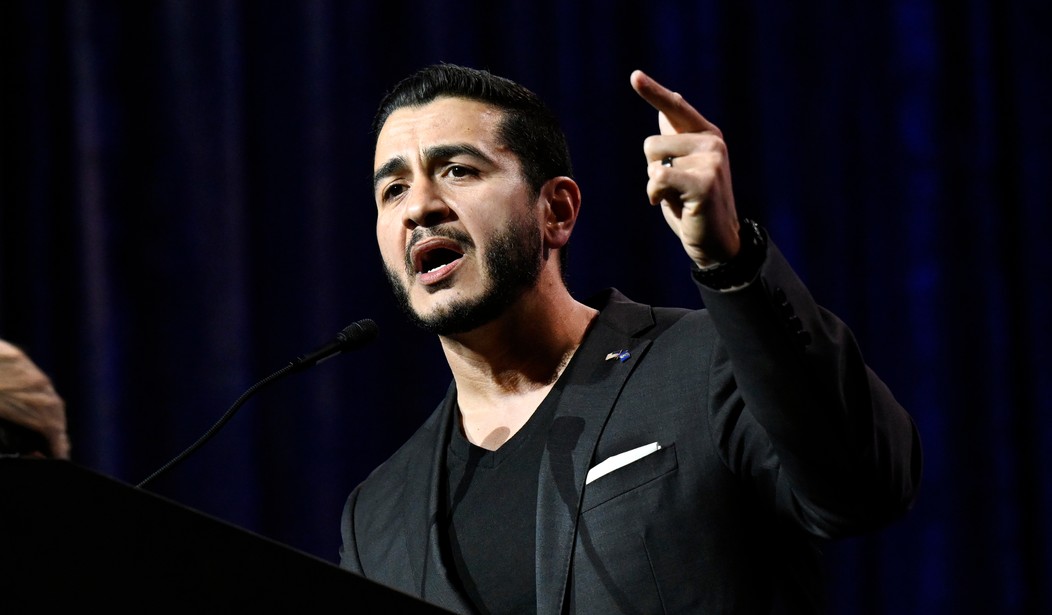
Like every Democrat in the last 100 years, Abdul El Sayed’s campaign would have you believe that his is a grassroots campaign. Thing is. Federal Election Commission filings tell a considerably more complicated story than the phrase "grassroots-funded" would suggest.
The FEC's own numbers, covering Jan. 1, 2025, through July 15, 2026, show El-Sayed's campaign reported $14,514,335.93 in total receipts. Of that, $14,408,058.06 — about 99.3% — is classified as individual contributions, according to the FEC's own candidate summary. No candidate money, no party committee money, no campaign loans anywhere in that total.
At first glance, that reads like the financial profile of a quintessential grassroots campaign, doesn’t it? But what many miss is that there's an important distinction between "individual contributions" and "small-dollar contributions." They aren't the same thing.
Individual money doesn't necessarily mean little money, and in this case it certainly doesn’t.
The FEC categorizes contributions from individuals, but once a donor's giving to a committee exceeds $200, those contributions are generally itemized, and the donor is disclosed. The FEC's database lets those contributions be examined by amount, state, employer, occupation, and more — and that distinction matters here.
Of the campaign's roughly $14.4 million in individual contributions, approximately $10.27 million was itemized, meaning large enough to require disclosure. Another $4.14 million came in unitemized. Broken out by size:
Contribution size | Amount | Share of individual contributions |
|---|---|---|
$200 or less | ~$4.14 million | 28.8% |
$200.01–$499 | ~$771,538 | 5.4% |
$500–$999 | ~$1.295 million | 9.0% |
$1,000–$1,999 | ~$2.020 million | 14.0% |
$2,000 or more | ~$5.214 million | 36.2% |
Total individual contributions | $14.408 million | 100% |
The last line is the one that matters most. More than $5.2 million came from contributions of $2,000 or more. Add the roughly $3.31 million raised in the $500-to-$1,999 range, and you're looking at approximately $8.5 million from contributions of $500 or more — roughly 59% of all individual giving.
There's nothing illegal, unusual, or inherently improper about raising money that way. A donor is a donor whether they send $25 or $2,900. But it puts real question marks around the word "grassroots." A campaign built on millions of $20 and $50 checks is a fundamentally different fundraising model than one built on people writing four-figure checks, and El-Sayed's fundraising deserves to be described by what the records actually show, not by the political branding they’ve attempted to attach to it.
And then there's the geography.
Among the itemized contributions, Michigan accounts for only about $3.29 million. California contributed roughly $1.78 million, New York about $719,000, Texas roughly $699,000, Illinois approximately $635,000, and New Jersey about $380,000. Michigan represents only about 32% of the itemized individual money — meaning roughly two-thirds of the disclosed individual contributions came from somewhere other than the state El-Sayed wants to represent in the U.S. Senate.
Again, nothing inherently improper there. Senate candidates routinely raise money nationally, particularly candidates whose profiles draw attention beyond their home states. But it's a legitimate question for Michigan voters to ask: who's financing this campaign, and why are so many of those people somewhere else?
The campaign's own receipts aren't the whole story, either. Money raised directly by El-Sayed's campaign is only part of the picture. Independent groups can spend money supporting or opposing candidates without that spending ever showing up on the candidate's own receipts report. One pro-El-Sayed super PAC, Fighting for Michigan PAC, has drawn substantial support from El-Sayed's own family: his father-in-law, Tayeb Jukaku, contributed $300,000 to the PAC in three separate $100,000 checks, according to federal campaign-finance records reported by the Washington Free Beacon.
That's relevant context precisely because El-Sayed has made opposition to big money in politics central to his political message. A super PAC supporting a candidate doesn't make that candidate legally responsible for everything the PAC does — they're separate entities under the law — but politically, the source of that money is fair game for scrutiny.
And now, let’s talk about the Barakat connection because it certainly deserves some scrutiny. This is where the campaign-finance story gets genuinely interesting.
Jewish Insider examined FEC records and reported that El-Sayed received $33,550 from members of the Barakat family, a Palestinian-American real-estate family based in Southern California. One member, Amani Barakat, personally contributed $7,000. Barakat chairs Al-Awda–Palestinian Right to Return Coalition, an organization whose statements have generated substantial controversy — Jewish Insider reported that Barakat promoted conspiracy theories linking Jews to the Illuminati and shared material celebrating the Oct. 7, 2023, attacks, including the line "when people are occupied, resistance is justified." Those are characterizations that belong to Jewish Insider's reporting, not an independent finding of this column's own.
Here's the part that's considerably more concrete: while El-Sayed's campaign was receiving money from Barakat family members, the campaign was also paying a company belonging to Amani Barakat's son, Jamal Barakat. According to Jewish Insider, El-Sayed's campaign paid at least $40,000 since December 2025 to The Commonwealth Project, a consulting firm formed in Wyoming in November 2025 — a firm Jamal Barakat co-founded with John R. Hall, with Barakat separately serving as an executive at Bayan Islamic Graduate School.
That doesn't prove wrongdoing, but it does establish a financial relationship worth scrutinizing: Money went into the campaign from members of one family, and money then went back out of the campaign to a company belonging to a member of the same family. That's not a conclusion. It's a paper trail — and paper trails are exactly what campaign-finance reporting exists to produce. That’s a huge red flag. It's the kind of arrangement campaign-finance investigators look at closely when they're checking for improper fund routing. If Donald Trump were doing anything of the like, the screaming would be loud enough to cause premature deafness. As it is, I doubt El Sayed will face any legal reckoning over it.
The Barakat family isn't the only connection worth examining. A review of FEC records reported by Fox News found El-Sayed's campaign had received more than $115,000 from at least 41 people who work for, previously worked for, or held leadership positions with the Council on American-Islamic Relations (CAIR) — including senior CAIR figures and El-Sayed's own father-in-law, Tayeb Jukaku. A later, updated review reported a figure closer to $129,693.
The distinction matters too: These were contributions from individuals affiliated with CAIR, not a six-figure check from CAIR itself, and accepting a donation from someone tied to an advocacy organization isn't, by itself, evidence of wrongdoing. But when a candidate builds his campaign around arguments about money and political influence, the identities and affiliations of the people providing that money become fair subjects for public examination — particularly when one of those donors is the candidate's own father-in-law, who separately supplied hundreds of thousands of dollars to a super PAC backing him.
This is another spot where precision matters. CAIR has not been designated a Foreign Terrorist Organization by the U.S. government. Yet.
There have, however, been repeated efforts to get one. Rep. Randy Fine introduced H.R. 4097, the "Designate CAIR as a Terrorist Organization Act," in June 2025, which would direct the Secretary of State to review whether CAIR meets the statutory criteria for FTO designation; it was referred to the House Judiciary Committee. And on Sept. 16, 2026, Sen. Ted Cruz raised the issue directly with FBI Director Kash Patel at a Senate Judiciary Committee hearing — Patel, per Jewish Insider, said the FBI was "taking a very hard look" at organizations with documented ties to terrorist financing.
Those are real, documented political and governmental actions. They are not the same thing as CAIR having actually been designated a U.S. Foreign Terrorist Organization. It hasn't. That distinction matters, because once campaign-finance reporting gets tangled up with allegations of terrorism, sloppy wording obscures the facts instead of illuminating them.
So again, where is Abdul El-Sayed's money actually coming from?
The answer is more complicated than the campaign's "grassroots" branding suggests. The FEC says El-Sayed's campaign raised $14.51 million through July 15, 2026, with about $14.41 million coming from individuals — but "individual" doesn't mean "small-dollar." Roughly $8.5 million came from contributions of $500 or more, and more than $5.2 million came from contributions of $2,000 or more. Only about a third of the itemized money came from Michigan. There's also substantial outside spending, including a super PAC backed in part by a $300,000 contribution from El-Sayed's father-in-law. There's the Barakat family, which gave $33,550 to the campaign while a company belonging to one member's son collected at least $40,000 from that same campaign for consulting work. And there's the separate matter of more than $115,000 — later reported near $130,000 — in contributions from people affiliated with CAIR.
None of those facts, individually, proves illegal conduct, and none should be presented as though they do. But taken together, they describe something considerably more interesting (and frankly, suspicious) than a candidate powered exclusively by ordinary Michigan voters dropping $20 into a campaign account.
The real story is the network. Who gives the campaign money? Where do those donors live? How much do they give, and what organizations are they affiliated with? Who receives money from the campaign in return? Who funds the outside groups supporting the candidate? And, perhaps most importantly, do the financial relationships surrounding the campaign line up with the candidate's public political alliances and stated priorities? None of that requires speculation. The FEC has already laid the paper trail. And certainly his public statements are on record.
And here’s the thing: I write this column because I’ve not seen any of the mainstream media asking these questions, or digging into the numbers at anywhere near the depth. Doesn’t sell newspapers, I suppose.
And let’s remember Hassan Piker waiting in the wings, which in itself tells a tale of who supports El Sayed. When combined with the questions I’ve asked and the numbers I’ve shown you here, it places a serious question mark on the campaign, at least for most people outside Dearborn.