


Let's go back to a time before Orange Man Bad ever decided to run for president as a Republican, because that's where this whole story actually starts, and it's not where the mythology wants you to think it starts. The overt, institutional hatred aimed at Donald Trump that now defines American political life? It simply didn't exist before that point on the timeline. Not in any form worth taking seriously, anyway.
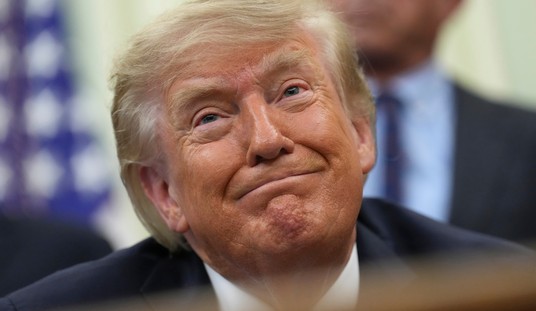
For roughly three decades, Trump was, by any honest accounting, one of the most cheerfully embraced figures in American pop culture. From the early '80s onward, he was a fixture of the New York media circus — tabloid fodder, sure, but also comfortably featured in "the tonier pages of Vanity Fair," according to Variety's 2016 retrospective. Then The Apprentice premiered in January 2004, and Trump's glow-up into a beloved national institution was complete. Wikipedia's entry on his public image describes him as "the epitome of entrepreneurial success and glamour." Time magazine named him Person of the Year — twice, once in 2016 and again in 2024. Say what you want about the man; the accolades didn't stop coming.
Academics have since confirmed just how much political juice that goofy reality show actually carried. A 2024 study in the American Political Science Review, covered by Penn's Annenberg Public Policy Center, found Trump's Apprentice persona measurably boosted his vote share in the 2016 primary — real, peer-reviewed proof that watching a guy fire people on television apparently makes you more likely to vote for him. Democracy, ladies and gentlemen.
Even NBC's own suits adored him. As late as 2015, network chairman Robert Greenblatt stood in front of television critics and gushed, "We were happy to have a show that was doing really well with a guy who was a big TV star," cheerfully insisting there was barely any connection between Trump's TV fame and his political ambitions. Adorable, in hindsight.
Now watch how fast that particular love affair curdled the instant it became inconvenient.
Trump announced his campaign as a Republican on June 16, 2015. Thirteen days — thirteen — is all it took for NBC to torch every single business relationship it had with him, canceling Celebrity Apprentice and dumping the Miss USA and Miss Universe pageants he co-owned. Sources who spoke to The Hollywood Reporter say the whiplash genuinely blindsided Trump himself — he apparently thought he could just keep hosting the show from the Oval Office once he won. That's not the reaction of a shrewd operator who saw the institutional guillotine coming. That's a man who spent thirty years being America's favorite loudmouth billionaire, genuinely stunned that declaring himself a Republican candidate flipped a switch that fast.
Thirteen days. Thirty years of prime-time adoration, gone before most people had finished their summer vacation plans.
Now, in the interest of not writing propaganda dressed up as a column, let's be fair: Trump wasn't a total stranger to elite mockery before 2015. Barack Obama famously roasted him alive over birtherism at the 2011 White House Correspondents' Dinner, and there was always a background hum of media snark about his hair, his ego, and his gaudy taste. Fine. That's real, and pretending otherwise would be dishonest.
Thing is, there's a Jerry Nadler-sized difference between a comedy roast poking fun at a celebrity's ego and the coordinated, wall-to-wall institutional excommunication that landed on him in under two weeks flat. One is mockery. The other is a corporate and cultural class collectively deciding, almost overnight, that a man they'd happily profited from for over a decade had suddenly become radioactive. Something flipped hard in June 2015, and it sure wasn't Donald Trump's personality — he was the exact same blowhard showman NBC had cashed enormous checks off of for years.
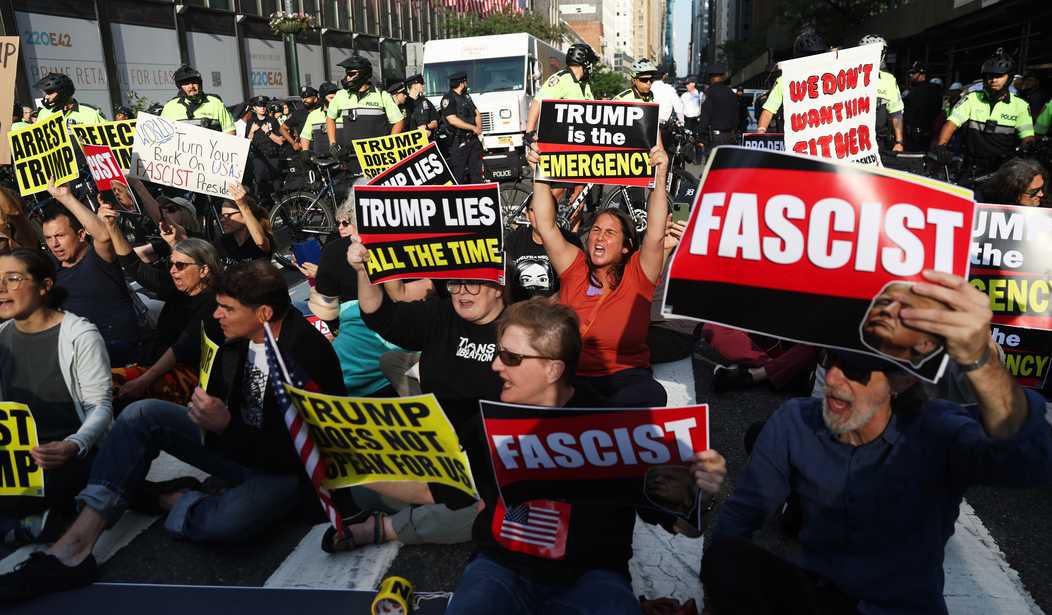
What changed is what he suddenly represented. The second Trump stopped being a harmless celebrity cosplaying as a business tycoon on basic cable and became the actual delivery vehicle for a specific political argument — real border enforcement, economic nationalism, open skepticism of the bipartisan foreign-policy blob, unapologetic contempt for the D.C. establishment's cushy little arrangements — the institutional class stopped seeing a man entirely. They saw a wrecking ball aimed squarely at the machine they'd spent decades building and feeding off of.
That's the actual answer, and it's the same answer this column keeps landing on no matter which target it's aimed at any particular week. It's why a Michigan Senate candidate keeps getting a pass from his party's leadership right up until his rhetoric gets too specific to hide behind talking points. It's why a WNBA rookie who doesn't fit the league's preferred cultural template becomes fair game despite single-handedly driving the entire league's commercial relevance. It's why a Canadian prime minister can build an entire political brand on "sovereignty" while quietly cracking Canada's uranium supply open for Beijing, and somehow catch less institutional heat for that than Trump catches for a single late-night tweet. Same pattern, every single time. The institutions never actually object to the person. The pattern becomes clear: They object to whatever that person threatens to knock loose.
Trump, specifically, and MAGA, in general, threatened the comfortable assumption that America's political, media, and corporate establishment gets to steer the country unbothered, regardless of which party's name happens to be on the White House lease that decade. That's not a character judgment. That's just an honest accounting of how fast, and how completely, the machine turned on him the instant he stopped being harmless entertainment and started looking like he might actually be able to take a wrench to it.
They didn't turn on Donald Trump in thirteen days. They turned on exactly what thirteen days told them he might be capable of doing to their whole arrangement — and they haven't stopped attacking him since.
Recommended: Renaming a Lake: A Surefire Way to Expose the Corrupt