



For the better part of 50 years, I've watched the Democratic Party drift further and further left. For most of that time, it's been genuinely hard to say with any precision where the line sits between mainstream Democratic politics, the Democratic Socialists of America, and outright Marxist communism. At this point, I've started questioning whether any real dividing line exists between them at all.
The focus of this column is going to be a little blurry, because the people we’re trying to define themselves tend to wander from one definition to another, as they see the need.
Lately, thanks to Alexandria Ocasio-Cortez, Bernie Sanders, and the rise of the DSA as a genuine electoral force rather than a college club with a Twitter account, that line has gotten blurrier still.
With the DSA now fielding winning candidates in major races, the question seems worth asking pointedly: Where exactly is the line between the American left and Marxism, and can we actually trust what these people tell us about which side of that line they're standing on?
The textbook version, for what it's worth
Let's start with the formal definitions, because precision matters even when it isn't as satisfying as a gut reaction. Skip this step, and every critic on the left will hammer you for refusing to "define your terms." Fair enough — though it's worth remembering the people who wrote most of those textbooks spent their careers steeped in the same academic left we're discussing, so treat the definitions as a starting point, not gospel. Still, you've got to go through the motions, so here goes.
Communism, in the Marxist-Leninist sense, means totally abolishing private ownership of the means of production and replacing it with single-party state control. Every single time it's actually been implemented — full stop, no exceptions — that arrangement gets enforced through a security apparatus that, to put it mildly, doesn't tolerate dissent. The results of that enforcement tend to resemble the more brutal strains of authoritarian rule the world already knows too well. What we see in Iran these days is a fair example.
Communism doesn't stop at economics, either. It carries Marx's own explicit call for wiping out the existing cultural values of whatever nation it infects. Don't take my word for it — take his. Straight from The Communist Manifesto (1848), Chapter 2:
Just as, to the bourgeois, the disappearance of class property is the disappearance of production itself, so the disappearance of class culture is to him identical with the disappearance of all culture. That culture, the loss of which he laments, is, for the enormous majority, a mere training to act as a machine.
Marx isn't denying that communism wipes out existing culture. He's conceding it outright and arguing the culture in question wasn't worth keeping anyway — just training for wage labor, in his telling. Want to see that theory put into practice? Look at Mao's Cultural Revolution. Look at what the Soviets did to the indigenous cultures scattered across their occupied territories. Both stand in direct opposition to an axiom I've quoted in this column before: Any government that wants to survive for long needs to understand its first duty is to defend, and if possible expand, the influence of the culture that gave it life.
Culture, as it turns out, proves far more resilient than any government sitting on top of it. Watch what happened the moment the Soviet Union collapsed — indigenous cultures across every one of its former territories sprang right back to life, like a lawn coming back after somebody finally turned off the herbicide. But every brand of socialism/communism tries to tear down and replace the culture, and replace it with itself.
Every great culture in world history has been built on some foundation of shared religion, giving its people a shared way of life, a shared morality, and a shared sense of purpose. Marx had a line for that, too: "Communism abolishes eternal truths, it abolishes all religion, and all morality, instead of constituting them on a new basis." That's technically Marx quoting a critic's objection before responding to it, but nothing in his response actually denies the substance of the charge.
One of the load-bearing bricks of any culture is the nuclear family — which communism, socialism, and, to a considerable degree, today's Democrat Party all seem determined to knock loose. And all three, in varying degrees, push toward dissolving nations and the borders that define them. Marx, in his own words: "The working men have no country. We cannot take away from them what they have not got." That’s a direct call to erase national identity as a meaningful category. Now try explaining the actual daylight between what Marx promoted and what the DSA, the DNC, and today's remaining communist states all promote in practice. I'll save you the trouble: You can't.
Socialism, properly defined, at least in the textbooks the left writes, means state or collective ownership of major industry, without necessarily requiring one-party rule. For example, postwar Britain nationalized rail and steel while keeping its elections intact. Britain's own steady economic and cultural decline over the last 60 years serves as a fairly good example of where that road leads, and it's both obvious and ominous if you're paying attention. Call socialism the slower-acting version of the same social suicide communism achieves in a single generation.
Social Democracy — the more accurate label for what Bernie Sanders actually describes whenever he's pressed on it — keeps private property and market capitalism largely intact and just piles heavy redistribution on top. Sanders himself points to Denmark as his model. Trouble is, Denmark runs a capitalist economy with high taxes, not a socialist one in any textbook sense.
Mainstream Democratic liberalism — the Biden-Harris-Schumer flavor — amounts to heavily regulated capitalism with redistribution that starts at the margins but never actually stays there. It inevitably creeps toward the middle class, too, since that's where the real money sits, once you're counting by population. As government's reach grows, so does its appetite for tax revenue — not just to feed the ever-expanding programs, but to feed the graft that kind of concentrated power reliably attracts. None of these three ever puts private ownership of industry genuinely in question.
Where the DSA claims to differ
The DSA insists it's cut from different cloth entirely, and that's worth stating plainly rather than dismissing outright. Its own platform explicitly calls for "democratic control of the means of production" — collective ownership instead of private capitalist ownership, pursued through elections rather than revolution.
That's a real, substantive break from mainstream Democratic liberalism, which never challenges private industry ownership at all — at least not so long as private industry doesn't challenge government's control over it. Funny thing: We used to have a word for that particular arrangement. We called it "fascism." I can't wait to watch Antifa try to define that term without tripping over its own contradictions.
It's also a real, if narrower, break from classical Leninist communism, since DSA explicitly rejects vanguard-party dictatorship and hides instead behind the imagined shield of multiparty democratic elections. Whether that process distinction amounts to a meaningful safeguard or just a difference in tactics aimed at the exact same destination remains the actual question worth arguing — and history hasn't been kind to the optimistic answer.
It's not even a new question. Marx himself, in his 1875 Critique of the Gotha Programme, which I quoted in this column not long ago, described socialism as nothing more than the transitional stage on the road to full communism — never a stable, permanent destination in its own right. If the DSA wants to claim they've broken cleanly from that sequence, the burden sits on them to explain exactly where and how. Denying the label and moving on doesn't cut it.
Now, the honesty question
Because without honesty, none of those textbook definitions mean a blessed thing. And honesty is in question from the jump, given that most of those textbooks were written by people steeped for decades in the traditions of the academic far left — inside a higher-education system that is, itself, government-run.
Can we actually trust these people when they tell us what they believe, or claim not to believe? And perhaps just as importantly, even assuming the first question is answered affirmatively, can whatever those beliefs are be separated from the remarkably similar disasters that result from any of them?
Salesmanship
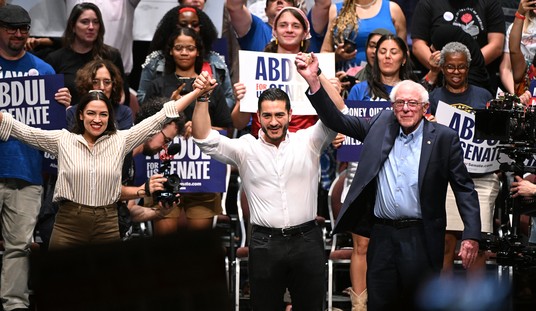
In the end, it comes down to whatever the proponents of the various strains of leftism can sell. Watch the pattern from yesterday's column, and you'll see exactly what I mean. Bernie Sanders and AOC went all-in for Abdul El-Sayed in Michigan and Zohran Mamdani in New York — full campaign muscle, real endorsements, the works. But the moment Wisconsin's Francesca Hong started saying the quiet parts out loud — abolishing police, canceling Thanksgiving, you know the drill — those same two allies quietly stepped back into the shadows and let her twist alone. CNN's own reporting confirms it.
Related: How Extreme Leftist Ya Gotta Be for AOC and Bernie to Reject You?
Before anyone objects: I'll grant that doesn't, by itself, prove these people are lying about their beliefs. What it does prove is that they know exactly how much of the real agenda the public will tolerate before it becomes a political liability, and they calibrate their public support accordingly. The dishonesty here, if you want to call it that, doesn't live in the ideology. It lives in the volume knob.
Mamdani as Exhibit A
Zohran Mamdani makes as good a test case as any for the bigger question: What happens once the rhetoric actually has to govern something?
On one hand, the man has been crystal clear about what he says he believes. Asked point-blank on NBC whether billionaires should exist, he didn't dodge: "I don't think that we should have billionaires because, frankly, it is so much money in a moment of such inequality." He's pushed a tax plan explicitly targeting what his own policy documents call "richer and Whiter neighborhoods." When Trump and others branded him a communist, he denied it and reached for the same "democratic socialist" label the DSA always reaches for. It's a laughable defense — for both him and the DSA — but it slips past his supporters just fine, so he keeps using it.
On the other hand — and this is the part that complicates the tidy "He's secretly a Marxist and lying about it" theory — six months into actually running the largest city in the country, Mamdani has been out courting Wall Street, celebrating American Express's decision to plant its new headquarters at Two World Trade Center, and telling reporters flatly, "I will always celebrate continued investment in this city."
Worth remembering: He didn't start making those noises until after the billionaires and businesses he was counting on to fund his socialist ambitions started actually executing their plans to flee New York. Funny how quickly ideology bends the moment the money starts packing boxes.
When an interviewer told him he sounded like "a capitalist mayor," he didn't push back. He simply reframed it as New Deal liberalism instead of revolutionary socialism. Trouble is, the practical daylight between those two labels is so thin, the naked eye cannot detect it.
City Journal, no friend of the socialist project, put it bluntly: "Mamdani's first six months in office indicate the success of capitalism and the regular machinations of municipal government, not democratic socialism." Even Jacobin — an actual socialist publication, not a hostile outside critic — describes him as a man "caught between two projects: that of managing capitalism and that of overturning it." That description holds up. The management effort amounts to nudging the city toward the socialist goal while saying as little as possible about the fact that's the actual goal.
I don't think Mamdani necessarily believes he's lying to us when he insists he's not a communist. He's quite aware he isn't telling the whole story — he just knows (unlike recent DSA Gubernatorial candidate Francesca Hong) that admitting that outright would be fatal to his own agenda.
I think what we’re watching is democratic socialism running headlong into the real limits of executive power inside a system it doesn't actually control. You can't nationalize Manhattan real estate from City Hall. You can't stop capital from relocating the second your tax policy gets aggressive enough to matter. The ideology writes checks the office can't cash, and six months in, the people voting with their feet are winning that argument, whether Mamdani says so out loud or not.
Which brings me to the real question — the one that's harder to dodge than a simple "Are you a communist, yes or no?" If the practical result of governing, every single time, ends up looking more like managed capitalism than anything Marx ever described — corporate investment courted specifically to prop up the system rather than dismantle it, Wall Street reassured, private property left standing — then why keep the socialist branding at all? What's that label actually doing, if not the political work the policy itself can't perform?
That doesn't require proving anyone lied under oath. It just requires pointing at the gap between the label and the ledger, and daring anyone on that side of the aisle to explain it honestly.
The final answer
…to the question I asked about 2,000 words ago is that there are differences between the three of them. The differences between communists, the DSA, and the Democrats are similar to the differences among Gerbils. Gerbils can tell each other apart, assuming Gerbils actually care about such matters. Nobody else can, however.
Similarly, the only people who notice any practical differences are the members of each group. The situation is analogous to, in Monty Python terms, the differences between The Judean People's Front and the People's Front of Judea.
REG: Right. You're in. Listen. The only people we hate more than the Romans are the f*****g Judean People's Front.
P.F.J.: Yeah.
JUDITH: Splitters.
P.F.J.: Splitters.
FRANCIS: And the Judean Popular People's Front.
P.F.J.: Yeah. Oh, yeah. Splitters. Splitters.
LORETTA: And the People's Front of Judea.
P.F.J.: Yeah. Splitters. Splitters.
REG: What?
LORETTA: The People's Front of Judea. Splitters.
REG: We're the People's Front of Judea!
LORETTA: Oh. I thought we were the Popular Front.
REG: People's Front! Ha!
FRANCIS: Whatever happened to the Popular Front, Reg?
REG: He's over there.
I'm still waiting for someone in all of this to recognize the absurdity of any and all of their positions — absurdity that's proven itself time after time. But damned if I'll be holding my breath.
And every time one of these strains of the left has taken over, the citizenry has ended up having to shoot its way out of the mess.