
If you lived in Iowa City, Iowa, on Nov. 7, 1947, you could walk into either bank in town and help feed somebody in Europe. You could also mail a donation or stop by one of the booths veterans planned to set up on campus. The local drive had already taken in $978. The Jaycees planned to use the money to buy rolled oats at cost from a company in Cedar Rapids, Iowa, and have a train pick up the food.
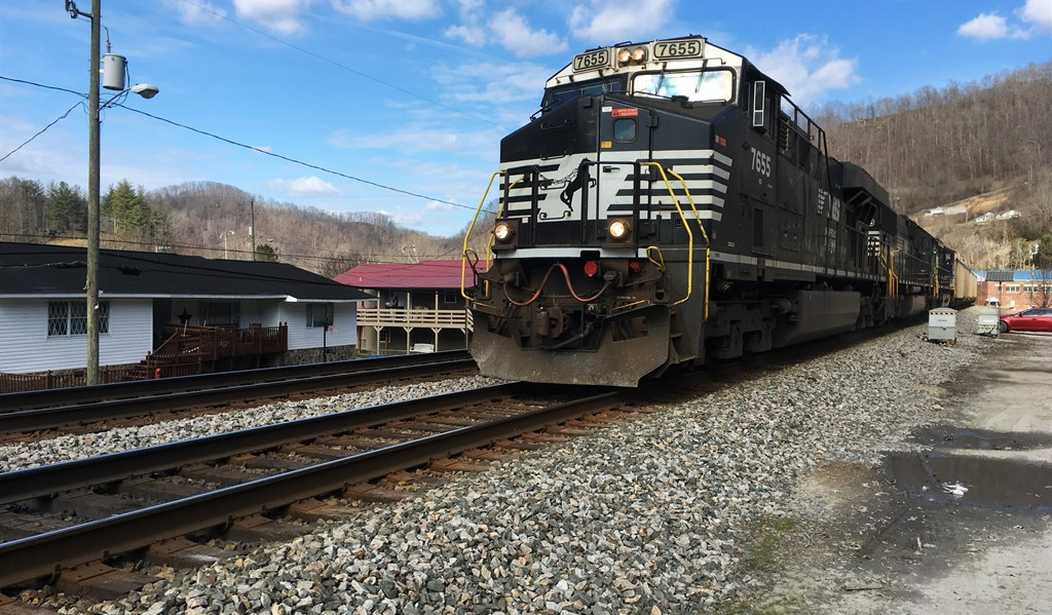
The Friendship Train set out from Los Angeles, Calif., that day. More than two years had passed since the end of World War II, and a bad drought had made life harder for people in parts of Europe still recovering from the war, when even bread was rationed.
The Americans organizing the train wanted to get food to families in France and Italy before winter made the shortages harder to bear.
Of all the things Iowa City might have sent, I’m glad the record tells us it was going to be oats. The local organizers had figured out who could sell them at cost and where to put them on a train. Somewhere on the other end, somebody with a pot and enough water to boil could make breakfast. When you’ve got children to feed, breakfast is a pretty good thing to know you have.
The Iowa City organizers planned to send something else with the food. They had sheets for the names of the people who contributed, with an American flag at the top and a message in French and Italian. The message told families where the food came from and hoped their own fields would soon produce enough again.
In Carlisle, Pa., a 10-year-old boy spent a day off from school pulling a wagon around to collect food. He took his haul to the collection point, then went back out for more. In Spencer, Iowa, a railroad engineer stopped his train so the crew could walk through the snow to a radio station and give money to its drive. Across the country, people collected money at church, at football games, and at the movies. They gave in places they already went, alongside people they already knew.
The railroads supplied cars and carried the freight. Shipping companies provided vessels and crews to take the food across the Atlantic. The train reached New York City on November 18, before Thanksgiving.
I keep coming back to the boy in Carlisle. Somebody had to get the food across an ocean, and somebody had to see what he could bring in a wagon. The people waiting for the food needed both.
I’ll think about those Iowa City donors when we sit down for Thanksgiving. I hope they had a good dinner that year. I hope the boy with the wagon ate his fill, and I hope someone at his table asked him how he’d spent his day off. He had a good story to tell. Most of the people who put food on that train probably never heard a word from the people who ate it. They went ahead and gave it anyway.
In February 1949, a French ship came into New York Harbor carrying 49 boxcars.
The Gratitude Train arrived in New York Harbor aboard the Magellan, a French merchant ship, in February 1949. The Gratitude Train, a gift from France, contained 49 boxcars. Each car was filled with gifts from the people of France to the people of the United States.
In 1947, an American Friendship Train carried $40 million in relief supplies to France and Italy. Initiated by Drew Pearson, an American newspaper columnist, the project sent over 700 carloads of food, fuel, and clothing, donated by the citizens of the United States, to war-torn Europe.
A French railworker and war veteran, Andre Picard, initiated the French Thank You Train project. The train had such appeal that the project, which began with one boxcar, ended with a train of 49 boxcars; one for each of the 48 states. The 49th was to be shared by the District of Columbia and the Territory of Hawaii.
People across France had filled them with gifts for Americans. One of the cars still stands in Jackson, Mississippi. I wonder what the boy from Carlisle would’ve made of the news; he’d hauled food to a collection point, emptied his wagon, and gone back out to see what else he could find.
A year and a few months later, people on the other side of the Atlantic had finished filing railroad cars of their own.