
Americans spent more money in October and got slightly less for it. On November 25, the Bureau of Economic Analysis said consumer spending rose 0.3% from September in dollar terms. Once the agency accounted for higher prices, spending edged down by less than 0.1%.
On the same morning, the government also had some good news: the economy grew considerably faster from July through September than it had first estimated.
The government raised its estimate of third-quarter growth from 3.4% to 4.3% annually. The actual increase from the previous quarter was 1.1%. The annual rate tells us what a full year of growth at that pace would look like. After a 2.2% annual rate in the second quarter, the economy went into fall with more momentum than the first estimate showed.
Look at what changed in the revision. The agency found more consumer spending on goods, including pharmaceuticals, computer software and accessories, and energy goods. It also revised investment in software upward. A separate measure combining consumer spending and private fixed investment rose 5.8% annually. That measure leaves out government spending, trade, and inventory swings, so it helps show how much demand came from households and businesses.
October brought a different set of numbers. The price index for personal consumption expenditures rose 3.8% year over year, up from 3.6% in September. Even after excluding food and energy, prices rose 3.3% over the year. October’s monthly increase was 0.3%, down from 0.5% in September. The monthly pace eased while the year-over-year rate climbed. Each number answers a different question, and picking just one leaves out part of the story.
From Reuters:
The Personal Consumption Expenditures Price Index increased 0.3% in October after gaining 0.5% in September, the BEA said. PCE inflation was lifted by higher prices for goods, including food and household furnishings, as well as services such as recreation, dining out and hotel stays. In the 12 months through October, PCE inflation increased 3.8% after advancing 3.6% in September.
Excluding volatile food and energy, the PCE Price Index rose 0.3% for the third straight month. So-called core PCE inflation rose 3.3% year over year in October, the largest advance since November 2023, after climbing 3.1% in September.
The Fed tracks the PCE price measures for its 2% inflation target. Financial markets have priced in a quarter-percentage-point rate hike at the US central bank's December 8-9 meeting from the current 3.75%-4.00% range and expect another increase in January, CME Group's FedWatch tool showed.
The spending report also shows where the extra dollars went. Americans spent about $64 billion more at an annual rate, with roughly $52 billion of that increase going to services. Goods accounted for about $12 billion. Those are dollar figures before adjusting for inflation. A store can ring up more sales in dollars even when its customers take home fewer goods. The same principle applies to the national spending total, which also counts services such as rent and medical care.
There’s another reason to give the summer numbers their due. The government also estimates growth by adding up the income generated by production. On that measure, the economy grew 4.4% annually in the third quarter, close to the revised GDP figure. Both estimates point to a strong quarter.
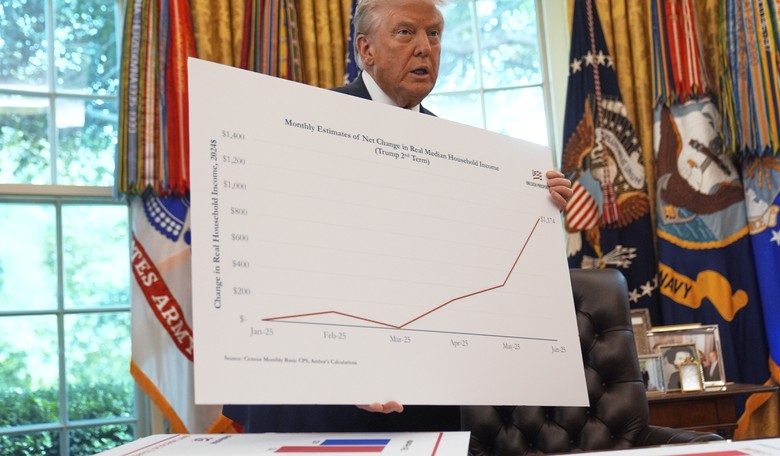
Households also had good news. After taxes and inflation, disposable income rose 0.5% in October, up from a 0.2% drop in September. Wages and salaries helped lift income, and so did a one-time Medicare premium rebate. The saving rate reached 4.1%. A gain in purchasing power is welcome. I’d weigh another month of take-home pay growth more than a one-time payment that helped lift the October total.
I give President Donald Trump credit for an economy that produced more than the government initially counted. I’d also ask his administration to give the October numbers the same attention. When families sit down to work out what they can spend through Christmas, an extra dollar in the budget counts only for what it’ll buy. They’ll measure improvement when the same paycheck starts covering more bills.
The next reports arrive on December 23. We’ll get another estimate of third-quarter growth and a first look at November spending and prices. Watch whether people can buy more after inflation, and whether incomes keep rising once October’s one-time rebate drops out of the monthly comparison. A strong quarter is worth celebrating. The question heading into the new year is how much of that strength households can carry into their own budgets.