
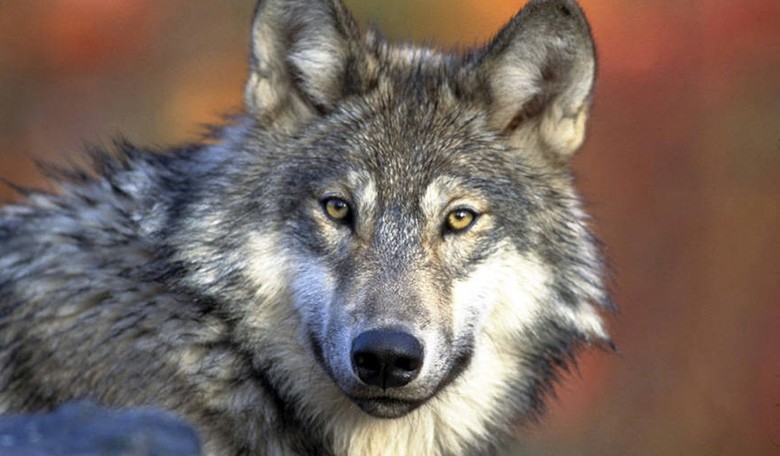
In Douglas County, Wis., investigators confirmed that wolves killed a beef animal, a miniature horse, and a miniature donkey in separate incidents in August. A dairy cow in Jackson County also appeared in the state records. Wisconsin can investigate those losses and compensate eligible owners. Federal protections still bar the state from using lethal control to deal with wolves that prey on livestock.
President Donald Trump has given the Interior Department until December 3 to determine whether gray wolves and Mexican wolves meet federal recovery criteria for removing or reducing their protections.
New from @kieramcd732 and me: Gray wolves are at the center of a heated battle between farmers and environmentalists, with a December 3 deadline looming for the Trump admin to weigh in. @Gabby_Hoffman @Shawn_Regan https://t.co/V8oQcy3190
— Andrew Mark Miller (@AndyMarkMiller) November 22, 2026
If Interior decides to do so, Trump’s September 4 executive order directs the department to begin that process. The deadline for the determination is December 3. Wisconsin’s rules stay in force while Interior reviews the evidence.
If federal protections are removed from Wisconsin’s gray wolves, the state could again use tools as permits to remove wolves responsible for livestock losses. Wisconsin law also provides for an annual hunting and trapping season when federal law allows one. A permit to address repeated losses on a farm and a public hunt serve different purposes. Wisconsin ought to explain how it would use both before anybody starts arguing over a quota.
Wisconsin has already seen how much judgment goes into a single removal decision. In the town of Flambeau in Price County, federal wildlife removed nine wolves after a series of verified human-safety conflicts. Nobody was injured. Tribal officials said they hadn’t been consulted before the removals, and Wisconsin’s DNR secretary apologized for inadequate communication.
Related: Nine Wolves, Six Conflicts, and a Difficult Wisconsin Decision
The case involved a narrow human-safety exception. A farmer who loses a calf faces a different set of rules.
Congress has two approaches on the table. The House passed Republican Wisconsin Rep. Tom Tiffany’s bill directing Interior to reissue the 2020 federal delisting rule. Wisconsin Sen. Tammy Baldwin and Minnesota Sen. Amy Klobuchar, both Democrats, introduced a bill covering Wisconsin, Minnesota, and Michigan’s Upper Peninsula. Their bill calls for an updated monitoring plan before delisting and gives tribal representatives a place on the advisory committee. Both bills went to the Senate Environment and Public Works Committee.
This is for people who value wolf recovery and people whose animals keep turning up dead. Wisconsin’s 2026 estimate was about 1,162 wolves, down slightly from the previous year. A statewide decline can coexist with repeated losses in particular counties. The state should keep counting wolves, publish the reasons for removal decisions, and consult tribes early when decisions affect ceded territory.
A farmer should also be able to find out who can act when the same problem keeps happening.
Interior’s deadline gives Wisconsin a reason to get specific. If the evidence supports delisting, I’d put more of the decision back in Wisconsin and expect the state to explain it in public. In Douglas County, the question will still be what happens after an investigator confirms the loss.
The people who have to go back out to that pasture tomorrow ought to know the answer.