
A wounded man lay beyond safety. Somewhere nearby, another American had to choose. Across generations, men made that choice with no assurance that they would come home.
Veterans Day gives us a chance to remember the names beyond the familiar roll call. These six men served in different wars and brought different convictions to their service. Their actions reveal a devotion to others that a medal citation can record but never fully measure.
George Wanton: Returning to the shore, 1898
On June 30, 1898, a landing at Tayabacoa, Cuba, went wrong. Spanish fire drove back Cuban fighters and American volunteers, leaving wounded men ashore. Several rescue attempts failed. George Wanton, a Buffalo Soldier from the 10th Cavalry, volunteered to try again with four other soldiers. Knowing that earlier efforts had failed didn't relieve them of the obligation to act.
The rescuers reached the shore, surprised the Spanish soldiers holding their comrades, and brought every wounded man back safely. Wanton and three fellow enlisted rescuers received the Medal of Honor. The achievement belonged to men willing to share the danger of people who could no longer escape it on their own.
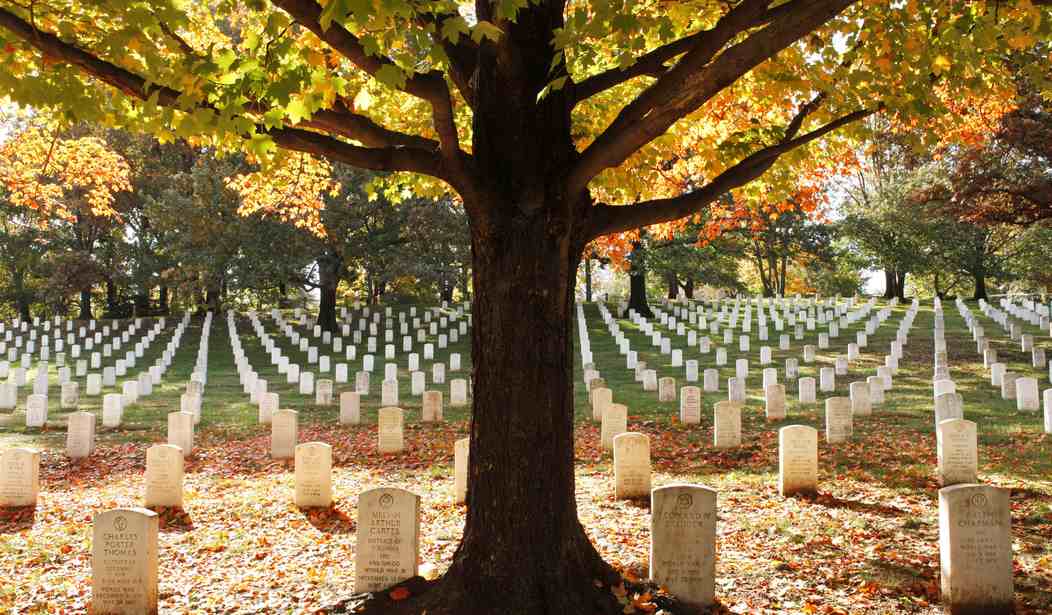
Wanton later struggled to find steady civilian employment and returned to military service. In 1921, he served as an honorary pallbearer at the burial of the Unknown Soldier in Arlington, Virginia. A man who had helped bring wounded comrades back from Cuba helped honor an American whose identity had been lost. His own name is worth remembering alongside the Unknown's enduring place in our history.
George Wanton’s Medal of Honor citation:
The President of the United States of America, in the name of Congress, takes pleasure in presenting the Medal of Honor to Private George Henry Wanton, United States Army, for extraordinary heroism on 30 June 1898, while serving with Troop M, 10th U.S. Cavalry, in action at Tayabacoa, Cuba.
Private Wanton voluntarily went ashore in the face of the enemy and aided in the rescue of his wounded comrades; this after several previous attempts at rescue had been frustrated.
Charles Hays Durham: Through the wire, 1912
Before the trenches of World War I, American Marines fought on Coyotepe Hill near Masaya, Nicaragua. On October 4, 1912, they advanced against defenders occupying the heights. Private Charles Hays Durham, whose mother lived in Junction City, Kentucky, was among four Marines killed in the assault (Author’s Note: his announcement is on Page 2). His war seldom appears in a Veterans Day remembrance, but the loss reached an American home just as surely as losses in the larger wars did.
A later account of the assault credits Durham with cutting barbed wire beneath the summit while the Marines faced a machine gun covering the approach. Other men had fallen before he went forward. Durham was shot down, and the Marines took the position. The account places his final action at the obstacle that stood between his comrades and the summit.
Durham's name belongs in our remembrance even though his campaign rarely enters our conversation. His mother lived in Kentucky; he died on a hill in Nicaragua. Between those two places lay a young man's service and a family's permanent loss. The small place his campaign occupies in American memory cannot measure the size of his sacrifice.
Louis Cukela: Going around the gun, 1918
On July 18, 1918, near Villers-Cotterets, France, a German strongpoint stopped Louis Cukela’s company. The Marine sergeant crawled away from the flank and worked toward the enemy’s rear under heavy fire. His comrades warned him. He kept going, taking on the position that was holding up the men beside him.
Cukela rushed a machine-gun emplacement with his bayonet, then used German grenades to clear the rest of the strongpoint. He captured four men and two machine guns. Both the Army and Navy awarded him the Medal of Honor for the same action.
The two medals recognize one extraordinary deed, rather than two separate battlefield episodes.
Born in Spalato, Yugoslavia, Cukela emigrated to America with his brother in 1913. Five years later, he was risking his life in an American uniform. His story belongs to the men who made a new home here and accepted its obligations, including the terrible obligation of protecting other Americans under fire.
Louis Cukela’s Medal of Honor citation:
Army Medal of Honor: When his company, advancing through a wood, met with strong resistance from an enemy strong point, Sgt. Cukela crawled out from the flank and made his way toward the German lines in the face of heavy fire, disregarding the warnings of his comrades.
He succeeded in getting behind the enemy position and rushed a machine-gun emplacement, killing or driving off the crew with his bayonet. With German hand grenades he then bombed out the remaining portion of the strong point, capturing four men and two damaged machine guns.
Navy Medal of Honor For extraordinary heroism while serving with the 66th Company, 5th Regiment, during action in the Forest de Retz, near Viller-Cottertes, France, 18 July 1918. Sgt. Cukela advanced alone against an enemy strong point that was holding up his line.
Disregarding the warnings of his comrades, he crawled out from the flank in the face of heavy fire and worked his way to the rear of the enemy position. Rushing a machine-gun emplacement, he killed or drove off the crew with his bayonet, bombed out the remaining part of the strong point with German hand grenades, and captured two machine guns and four men.
George Wahlen: Fifty more yards, 1945
George Wahlen was already wounded when he carried a Marine to safety on Iwo Jima. The Navy corpsman continued treating casualties, including 14 men in an adjacent platoon. Wounded again on March 2, 1945, he refused evacuation. The next day, he accompanied his company into another assault, still answering the needs of men falling around him.
A third wound left Wahlen unable to walk. Another fighter still needed first aid, so Wahlen crawled 50 yards to reach him. His own injuries had become severe enough to stop him from walking, but they hadn’t stopped him from trying to help. He covered those remaining yards with a wounded body because a man at the other end still needed him.
Wahlen survived and returned home to Utah. In 1946, he married Melba Holley, and they raised five children. He later said the nightmares he’d experienced after Iwo Jima stopped when they married. His life continued beyond the island, into marriage and fatherhood.
The family he built reminds us of what survival could make possible: a life after the shooting stopped.
George Wahlen’s Medal of Honor citation:
For conspicuous gallantry and intrepidity at the risk of his life above and beyond the call of duty while serving with the 2d Battalion, 26th Marines, 5th Marine Division, during action against enemy Japanese forces on Iwo Jima in the Volcano Group on 3 March 1945.
Painfully wounded in the bitter action on 26 February, Wahlen remained on the battlefield, advancing well forward of the front lines to aid a wounded marine and carrying him back to safety despite a terrific concentration of fire.
Tireless in his ministrations, he consistently disregarded all danger to attend his fighting comrades as they fell under the devastating rain of shrapnel and bullets, and rendered prompt assistance to various elements of his combat group as required. When an adjacent platoon suffered heavy casualties, he defied the continuous pounding of heavy mortars and deadly fire of enemy rifles to care for the wounded, working rapidly in an area swept by constant fire and treating 14 casualties before returning to his own platoon.
Wounded again on 2 March, he gallantly refused evacuation, moving out with his company the following day in a furious assault across 600 yards of open terrain and repeatedly rendering medical aid while exposed to the blasting fury of powerful Japanese guns.
Stouthearted and indomitable, he persevered in his determined efforts as his unit waged fierce battle and, unable to walk after sustaining a third agonizing wound, resolutely crawled 50 yards to administer first aid to still another fallen fighter.
By his dauntless fortitude and valor, Wahlen served as a constant inspiration and contributed vitally to the high morale of his company during critical phases of this strategically important engagement. His heroic spirit of self-sacrifice in the face of overwhelming enemy fire upheld the highest traditions of the U.S. Naval Service.
William Charette: Giving away his protection, 1953
On March 27, 1953, during the fighting at Outpost Vegas in Korea, Navy corpsman William Charette moved through gunfire to treat wounded Marines. When a grenade landed near a man in his care, Charette threw himself over the casualty. The blast wounded Charette’s face and tore away his helmet and medical kit. He tore clothing into bandages and continued working.
Then he found a wounded man whose armored vest had been torn away. Charette removed his own vest and put it on the casualty. Later, he exposed himself above the trench to help another man suffering from a severe leg wound. His protection, his clothing, and his body had all become things he could use for someone else’s survival.
Charette eventually married Louise, a fellow Navy veteran, and they raised five children. In 1958, aboard the USS Canberra off the Virginia coast, he selected the World War II Unknown Soldier for burial at Arlington. The corpsman who had protected wounded men in Korea was entrusted with honoring a man whose name had been lost.
Service could follow a survivor into marriage, fatherhood, and the solemn duty of remembering those who never had those years.
William Charette’s Medal of Honor citation:
For conspicuous gallantry and intrepidity at the risk of his life above and beyond the call of duty in action against enemy aggressor forces during the early morning hours. Participating in a fierce encounter with a cleverly concealed and well-entrenched enemy force occupying positions on a vital and bitterly contested outpost far in advance of the main line of resistance.
Charette repeatedly and unhesitatingly moved about through a murderous barrage of hostile small-arms and mortar fire to render assistance to his wounded comrades. When an enemy grenade landed within a few feet of a marine he was attending, he immediately threw himself upon the stricken man and absorbed the entire concussion of the deadly missile with his body.
Although sustaining painful facial wounds and undergoing shock from the intensity of the blast which ripped the helmet and medical aid kit from his person. Charette resourcefully improvised emergency bandages by tearing off part of his clothing, and gallantly continued to administer medical aid to the wounded in his own unit and to those in adjacent platoon areas as well.
Observing a seriously wounded comrade whose armored vest had been torn from his body by the blast from an exploding shell, he selflessly removed his own battle vest and placed it upon the helpless man although fully aware of the added jeopardy to himself. Moving to the side of another casualty who was suffering excruciating pain from a serious leg wound.
Charette stood upright in the trench line and exposed himself to a deadly hail of enemy fire in order to lend more effective aid to the victim and to alleviate his anguish while being removed to a position of safety. By his indomitable courage and inspiring efforts in behalf of his wounded comrades. Charette was directly responsible for saving many lives.
His great personal valor reflects the highest credit upon himself and enhances the finest traditions of the U.S. Naval Service.
Thomas Bennett: “I'll stick with her,” 1969
Thomas Bennett opposed the Vietnam War and served as a conscientious objector willing to perform military duty. The young man from Morgantown, West Virginia, became an Army medic. In his correspondence about America, he expressed hope for his country and wrote, “I’ll stick with her.” Letters and recordings carried his thoughts home while he learned the responsibilities that came with being called Doc.
From February 9 through 11, 1969, in the Chu Pa region of Pleiku Province, Bennett repeatedly went through enemy fire to treat and carry wounded soldiers. He also recovered fallen men and spent the night and the following day treating and comforting casualties. His convictions had put him in a role where compassion required him to enter the same fire that had struck his comrades.
On February 11, Bennett treated one wounded man and started toward another. He was warned that the exposed position was unreachable. He tried anyway and was mortally wounded.
He was 21.
The men he served had learned what his presence meant: if they were hit, their medic would come. His family received the Medal of Honor after his death, on what would’ve been his 23rd birthday.
Thomas Bennett’s Medal of Honor citation:
For conspicuous gallantry and intrepidity in action at the risk of his life above and beyond the call of duty. Cpl. Bennett distinguished himself while serving as a platoon medical aidman with the 2d Platoon, Company B, during a reconnaissance-in-force mission.
On 9 February the platoon was moving to assist the 1st Platoon of Company D, which had run into a North Vietnamese ambush, when it became heavily engaged by the intense small-arms, automatic-weapons, mortar and rocket fire from a well-fortified and numerically superior enemy unit.
In the initial barrage of fire, three of the point members of the platoon fell wounded. Cpl. Bennett, with complete disregard for his safety, ran through the heavy fire to his fallen comrades, administered life-saving first aid under fire, and then made repeated trips carrying the wounded men to positions of relative safety from which they would be medically evacuated from the battle position.
Cpl. Bennett repeatedly braved the intense enemy fire, moving across open areas to give aid and comfort to his wounded comrades. He valiantly exposed himself to the heavy fire in order to retrieve the bodies of several fallen personnel. Throughout the night and following day, Cpl. Bennett moved from position to position treating and comforting several personnel who had suffered shrapnel and gunshot wounds.
On 11 February, Company B again moved in an assault on the well-fortified enemy positions and became heavily engaged with the numerically superior enemy force. Five members of the company fell wounded in the initial assault. Cpl. Bennett ran to their aid without regard to the heavy fire. He treated one wounded comrade and began running toward another seriously wounded man.
Although the wounded man was located forward of the company position covered by heavy enemy grazing fire and Cpl. Bennett was warned that it was impossible to reach the position, he leaped forward with complete disregard for his safety to save his comrade's life.
In an attempt to save his fellow soldier, he was mortally wounded. Cpl. Bennett's undaunted concern for his comrades at the cost of his life above and beyond the call of duty are in keeping with the highest traditions of the military service and reflect great credit upon himself, his unit, and the U.S. Army.
These men had names, hometowns, parents, and lives beyond a battlefield. Some came home to raise children. Others left families to preserve the photographs and letters that would have to last.
On Veterans Day, we can give their names a little of our time. They gave other Americans something far harder to give: a chance to live when helping them could mean losing their own.