
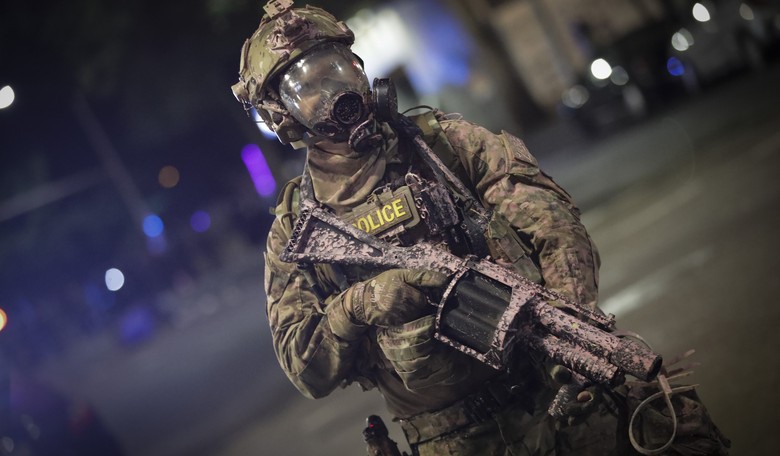
Michael Simon wanted federal officers in Portland, Oregon, to wear more conspicuous identifying markings. He ordered the parties to discuss changes to uniforms, vests, or helmets and reserved the power to impose a solution if they couldn’t agree. A dispute over alleged retaliation against protesters had reached the point of a judge preparing to dictate details of federal officers’ equipment.
On November 10, the Ninth Circuit vacated Simon’s preliminary injunction and provisional class certification in Dickinson V. Trump. The majority found the restrictions overbroad and rejected the uniform requirement as beyond the court’s authority.
The Trump administration won an important appeal. The larger benefit is a constitutional system in which officials reviewing someone else’s power must answer for their own.
Judicial review carries enormous authority. An injunction can halt government action before the underlying lawsuit reaches a final judgment. The judge wielding that power needs evidence supporting the remedy and a lawful basis for its scope. Personal confidence that a different enforcement policy would be better can’t supply either.
The plaintiffs alleged that federal officers used crowd-control weapons to retaliate against peaceful protest and journalism. Simon held an evidentiary hearing and credited evidence supporting their claims. His March order restricted chemical and projectile munitions to circumstances in which the specific target posed an imminent threat of physical harm. It also imposed additional restrictions on pepper spray and dispersal procedures.
The appellate majority rejected the imminent-harm threshold. Circuit precedent permits officers to use nonlethal force to clear crowds and restore order without waiting for that threat. The majority also found insufficient evidence of the alleged retaliatory policy. The ruling concerns preliminary relief; it doesn’t resolve every disputed use of force.
Federal officers need workable rules when enforcing the law. A restriction that prevents lawful action can expose them and the public to additional danger. Judges should consider those consequences before replacing operational discretion with conditions enforceable through contempt proceedings.
The uniform provision makes the problem particularly clear. Identifying officers can serve accountability. Whether a court may prescribe new markings in a particular lawsuit is a separate legal question. A useful policy idea doesn’t automatically become an available judicial remedy.
Judges have a duty to restrain unconstitutional conduct. Performing that duty requires them to explain how the conduct violates the law and why their chosen order properly addresses it. Otherwise, a temporary injunction can become an opportunity to manage an agency.
Ana de Alba agreed that three provisions were overbroad but dissented from the rest of the majority’s decision. She would’ve preserved restrictions on firing munitions at a person’s head, neck, or torso without justification for deadly force. Her dissent also defended class certification.
Peaceful people injured while exercising constitutional rights should have access to courts. Their claims require careful examination, and officers remain accountable for unlawful conduct. Those obligations give judges difficult work. They don’t give judges unrestricted authority to choose the terms on which executive agencies operate.
An order should also make clear what compliance requires. Officers need to understand their obligations before a confrontation unfolds, and people challenging their actions need a legally grounded standard. Judicial remedies work best when their reach follows the proven violation. The broader the requested supervision, the stronger the explanation a court owes everyone affected.
Americans arguing about President Donald Trump’s power should apply the same scrutiny to the judges who limit it. Every branch exercises delegated authority, and every branch can exceed its bounds.
The Ninth Circuit enforced a limit in Portland. Simon’s order failed that examination. A federal robe carries responsibility, including recognizing when another branch’s decisions remain its own to make.