
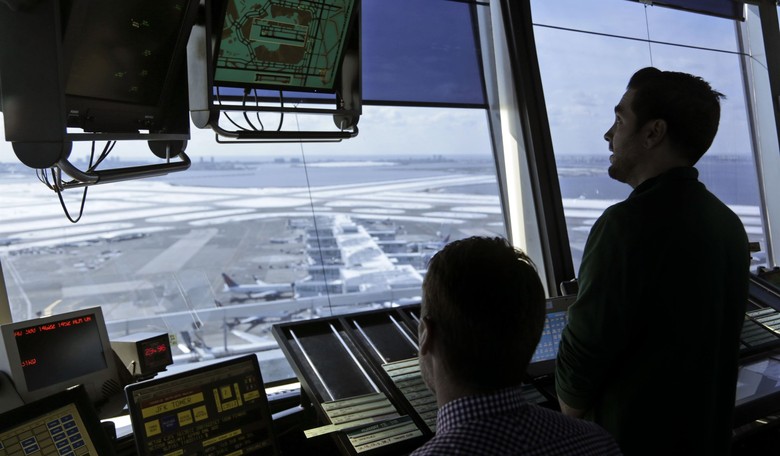
An air traffic controller’s most important equipment still includes a trained mind, alert eyes, and the judgment to keep aircraft safely separated. At two American airports, digital displays now provide the view that supports that work. The people making the decisions remain very much on duty.
On November 6, the Federal Aviation Administration announced that digital towers are operating at Bartow Executive Airport in Florida and Kenai Municipal Airport in Alaska. Cameras supply a continuous, 360-degree view of runways, taxiways, and nearby airspace. Controllers use that information to manage traffic.
From the FAA:
The FAA has operationalized digital towers at Bartow Executive Airport in Florida and Kenai Municipal Airport in Alaska. With funding from President Trump’s Working Families Tax Cut Act, five more non-towered airports will soon get these systems: Winter Haven Regional Airport in Florida, Venice Municipal Airport in Florida, Montgomery County Airpark in Maryland, Johnston Regional Airport in North Carolina, and Durango-La Plata County Airport in Colorado.
“Our air traffic controllers continue to do the critical job of keeping aircraft safely separated, and we're giving them better technology to do that,” said FAA Administrator Bryan Bedford. “Digital towers provide controllers with greater visibility of airport activity and more information to make critical decisions. It's about putting better tools in the hands of our workforce so they can continue delivering the safe, reliable air traffic services the flying public depends on.”
For anyone tired of government announcements that promise transformation without explaining what changes, the basic idea is refreshingly understandable. Give trained people a better view of the work they’re already responsible for doing. Technology earns its place by helping them perform that job.
Traditional towers put controllers above an airport, looking through windows. A digital tower uses cameras, sensors, and dedicated displays to provide the necessary visual information. The control center can sit on airport property or elsewhere, subject to applicable requirements. “Digital” describes the equipment, not the location of the controllers.
Keeping those terms straight helps explain the actual achievement. Moving the view onto a screen changes how controllers observe the airfield. It doesn’t eliminate the need for people who understand aircraft movement, issue instructions, and recognize when a situation requires immediate attention.
The human responsibility remains central to the project.
The equipment can also combine services that controllers need. At Bartow, the supplier describes a communications platform integrating radio, telephone service, recording, and weather information. Its account places the digital operations center installation in summer 2025, followed by accelerated communication delivery to support testing in 2026.
From Frequentis:
The Frequentis digital tower solution, implemented into the newly renovated Digital Tower Operations Center at Bartow airport in summer 2025, required a future-ready communications solution designed specifically for digital operations. Frequentis was selected to deliver a fully digital communications platform that unifies voice, recording, and terminal information, including weather (ATIS), on one platform to reduce complexity, modernize legacy infrastructure, increase resilience, and support the airport’s long-term innovation goals.
“Working with a partner like Bartow Executive Airport allows us to demonstrate the benefits of digital tower technology for aviation-grade resilience, safety, scalability, and efficiency as well as lay the foundation for digital tower operations in the U.S.,” says Dieter Eier, President, Frequentis USA.
A supplier’s description helps explain the design, but it shouldn’t replace performance measurement. Airports should be able to show the equipment works reliably during routine operations and under demanding conditions. Buying modern technology is the start of that obligation, not the end.
Timing needs precision, too. The FAA identifies September as the start of Bartow’s operational digital tower service. The November announcement describes the two operating locations and the next deployments. It doesn’t mean every camera was installed, tested, and switched on during one convenient news cycle.
Five more airports are scheduled to receive systems: Winter Haven Regional and Venice Municipal in Florida, Montgomery County Airpark in Maryland, Johnston Regional in North Carolina, and Durango-La Plata County in Colorado. The announcement cites funding from President Donald Trump’s Working Families Tax Cut Act but doesn’t provide individual opening dates.
Smaller communities have a practical reason to pay attention. The FAA presents digital towers as a potentially less expensive alternative to conventional construction that could expand access to tower services at rural and community airports. Actual savings depend on each project, its equipment, and its continuing operating expenses.
Residents outside major metropolitan areas should welcome a chance to examine a workable option. They should also demand full cost details. The calculation should include installation, training, maintenance, replacement equipment, and service interruptions. An attractive opening price means little if an airport can’t afford to keep the system dependable.
The engineering rules make clear that these installations require dedicated infrastructure. Current FAA guidance requires a closed, physically point-to-point network, with an independent fiber-optic feed between the sensors and the control center. Wireless transmission isn’t currently allowed, and additional work is required before deployment at federally owned conventional towers.
Aviation leaves little room for accepting vague assurances about reliability. Every added component needs a purpose, and every critical dependency needs scrutiny. Officials should explain what happens during an interruption, how controllers train for it, and who pays to restore service. Those are ordinary questions for extraordinary responsibilities.
For travelers, the useful promise is competent modernization. For controllers, it’s equipment that supports their skill. For taxpayers, it should be a project whose benefits can be measured after the announcement fades. All three groups want results that survive daily use.
Expansion should follow demonstrated performance at the operating airports. Each successful installation can provide useful experience, while problems should produce corrections that reach the next airport before its system enters service.
It’s cool to see practical engineering receive attention. Our country needs people willing to build, test, improve, and maintain essential systems. Digital towers offer an opportunity to do that work while keeping experienced human judgment at the center.
The next achievement should be proving, day after day, that the investment improves the job.
Related: FAA Knows Aircraft Comms Can Be Spoofed. GAO Says It Still Can't Monitor Them.