




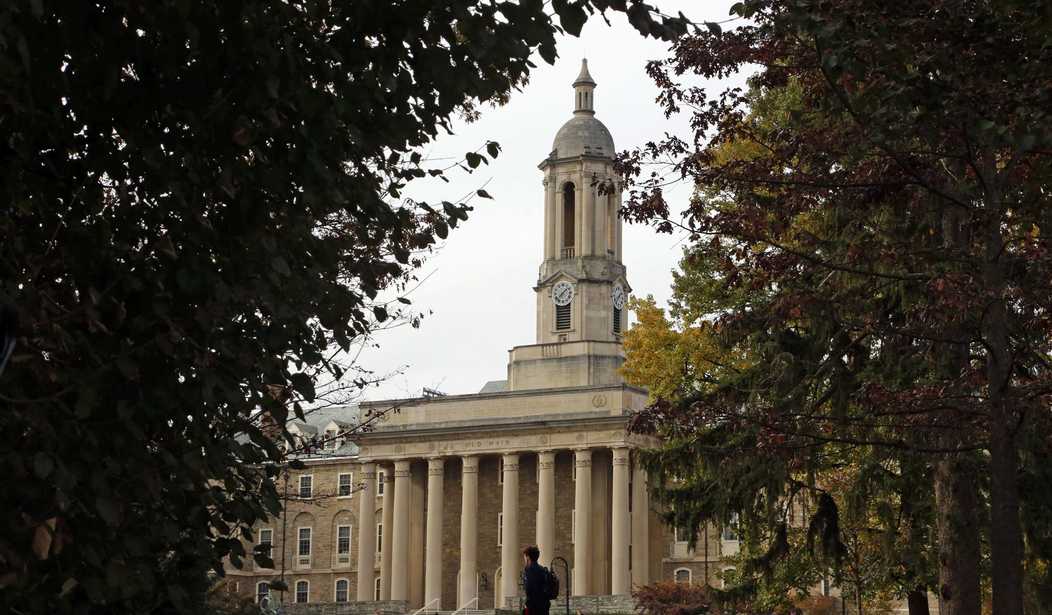
An American family considering Penn State may face a higher tuition rate if they live outside Pennsylvania. The Justice Department now wants the university to explain why its published guidance offers qualifying illegals access to the lower resident rate.
DOJ sued Penn State and its trustees on November 5, alleging that the university’s policy violates federal law. The complaint challenges a benefit based on Pennsylvania residence that isn’t generally available to Americans living elsewhere. For parents calculating college bills, the question reaches well beyond immigration politics.
Universities routinely lecture the country about fairness. Asking whether their own tuition rules comply with federal law shouldn’t require smelling salts and an emergency faculty meeting. American families have every reason to demand a clear explanation of who qualifies for a discount and who gets the larger bill.
Penn State’s admissions guidance says illegal alien students, with or without DACA, can qualify for in-state tuition if they meet residency requirements. The listed conditions include four years at an accredited Pennsylvania high school and graduation from that school or receipt of a Pennsylvania GED. Eligibility carries conditions; the page doesn’t promise every illegal applicant a discount.
Congress addressed residence-based college benefits in 1996. Under 8 U.S.C. 1623, someone unlawfully present can’t receive a postsecondary benefit based on state residence unless Americans can receive an equivalent benefit regardless of their own residence. The wording puts out-of-state American students directly into the legal equation.
The DOJ also raises a separate objection: federal law requires an affirmative state enactment to authorize certain benefits for otherwise ineligible illegal aliens. Prosecutors argue that a university policy can’t substitute for that legislative action. Penn State’s trustees therefore face questions about both the benefit terms and the authority used to offer it.
One complication requires an answer before anyone declares the case finished. A December 2025 FAQ from Penn State Dickinson Law’s immigration clinic says noncitizens seeking resident classification must hold a visa or otherwise be lawfully present. Its description differs from the broader eligibility language on the admissions page the DOJ cites.
From Penn State’s Dickinson Law:
A visa is an official document stamped into someone’s passport that allows a noncitizen to travel to the United States for a specific period and purpose, such as study or work. For tuition purposes at Penn State, holding a visa can satisfy part of the requirement of being classified as a Pennsylvania resident as a noncitizen.
The primary student visas are the F-1 visa, which is issued for full-time study at accredited U.S. schools, including colleges and universities, and the J-1 visa, which is issued for participants in approved exchange programs that involve study, research, or training. While holding a visa can satisfy part of the requirements of being classified as a Pennsylvania resident, Penn State’s residency policy excludes F-1 and J-1 students from Pennsylvania resident classification, even if they hold a valid visa.
Penn State should explain which rule governs, when any change took effect, and whether its public guidance accurately describes eligibility. Conflicting university explanations leave families guessing about expensive decisions. They also require careful scrutiny of the DOJ’s claim about the policy currently in force.
The lawsuit establishes what the government alleges. A court must still determine whether the challenged policy violates federal law, and it will need to treat the distinction between lawful presence, immigration status, and eligibility precisely. The university’s own conflicting materials make that examination necessary, not optional.
Americans shouldn’t need a legal research team to understand the price attached to an education. If Penn State’s operative policy excludes unlawfully present applicants from resident tuition, it should identify that policy and correct contrary guidance. If it offers the benefit the DOJ describes, it should explain how the arrangement satisfies Congress’s requirements.
For a family weighing loans, savings, and another year of work, tuition classifications have lasting consequences. The university should publish one consistent explanation that applicants can use before committing money. Administrators have the resources to clear up their own rules. Families shouldn’t bear the cost of the confusion.
Compassion for young people doesn’t give university administrators legislative authority. Congress wrote a condition protecting Americans from being excluded from residence-based benefits offered to people unlawfully present. Universities can advocate for changes to federal law, but their preferences don’t amend it.
Penn State owes prospective students an accurate policy, and its trustees owe the public an explanation. President Donald Trump’s administration has brought that demand into federal court. American parents who keep hearing that college costs require another sacrifice should welcome a hard look at who gets the lower bill.
Help keep scrutiny on the institutions spending public money and writing rules that affect American families. Join PJ Media VIP for 60% off with promo code FIGHT.


Join the Conversation
VIP members get the ability to comment on articles.