
A referee can explain every flag he throws and still ruin a football game. Let him watch only one team closely enough, and he’ll discover an impressive collection of penalties while the other sideline enjoys a relaxing afternoon.
Political journalism deserves the same inspection. Count the calls, examine the fouls, and pay special attention to what happened while the officials looked elsewhere.
A MRC Media’s study of evening newscasts of the three major networks, covering September 28 through October 26, counted 56 minutes and 44 seconds of negative Republican campaign coverage against 18 minutes and 53 seconds for Democrats: almost exactly 3-to-1. Analysts timed statements by anchors, reporters, politicians, and voters.
From Newsbusters:
Network evening news shows kept pushing the narrative of this being a bad cycle for Republicans, as they pushed the themes of Republicans running scared in red states, because of the dark cloud hanging over them of low approval polls for Trump; high gas and grocery prices; and the Iran war.
Overall, ABC’s World News Tonight spent the most amount of time (23 minutes, 49 seconds) on negative news for the Republicans this cycle. NBC Nightly News came in second with 16 minutes, 35 seconds of bad campaign news for the GOP. CBS Evening News wasn’t that far behind with 16 minutes, 20 seconds of midterm blues for Team MAGA.
The campaign story on the October 5 edition of CBS Evening News was typical of the coverage: Both CBS Evening News anchor Tony Dokoupil and correspondent Ed O’Keefe offered up the following doomcast for the GOP:
WATCH: A month out, the Elite Media evening news is locked on two types of political story: "Republicans in Disarray" or polling DOOM!1!1! https://t.co/uTBB07kRI1
— Jorge Bonilla (@BonillaJL) October 6, 2026
The category matters; those totals include unfavorable polling and economic coverage, not merely candidate scandals. A sour poll and a dishonest campaign biography aren’t interchangeable offenses, and a stopwatch alone can’t tell us whether either story was treated fairly.
The Referee Test asks a harder question: Would the same conduct receive the same scrutiny if the candidate wore the other party’s jersey? Keep the facts, switch the party labels, and see whether the editorial explanation survives.
Recommended: Democrats Promise Cheaper Groceries, but Their Plans Bring Bigger Government
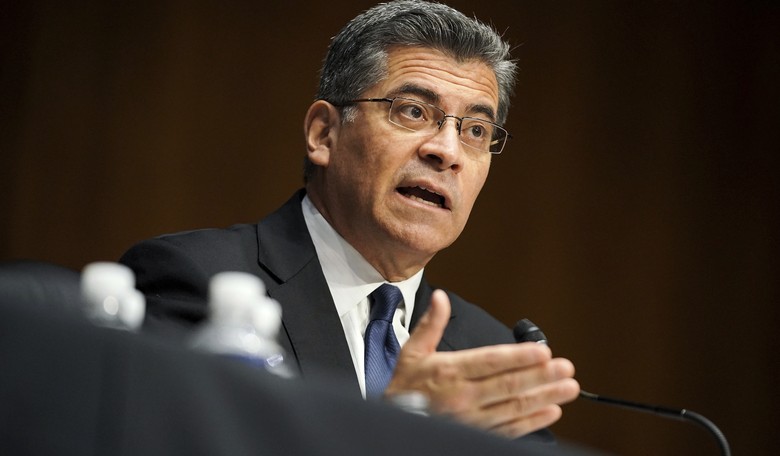
Start with California’s Democratic candidate for governor, Xavier Becerra. His campaign published prepared remarks describing his parents as “Two immigrants with $12 and a dream.” Later in the speech, he again described himself as their son. The biography wasn’t incidental scenery; it supplied the campaign’s underdog story.
His father’s obituary supplies a stubborn detail: Manuel Becerra was born in Sacramento in 1928. His family took him to Tijuana as a child, and he returned to California as a young teenager, where he worked and built a family, a record needing no embellishment from a campaign speechwriter.
Growing up in Mexico and returning to America helps explain the family story. It doesn’t make a Sacramento birthplace feel foreign. A candidate can honor his father’s hardships while accurately describing where the man was born.
Now switch the jersey. Imagine a Republican selling an embellished family biography while campaigning to govern the country’s most populous state. Would producers consider the discrepancy too small, too personal, or too complicated for an evening segment?
I’d like to be a fly on the wall during that editorial meeting.
During its review, the MRC found no coverage of Becerra’s family-background controversy on those evening programs. Its published account doesn’t supply a complete segment dataset or detailed coding manual, so readers can’t independently reconstruct every classification from the article. The reported omission still presents a concrete question editors can answer.
An editor who considers Becerra’s wording defensible can explain why. An editor who considers it misleading can ask him to correct it. Either response requires recognizing that a candidate’s own published words are available for inspection, even when an inconvenient answer might spoil an inspiring profile.
Republicans shouldn’t demand a daily quota of cheerful coverage. Demand a stable threshold for scrutiny: comparable evidence, comparable questions, and comparable persistence when the first answer dodges the issue.
Publish the response, and follow up when the record contradicts it.
That’s where editorial power deserves attention. An accusation broadcast tonight can be challenged tomorrow. A story left outside the frame never reaches viewers who might have challenged the candidate themselves. Silence saves a campaign the trouble of answering.
Before Election Day, voters deserve to know which candidates withstand scrutiny and which have merely avoided it. Count the minutes, certainly. Then ask who had to explain himself, who escaped the question, and whether the referee would make the same call after the jerseys changed.