


Donald Trump appeared on Wisconsin’s presidential ballot three times. Each time, Marquette’s final pre-election poll made his position look weaker than the election results eventually showed. Wisconsin voters have good reason to remember that record when another poll arrives wrapped in confident headlines.
Start with 2016. Marquette’s final likely-voter survey put Hillary Clinton at 46% and Trump at 40%. Trump won Wisconsin by about 0.8 points. The gap between Clinton’s six-point polling lead and Trump’s victory was roughly 6.8 points in the Democratic direction.
That’s a substantial miss in a state decided by fewer than 23,000 votes.
Four years later, Marquette put Joe Biden at 48% and Trump at 43%. Biden won Wisconsin, so the poll identified the eventual winner. But his actual margin was about 0.6 points. Marquette overstated his advantage by approximately 4.4 points. Getting the winner right doesn’t erase getting the contest size wrong.
In 2024, Marquette’s headline matchup showed Kamala Harris leading Trump 50% to 49%.
A new Marquette Law School poll of Wisconsin finds Democratic Vice President Kamala Harris supported by 50% of likely voters and Republican former President Donald Trump supported by 49% in a head-to-head matchup. These results include initially undecided voters who were then asked whom they would vote for if they had to choose. In the previous late-September poll, Harris received 52% and Trump 48% among likely voters.
Keeping initially undecided voters as a separate category, Harris holds 48% of likely voters, Trump gets 47%, and 5% are undecided.
Trump won Wisconsin by about 0.9 points, producing a margin error of roughly 1.9 points toward the Democrat. Marquette’s separate multicandidate question showed Harris ahead by two, making that error approximately 2.9 points. Both versions understated Trump’s position.
The record deserves skepticism, with one important qualification: Marquette’s presidential margin errors shrank across those three elections. Calling all three equally ignores that improvement. Calling the pattern imaginary would ignore the results.
These comparisons reflect the candidates’ margins, not just Trump’s individual percentage. Undecided voters and third-party supporters can move after interviews end. Polls measure opinion during their fieldwork; they don’t count ballots cast days later.
Recommended: The Referee Test: Does Political Decency Depend on Which Party Runs the Ad?
Still, “snapshot” can’t end the discussion. Three snapshots that leave the same candidate looking weaker than he finishes deserve examination. Were his supporters harder to reach? Less willing to participate? Did the likely-voter screen miss people who ultimately voted?
Those are questions a polling operation should keep testing.
The results establish repeated error in the Democratic direction; they don’t establish deliberate manipulation. I can question a poll’s reliability without pretending I’ve proved the motives of the people producing it. As the saying goes: the first time is an accident, the second is a coincidence, and the third is a pattern.
Methodology also deserves attention. By 2025, Marquette’s Wisconsin polling used a mixture of voter-registration samples and a probability panel, with online and telephone interviews. Readers shouldn’t assume today’s operation matches the telephone surveys used in earlier Trump elections.
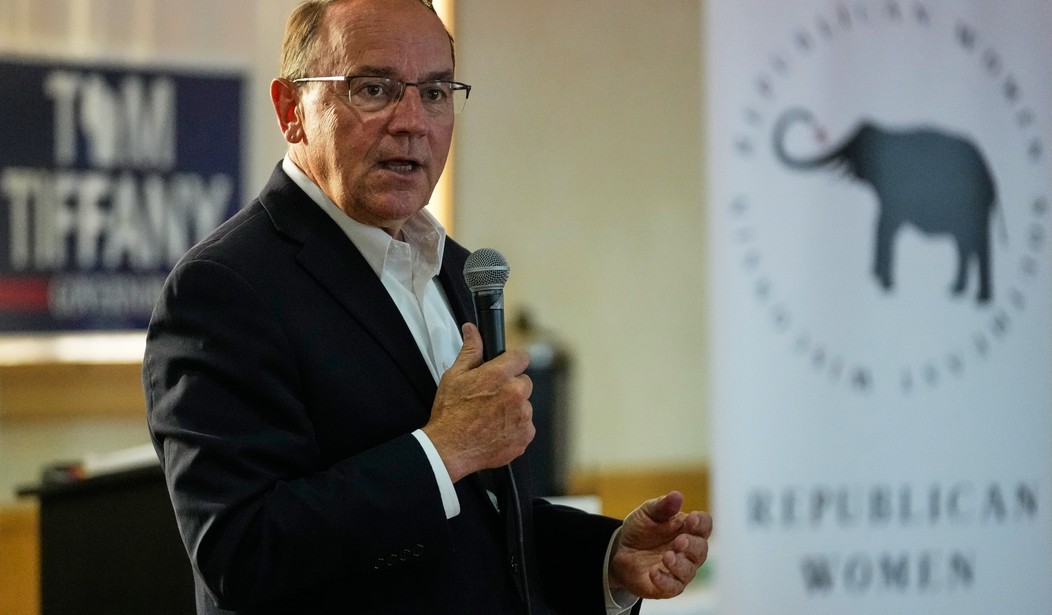
Today’s poll puts David Crowley seven points ahead of Tom Tiffany among likely voters.
A new Marquette Law School Poll survey of Wisconsin finds that, among those who describe themselves as certain to vote for governor on or before Nov. 3, Democrat David Crowley is the choice of 51% and Republican Tom Tiffany the choice of 44%, with 4% undecided. Among all registered voters, Crowley is the choice of 47% and Tiffany is supported by 44%, with 9% undecided. In September, Crowley had 49% and Tiffany 46% of likely voters, and, among registered voters, Crowley had 46% and Tiffany 45%.
Crowley leads with those who are absolutely certain they will vote or have already done so (the group classified as “likely voters”), while Tiffany leads among those who say they are not certain but very likely to vote, as well as among those who say they may not or won’t vote.
Trump’s record gives us reason to examine that finding carefully, but it doesn’t give us seven points we can simply hand Tiffany. Different candidates and different elections require their own evidence.
Wisconsin voters should read the poll, inspect its assumptions, and remember its record. Confidence ought to be earned through accuracy. Nobody wins Wisconsin because a university puts a number beside a name.
Voters do.
Support independent commentary that checks the numbers and asks the uncomfortable questions. Get 60% off a PJ Media VIP membership with promo code FIGHT.

Join the Conversation
VIP members get the ability to comment on articles.