


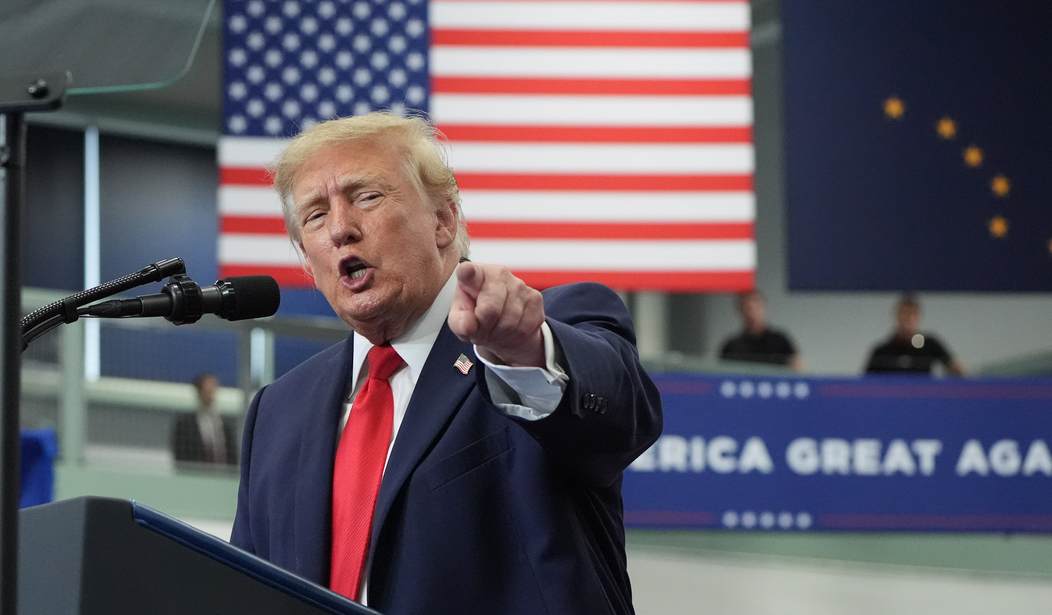
On September 18, President Donald Trump signed a law designed to punish Russia for continuing its war against Ukraine. The Senate had approved it 86-11. On October 16, as its major new penalties approached, Trump issued an executive order that waived much of what Congress had just enacted.
Lawmakers gave him authority in a provision they included in the statute: Section 115.
The Graham Act was meant to increase economic pressure on Moscow and its trading partners. It authorized duties as high as 500% on Russian imports and up to 100% on goods from certain countries buying Russian oil and gas. It also targeted Russian officials, banks, energy interests, and efforts to evade existing sanctions.
Section 115 permits the president to waive sanctions, restrictions, or duties under the act. Before doing so, he must send Congress a written certification, accompanied by an explanation, that the waiver serves America’s national interests. The text doesn’t require Russia to make concessions before a waiver can be issued. Congress expressly gave the president discretion.
Trump used it. Section 4 of his October 16 order waives new tariffs under Sections 112 and 113 and includes a long list of sanctions provisions. Anyone looking only at the announced diesel arrangement would miss the decision’s breadth. The order also directs trade officials to monitor Russian energy purchases and sanctions evasion, preserving the possibility of future penalties if the administration changes course.
The order also preserves sanctions imposed under earlier executive authorities. Existing measures against Russia weren’t automatically erased, and the new waiver shouldn’t be mistaken for the end of America’s sanctions program.
The administration faces an economic calculation. War involving Iran and disrupted energy supplies have pushed fuel prices higher, affecting transportation, farming, and household expenses. Trump recently announced an agreement to let Russian diesel reach American and global markets.
Energy Secretary Chris Wright has argued the arrangement could ease prices while giving Moscow an incentive to reduce hostilities.
From Reuters:
Rubio on Saturday also defended a separate US agreement with Russia to increase diesel supplies to global markets, aimed at easing fuel prices that have climbed amid the war with Iran and disruptions to energy supplies.
"That diesel is going to be sold one way or the other," Rubio said. "The only difference is how much of it the United States was going to get."
Under the agreement, ?Trump said Russia initially would supply more than 300,000 metric tons of diesel to the United States, followed by shipments in November and beyond.
The diesel agreement is "a carrot to try to end the war, not an economic lifeline" to Russia, US Secretary of Energy Chris Wright said during a Sunday interview on ABC's "This Week."
Secretary of State Marco Rubio said the president wants up to 60 days to examine the impact of the new sanctions and tariffs on the American and global economies. Yet the executive order contains no automatic 60-day expiration. Its waiver remains effective until the president or designated officials determine further action is appropriate.
Ukraine sees a serious risk in waiting. President Volodymyr Zelensky has warned that easing pressure could encourage Vladimir Putin to prolong the war. Sen. Thom Tillis (R-N.C.) also criticized the move, pointing to the Senate’s overwhelming vote. Sen. Darline Graham (R-S.C.), who helped advance her late brother’s legislation, says she shares Trump’s goal of ending the war but would maintain economic pressure on Russia.
Congress has its own question to answer. The White House order says Trump submitted the required national-interest certification and explanatory report. Section 115 requires that report to be unclassified, although it may have a classified annex. The administration hasn’t published the explanation alongside the order, leaving the public without the reasoning Congress was given.
Lawmakers who wanted an unavoidable sanctions trigger could’ve written narrower waiver conditions. Instead, they approved a law that balances mandatory measures with broad presidential discretion. Congress can now request the explanation, hold hearings, or seek to change that balance through new legislation.
Over the next 60 days, Americans can look for specific results: lower fuel costs, movement toward negotiations, or evidence that delaying sanctions reduced pressure on Moscow. They can also ask when those provisions will take effect, if ever.
Trump made the waiver decision, and Congress wrote the permission into law. Both branches have decisions to explain.
Congress gave the president extraordinary economic tools and equally important authority over their use. PJ Media examines the decisions behind the headlines and the consequences for Americans. Join PJ Media VIP today and save 60% with promo code FIGHT.


Join the Conversation
VIP members get the ability to comment on articles.