
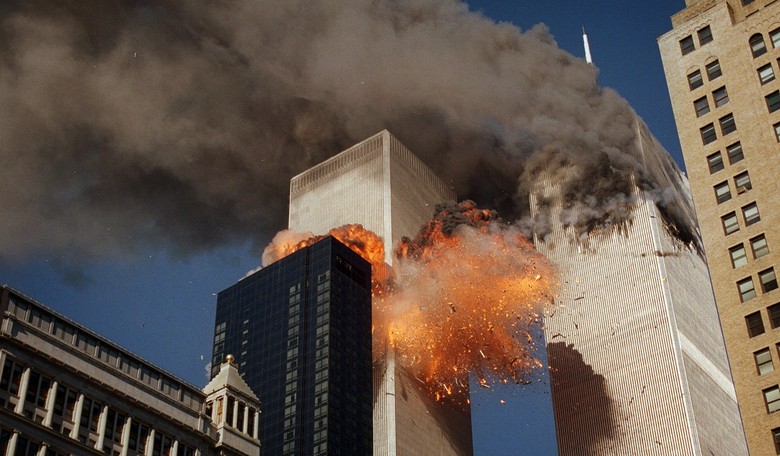
On September 11, 2001, Welles Crowther was supposed to be trading stocks at work. Instead, the 24-year-old covered his nose and mouth with a red bandana and guided terrified people through the smoke in the World Trade Center’s South Tower. He carried a badly wounded woman on his back, helped others find a way down, then went back up to look for more survivors.
He never came home.
Crowther had trained as a volunteer firefighter, but he was working a civilian job that morning. Nobody ordered him to go back upstairs. He simply recognized people who needed help and accepted a danger that could cost him his life.
I’ve written about soldiers who made similar choices. Navigator Henry “Red” Erwin suffered horrible burns from phosphorus he carried close to his body to save his teammates. Such a sacrifice deserves our deepest gratitude, and recognizing civilian courage doesn’t diminish it.
For our VIP members: He Saved His Crew While Burning Alive, and Then Came His Second Miracle
But courage doesn’t belong to the battlefield. It belongs wherever someone sees what is right, understands the price, and acts anyway.
Consider Sophie Scholl. She was a 21-year-old German student who helped distribute leaflets opposing the Nazis during World War II. She knew the danger posed by Hitler’s secret police. In February 1943, authorities caught her and her brother Hans distributing leaflets at their university. The regime executed them four days later.
Scholl carried no rifle. She held to her convictions even though staying quiet would’ve been safer. The risks differed from those faced by a soldier in combat, but the moral choice felt painfully familiar.
Most of us will never confront a burning skyscraper or a dictatorship. Our moments of courage may arrive without any warning, in places where nobody is keeping score and nobody is likely to say thank you.
A woman leaves an abusive home despite threats from the person who has hurt her. An employee exposes theft or fraud knowing his career could end. A teenager defends a classmate being tormented by the crowd, then finds himself standing alone.
Each faces a consequence that would make silence or retreat understandable.
Other struggles last longer than a single moment. A parent sits beside a child’s hospital bed after another frightening diagnosis. Someone living with constant pain makes a difficult choice to keep a promise to a loved one. Their courage may be less visible, but the effort and sacrifice can be real.
Of course, suffering alone doesn’t make someone courageous. Neither does being loud, stubborn, or eager for a fight. We can admire endurance without pretending every bad day is heroism. Courage requires more: the freedom to choose, a real cost, and a reason worth paying.
Doing the right thing when it’s easy is decency. Doing it when you might lose your safety, livelihood, standing, or life is where decency meets courage. Fear doesn’t disqualify anyone. Sometimes the person who is trembling most is making the greatest choice of all.
The people we honor for saving comrades often say they were only doing their duty. Maybe they meant it. Perhaps they spent years becoming the sort of people who couldn’t bear to abandon someone in danger.
The same character can live in a nurse, a neighbor, a teacher, or a stranger who refuses to walk away when help is needed. The world may never learn their names. Their families and the people they’ve helped may never forget them.
We need to keep honoring those who risk everything in uniform. We should also recognize the brave among us who face danger without one. Courage needs no rank, no ceremony, and no medal. Sometimes the most courageous person we’ll ever know is sitting quietly across from us at the kitchen table.