Deke Slayton helped decide which astronauts would ride rockets into orbit, circle the moon, and eventually walk across its surface. For years, the Wisconsin pilot assigned other men to missions he desperately wanted for himself.
Donald "Deke" Slayton was born in Sparta, Wis., on March 1, 1924, and grew up on his family's farm near Leon. Pearl Harbor was attacked during his senior year of high school, and on his 18th birthday, Slayton enlisted in the Army Air Corps and began the journey that would eventually carry him far beyond Wisconsin.
He earned his wings in 1943 and flew 56 combat missions in B-25 bombers over Europe. After returning to the United States, he became an instructor pilot, then deployed again in 1945 and flew seven combat missions in A-26s near Okinawa before Japan surrendered.
After the war, Slayton earned an aeronautical engineering degree at the University of Minnesota and eventually became an Air Force test pilot at Edwards Air Force Base.
NASA selected Slayton as one of its original Mercury astronauts in April 1959. Suddenly, the Wisconsin farm boy stood beside John Glenn, Alan Shepard, Gus Grissom, Scott Carpenter, Wally Schirra, and Gordon Cooper as America prepared to challenge the Soviet Union in space.
Slayton was supposed to fly Mercury-Atlas 7. Then doctors found idiopathic atrial fibrillation, an irregular heart rhythm. NASA announced on March 15, 1962, that he wouldn't fly the mission. Scott Carpenter took his seat and launched aboard Aurora 7 two months later.
Slayton stayed.
His medical condition kept him out of space, but NASA increasingly placed him near the center of its astronaut operations. By 1966, he was director of flight crew operations, giving him a major role in choosing crews for America's manned missions. The grounded astronaut helped decide who would fly Gemini and Apollo while men he knew climbed into spacecraft and disappeared into the sky.
From NASA:
On July 11, 1962, Slayton assumed new operational, engineering and planning responsibilities within NASA’s Manned Space Flight Research Programs, including Projects Mercury, Gemini, and Apollo. He continued to participate in the astronaut training program and his physical condition was monitored on a continuous basis by members of the MSC medical staff.
In September 1962, Slayton was assigned as Coordinator of Astronaut Activities with responsibility for directing the newly formed Astronaut Office. In November 1963, he resigned his commission as an Air Force major and continued and continued with NASA as a civilian astronaut. For three years Slayton served as assistant director of flight crew operations, a new office with responsibility for directing the Astronaut Office, Aircraft Operations Office and Flight Crew Support Division.
Beginning in 1966, he served as director of flight crew operations. As director of flight crew operations, he played a key role in choosing the crew of every manned space mission, including the Apollo teams.
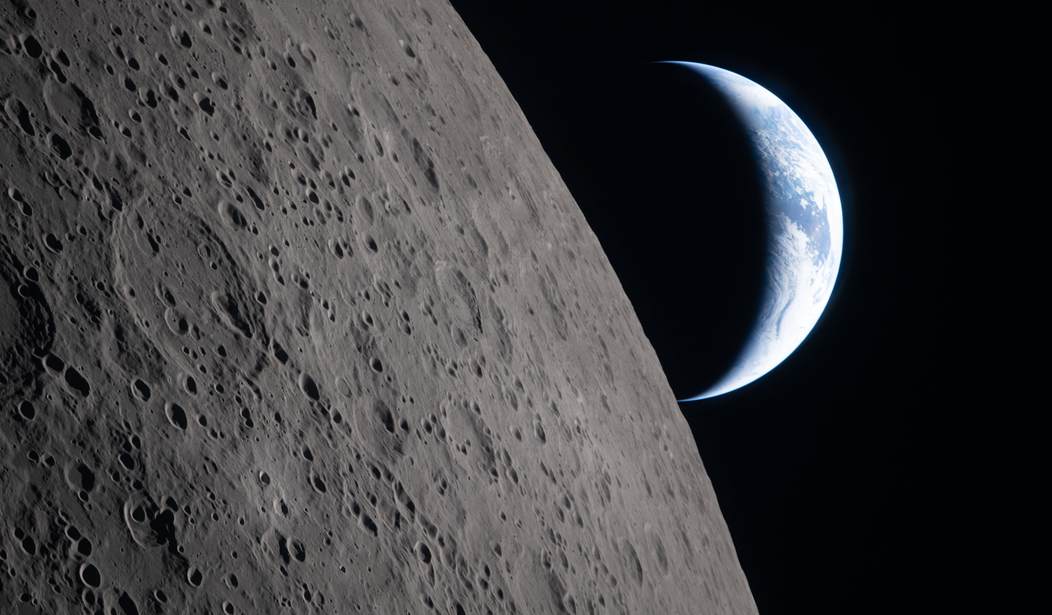
Imagine the restraint required when Apollo 8 carried humans around the moon. Apollo 11 put Neil Armstrong and Buzz Aldrin on its surface, and later crews followed. Slayton helped shape the teams involved in America's greatest space triumphs while his own astronaut wings remained unused.
He didn't surrender the possibility of flying. Slayton exercised daily, quit smoking, stopped drinking coffee, sharply reduced alcohol, experimented with medication, and continued undergoing medical examinations.
In July 1970, his atrial fibrillation disappeared. NASA restored him to full flight status in March 1972.
From NASA:
Slayton was doing everything possible to return to flight status. He followed a daily exercise program, quit smoking cigarettes and drinking coffee, reduced his intake of alcohol drastically, took massive doses of vitamins, and, for a time, took daily doses of quinidine, a crystalline alkaloid.
In July 1970, the fibrillation ceased, and he was restored to full flight status in March 1972, following a comprehensive review of his medical status by NASA’s director of life sciences and the Federal Aviation Agency. Instead of breaking out the champagne, Slayton checked out a T-38 jet trainer at Ellington Air Force Base, Texas, and celebrated with an hour’s worth of aerobatic maneuvers, flying solo.
Slayton celebrated in a way that probably surprised nobody who knew him. He checked out a T-38 jet trainer and spent an hour flying aerobatics alone. Champagne could wait; Deke Slayton had an airplane again.
NASA assigned him to the Apollo-Soyuz Test Project in 1973. On July 15, 1975, Slayton finally launched into space beside Thomas Stafford and Vance Brand. He was 51 years old and the last of the original Mercury Seven to leave Earth.
Two days later, their Apollo spacecraft docked with Soyuz 19. American astronauts and Soviet cosmonauts met in orbit, shook hands, conducted experiments, and demonstrated that spacecraft built by Cold War rivals could rendezvous and connect.
He wasn't finished. Slayton later helped oversee testing for the Space Shuttle Enterprise and preparations for the first shuttle orbital flights. After leaving NASA in 1982, he remained involved in private spaceflight and aviation until his death from brain cancer in 1993.
Back in Sparta, the Deke Slayton Memorial Space & Bicycle Museum preserves his story. Among its exhibits are artifacts from his career, aircraft, NASA items, and Wisconsin's only publicly viewable piece of moon rock.
Deke Slayton spent years watching rockets rise without him. He could've walked away when doctors took his Mercury seat, but he stayed close enough to help send other astronauts farther than anyone had gone before.
Sixteen years after NASA chose him, Wisconsin's astronaut finally got his turn.