





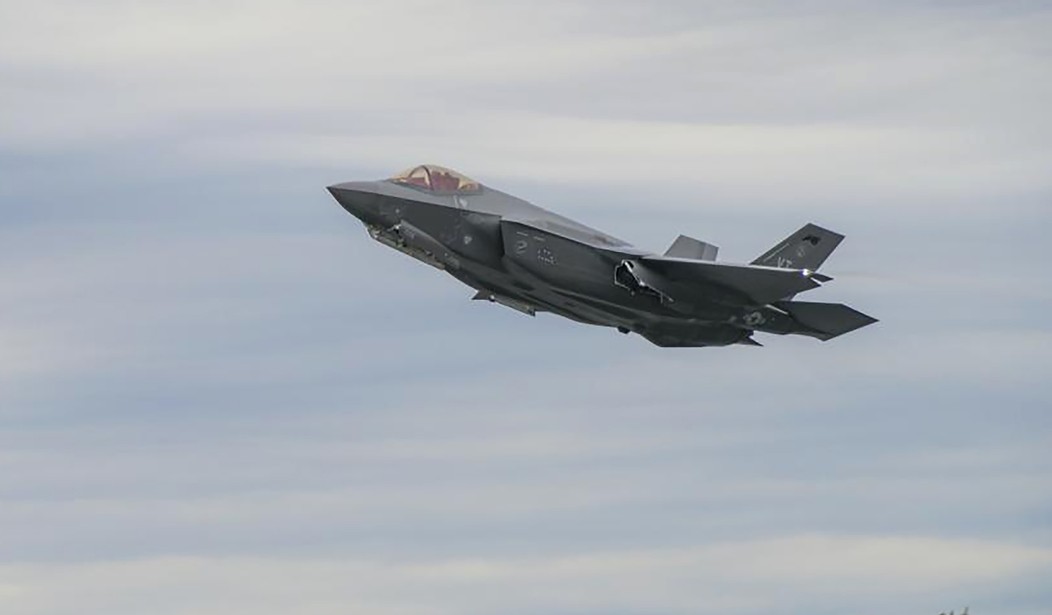
America spent decades and hundreds of billions building an extraordinarily difficult fighter aircraft for an enemy to find.
Apparently, keeping track of spare parts is a separate engineering problem.
A shipment of unserviceable F-35 components left Australia for repairs in the United States earlier this year. Somewhere across the Pacific, the shipment was diverted to Hong Kong.
Months later, U.S. officials and Lockheed Martin were still working to retrieve the components and determine what happened.
From Freightwaves:
Among the diverted equipment was reportedly an F-35 canopy, the cockpit enclosure that incorporates technology associated with the aircraft’s low-observable design. That detail elevates the security implications beyond a routine loss of repairable spares, because adversaries could potentially examine physical components for clues to the F-35’s stealth characteristics and manufacturing methods.
Hong Kong’s status as a Chinese special administrative region has amplified congressional concern that Beijing could gain access to the equipment. There is no public indication that Chinese authorities or the Chinese military have obtained the parts, and the current location and custody of the shipment were not known Friday.
Nobody has produced public evidence showing that China seized the parts or examined them. Nobody has publicly explained why equipment belonging to one of America's most sophisticated weapons programs wound up in Hong Kong, either.
Australian Deputy Prime Minister and Defense Minister Richard Marles confirmed Tuesday that his government is examining what happened on the Australian side. He said his understanding is that the missing equipment isn't sensitive. Lockheed Martin offered similar reassurance, calling the components unserviceable and "low risk for exploitation."
Good. That's comforting.
It would be considerably more comforting if everyone knew where the parts were.
One account says the shipment included an F-35 cockpit canopy containing radar-absorbing material associated with the aircraft's low-observable design. The Pentagon hasn't publicly confirmed that detail, so there's no justification for claiming China obtained American stealth technology. The F-35 Joint Program Office will say only that it is dealing with a "shipment issue" and trying to recover the components while establishing safeguards to prevent another occurrence.
From Breaking Defense:
“We are examining very much everything that has occurred at the Australian end, but the point I would make here is that we are confident about the way in which we’ve engaged with the program, and through the US’s prime contractor, Lockheed,” Richard Marles said, according to a government transcript.
While ultimately referring questions about the nature of the missing components to the US government and Lockheed, Marles said his “understanding” is “we’re not talking about sensitive parts here.”
The uncomfortable part is that the misplaced F-35 hardware isn't a new accounting problem.
The Government Accountability Office reported in 2023 that one F-35 prime contractor had recorded losses of more than 1 million spare parts worth more than $85 million since 2018.
The Joint Program Office had reviewed fewer than 2% of those losses. GAO also found more than 900,000 lost parts worth $66 million had not even been reported to the program office for review as of October 2022.
The reason helps explain the current mess. F-35 operators around the world share a global pool of government-owned spare parts managed largely by contractors. The GAO found the Pentagon lacked a complete real-time accounting system for parts stored throughout that network.
Congress has already recognized the weakness. The 2026 defense authorization requires the program to maintain at least 90 days of F-35 parts by September 2028 and calls for an independent review of shortages hurting aircraft readiness.
Now a shipment headed from one close American ally to the United States has somehow taken a detour into Chinese territory, and officials are still trying to retrieve it.
Maybe investigators will determine this was nothing more sinister than a logistics mistake involving broken equipment. Hopefully they will.
Even that answer should bother us.
The F-35 exists partly because America expects to fight technologically sophisticated adversaries capable of exploiting tiny advantages. Its supply chain shouldn't depend upon everyone hoping a box takes the correct turn somewhere over the Pacific.
We already know how to make the F-35 difficult for China to find.
The Pentagon might want to make sure America can find its own parts first.
PJ Media VIP keeps digging into the national security stories hiding behind the reassuring statements. Join today for 60% off with promo code FIGHT.


Join the Conversation
VIP members get the ability to comment on articles.