


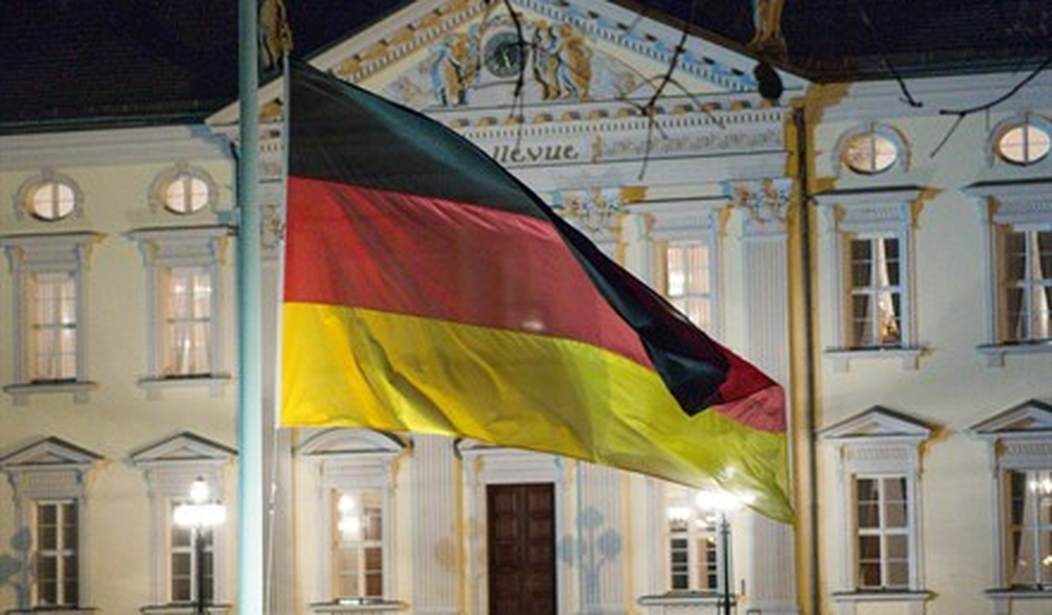
German voters just handed Alternative for Germany its strongest state election result ever. In Saxony-Anhalt, the AfD was taking roughly 45% of the party vote Sunday, more than doubling its 2021 showing, while Chancellor Friedrich Merz's Christian Democratic Union fell far behind it.
The headline formula arrived almost as quickly as the returns. The AfD, readers were told, could become the first "far-right" party to govern a German state since World War II.
🚨 BREAKING: Germany’s far right is on track to claim its biggest electoral success since World War II, with exit polls predicting it will win about 44 percent of the vote in the eastern region of Saxony-Anhalt today.
— POLITICOEurope (@POLITICOEurope) September 6, 2026
Full story: https://t.co/2W0FwfRgMn pic.twitter.com/AbtQrW9eLT
Versions of the same framing appeared across international coverage before anybody knew whether the AfD would have enough seats or coalition support to govern.
Here's the headline and subhead from NBC News:
"German far-right party set for strong win in regional election but uncertain of governing."
"Alternative for Germany could become the first far-right party to take power at a state level since World War II."
The AfD, according to the legacy media, gives reporters legitimate reasons for scrutiny. Saxony-Anhalt's domestic intelligence service formally classifies the state party as a confirmed right-wing extremist organization, citing anti-Muslim, racist, and antisemitic statements and positions it says conflict with human dignity and democratic principles.
From CBS News:
Early exit polls in Germany on Sunday indicated that the Alternative for Germany party has a strong lead in a regional election. Still, it was unclear whether it would be able to form the country's first far-right state government since World War II.
Magdeburg, a city of only about 244,000 people, is the capital of the East German state of Saxony-Anhalt — where the Alternative for Germany (AfD) party is hoping to rise to power in Sunday's state election.
The AfD went into Sunday's election seeking an absolute majority in the state legislature to govern on its own. That would overcome the so-called "firewall" of mainstream parties' refusal to work with AfD.
The polls for ARD and ZDF public television put AfD at around 44% of the vote, more than double its showing five years ago in the region of 2.1 million people west of Berlin.
That was far ahead of the Christian Democratic Union, the center-right party of Chancellor Friedrich Merz that currently leads the state, which was seen polling 18.5%. The Left Party was seen finishing third with about 9%.
The center-left Social Democrats and Greens were also on course to remain in the state legislature, with around 8%-9% each. It was unclear whether the BSW party would get the 5% of the vote needed to win seats. The exit polls put AfD at least marginally short of an absolute majority.
The AfD disputes the designation and continues challenging it through the courts.
Saxony-Anhalt voters faced migration, economic frustration, energy policy, Ukraine, and dissatisfaction with Merz's federal government. AfD lead candidate Ulrich Siegmund campaigned on tougher immigration enforcement, reduced support for Ukraine, and nationalist policies while presenting Sunday's election as a step toward greater national power.
"First since World War II" supplies more than a calendar reference. The phrase places a modern election result in a historical sequence beginning with the defeat of Nazi Germany, even though voters were choosing among legal political parties in a democratic election 81 years later.
Americans have heard similar language for years. Critics of President Donald Trump have invoked Adolf Hitler, Nazism, and Weimar Germany so frequently that a German historian recently described Trump-Hitler comparisons as a "rhetorical cliché" and argued that they have failed to persuade voters.
From the Washington Post:
The ghosts of Germany’s past are everywhere these days. In the United States, critics of President Donald Trump have so often compared him to Adolf Hitler that the analogy is by now a rhetorical cliché. Even JD Vance did it — before recanting and becoming vice president. In Germany itself, references to the Weimar Republic, the fragile democracy that preceded Hitler’s rise to power, are a staple of public debate as an unmistakable prelude-to-Hitler warning. In Britain, the cover of the Spectator magazine last fall raised the specter of “Weimar Britain.”
The German interwar period remains the starkest example of a liberal democracy turning into a brutal dictatorship. An impulse to evoke this era in times of crisis is understandable. But the more Western democracies become fixated on the idea that they might be reliving one of history’s darkest chapters, the more they risk failing to address the challenges of the present.
References to Weimar and Nazi Germany are usually intended to warn against political opponents or unwelcome policies. Take podcaster Joe Rogan, who in January likened the tactics of U.S. Immigration and Customs Enforcement to those of the Gestapo. Or consider the German left-wing activists who turned up at a conference of the far-right Alternative for Germany (AfD) party on Saturday, adding a swastika made out of vegan mince to the breakfast buffet. Such words and gestures are intended to send a clear moral message: This policy or party is reminiscent of the Nazis, and therefore you mustn’t support it.
The problem is that the message doesn’t work. Trump-Hitler comparisons were already popular before 2016 and didn’t deter American voters from making him president twice. (Before Trump, left-wing critics likened President George W. Bush to Hitler; Bush served two terms.) In Britain, conservative Nigel Farage’s Reform UK has been leading in the polls consistently for more than a year despite left-wing opponents describing the party as a “proto-fascist organization” or using similar invective. In Germany, the AfD is now the most popular party, according to all major surveys. Nowhere in the West does the Nazi label kill a political career. A Nazi tattoo did not make Graham Platner a Democratic Party pariah in the run-up to Tuesday’s Democratic Senate primary in Maine.
Warnings of far-right extremism didn’t even work in 1930s Germany; it didn’t even work in Weimar itself, the town that gave the ill-fated republic its name because it was founded there in 1919 after World War I. I have studied the lives of the Weimar townspeople and found ample evidence that many of them knew exactly what they would get if they elected Hitler to power. Many voted for him anyway.
History loses explanatory value when every modern political movement is forced through its darkest chapter. Hitler destroyed German democracy, launched war across Europe, and presided over the systematic murder of six million Jews.
Modern parties should be judged by their own platforms, leaders, actions, and threats to democratic institutions.
The AfD provides plenty to examine on those terms; its critics don't need Hitler standing beside every paragraph to make their case.
Sunday's election deserves the same treatment. Millions of Germans deliberately rejected established parties, and the AfD's support surged to levels once considered impossible.
Calling the result alarming is commentary; explaining why voters produced it is journalism, and 1945 can't substitute for the explanation.
If you value opinion and reporting that digs past political labels and examines what actually happened, PJ Media VIP gives you much more of it. Use promo code FIGHT today and save 60% on your subscription.






Join the conversation as a VIP Member