


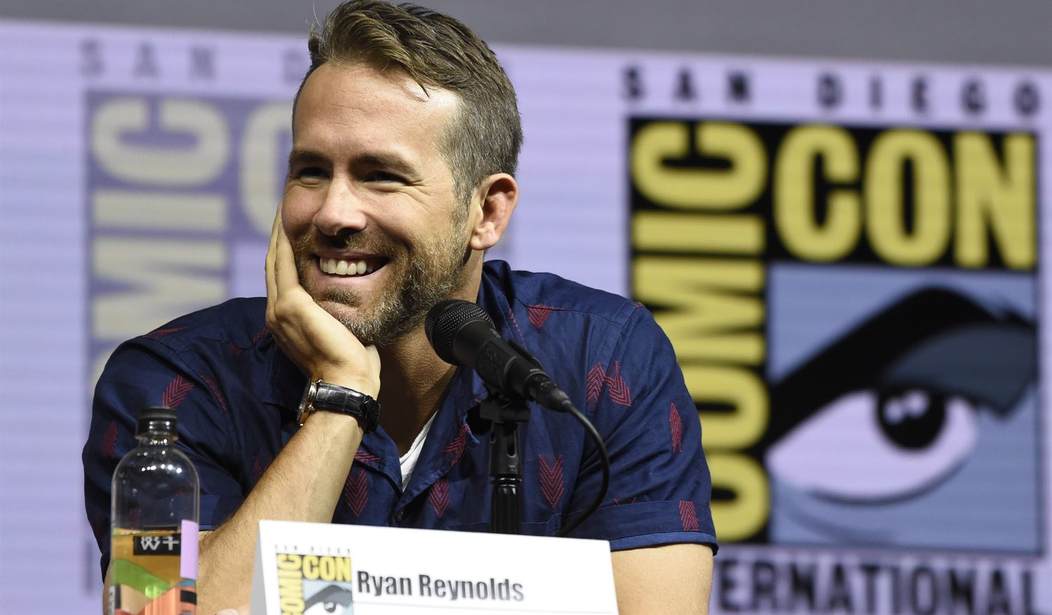
Ryan Reynolds remembers the 1980s as a "brutal, brutal time" and a "f*****g mess."
My memories are considerably less apocalyptic.
I played Little League and Babe Ruth baseball; I played football and basketball, spent hours in the weight room, rode around with friends who finally had driver's licenses, and got my first real job stuffing newspapers with advertising inserts.
Glamorous work, obviously. Somewhere between the furniture store circular and grocery coupons, capitalism corrupted me.
Reynolds has another perspective. He was born in Vancouver in October 1976, meaning he was three when the decade began, and 13 when it ended.
Ryan Reynolds says ’80s nostalgia “paves over all the trauma” of the “tumultuous” decade:
— Variety (@Variety) September 2, 2026
“The 80s was a brutal, brutal time for people. It was a fucking mess and people forget that. It was a tremendous strife. Socio political tensions everywhere. We were still pretty fresh off… pic.twitter.com/CvNE3KLfff
He also grew up in Canada, which seems worth mentioning when explaining what America supposedly felt like during the Reagan years. At three years old, most people haven't deployed a fully formed position on monetary policy.
Reynolds made his comments while promoting Mayday, an Apple TV comedy set in 1987 at the height of the Cold War. Hollywood is still making money from the music, clothes, politics, and atmosphere of the decade Reynolds finds so traumatic.
Apparently, the 1980s remain horrifying right up until somebody green-lights them.
The decade certainly had darkness. AIDS killed tens of thousands of Americans and terrified millions more; the crack epidemic devastated neighborhoods. The Challenger exploded while classmates and I watched. The Cold War remained dangerous; inflation and high-interest rates hurt families, and the 1981 to 1982 recession drove unemployment to nearly 11%.
None of those hardships deserve to be minimized: human beings suffered, families buried loved ones, and some communities carried scars long after the calendar changed.
The economic trouble also didn't materialize when President Ronald Reagan put his hand on the Bible in January 1981. Inflation had battered the country throughout Jimmy Carter's presidency.
Carter appointed Federal Reserve Chairman Paul Volcker in 1979, and Volcker's aggressive interest rate policy helped break inflation, while contributing to the severe recession that followed.
By late 1982, inflation had fallen below 5%, and the long expansion of the middle and late 1980s followed.
Something else changed. Americans started feeling better about America. Only 17% said they were satisfied with the country's direction just before Reagan took office. Satisfaction reached 69% in June 1986. Another Gallup survey that summer found 89% were "very proud" to be Americans, up from 80% in 1981.
Christian Toto also came down on Pratt's side:
Fox spoke with Christian Toto, an award-winning film critic, about how Pratt’s response to Reynolds points to a “very real fissure in American culture.”
“Spencer Pratt’s hot take suggests a sobering reality. Has pop culture’s infatuation with antiheroes had real-world implications? It’s one thing to follow Tony Soprano or Walter White, but modern films and TV shows are replete with villains we’re asked to cheer on,” he told the outlet.
“Consider how many recent movies have given us hit men with hearts of gold. ‘Bullet Train.’ ‘Hit Man.’ The ‘John Wick’ saga. Indie films like ‘Emily the Criminal’ and ‘Carolina Caroline’ also turn villains into quasi-heroes.”
Toto concluded, “Has that had a corrosive effect on the culture? Pratt’s question is worth exploring.”
I remember some of that confidence. I also remember working; stuffing those papers paid for my first car and, eventually, five years of college. Nobody handed me a motivational poster about economic mobility.
They handed me another stack of inserts.
Spencer Pratt was right to push back on Reynolds' sweeping description. Memory romanticizes a decade, but cynicism can flatten one just as easily.
It makes perfect sense that Ryan Reynolds' view of the 80's is the inverse of what normal people think. In 80's movies, bad guys were villains. Today, the bad guys are the heroes. Hollywood now bends over backwards to redeem wickedness and mental illness.
— Spencer Pratt (@spencerpratt) September 4, 2026
Top Gun and St Thomas… https://t.co/nResuc7we7 pic.twitter.com/W1lQcye64h
My 1980s contained bad news, hard work, great friends, baseball diamonds, first cars, growing independence, and possibilities I could actually see.
Ryan Reynolds remembers a mess.
I simply remember growing up.
Want more columns that challenge the fashionable version of history and politics? PJ Media VIP is available at 60% off with promo code FIGHT. Join PJ Media VIP and save 60%




Join the conversation as a VIP Member