


Ronald Reagan faced a choice on August 3, 1981: surrender presidential authority or fire thousands of skilled federal workers whose absence could cripple air travel. He gave the striking controllers 48 hours to return. Most believed he would never carry out the threat.
The anger had been building for years. Air traffic controllers worked under intense pressure, aging equipment, irregular schedules, and staffing shortages. PATCO wanted a $10,000 pay increase, a 32-hour workweek, improved retirement benefits, and better working conditions.
Reagan understood some of those complaints; during the 1980 campaign, he had promised PATCO President Robert Poli that his administration would address staffing, equipment, and workdays.
From the Reagan Library:
I would like to thank the supervisors and controllers who are on the job today, helping to get the nation's air system operating safely. In the New York area, for example, four supervisors were scheduled to report for work, and 17 additionally volunteered. At National Airport a traffic controller told a newsperson he had resigned from the union and reported to work because, ``How can I ask my kids to obey the law if I don't?'' This is a great tribute to America.
Let me make one thing plain. I respect the right of workers in the private sector to strike. Indeed, as president of my own union, I led the first strike ever called by that union. I guess I'm maybe the first one to ever hold this office who is a lifetime member of an AFL - CIO union. But we cannot compare labor-management relations in the private sector with government. Government cannot close down the assembly line. It has to provide without interruption the protective services which are government's reason for being.
It was in recongition of this that the Congress passed a law forbidding strikes by government employees against the public safety. Let me read the solemn oath taken by each of these employees, a sworn affidavit, when they accepted their jobs: ``I am not participating in any strike against the Government of the United States or any agency thereof, and I will not so participate while an employee of the Government of the United States or any agency thereof.''
It is for this reason that I must tell those who fail to report for duty this morning they are in violation of the law, and if they do not report for work within 48 hours, they have forfeited their jobs and will be terminated.
PATCO then endorsed him.
Negotiations still collapsed. The FAA and PATCO held 37 formal bargaining sessions before the union rejected the administration's offer. At 7 a.m. on August 3, about 12,300 controllers walked off the job.
Federal law prohibited government employees from striking, and every controller had signed an oath promising not to do so.
From the Georgetown Labor History Resource Project:
Forty years ago, in August 1981, over 12,000 members of the Professional Air Traffic Controllers Organization (PATCO) walked off the job after contract negotiations with the Federal Aviation Administration (FAA) broke down. President Ronald Reagan ordered them to return to work, and after 48 hours fired those who did not (Schalch).
PATCO was established in 1968 (Schalch, Lippert). During the 1970s, it was successful in using a series of slowdowns and sick-outs to gain retirement and retraining benefits for its members, air traffic controllers employed by the federal government, who were both at least 50 years old and had worked for at least 20 years (Lippert). In the 1980 presidential election, PATCO endorsed Reagan, who had previously been the president of the Screen Actors Guild, in his successful bid to defeat incumbent President Jimmy Carter. In a letter to PATCO president Robert Poli in October 1980, Reagan wrote “I pledge to you that my administration will work very closely with you to bring about a spirit of cooperation between the President and the air traffic controllers” (Pardlo).
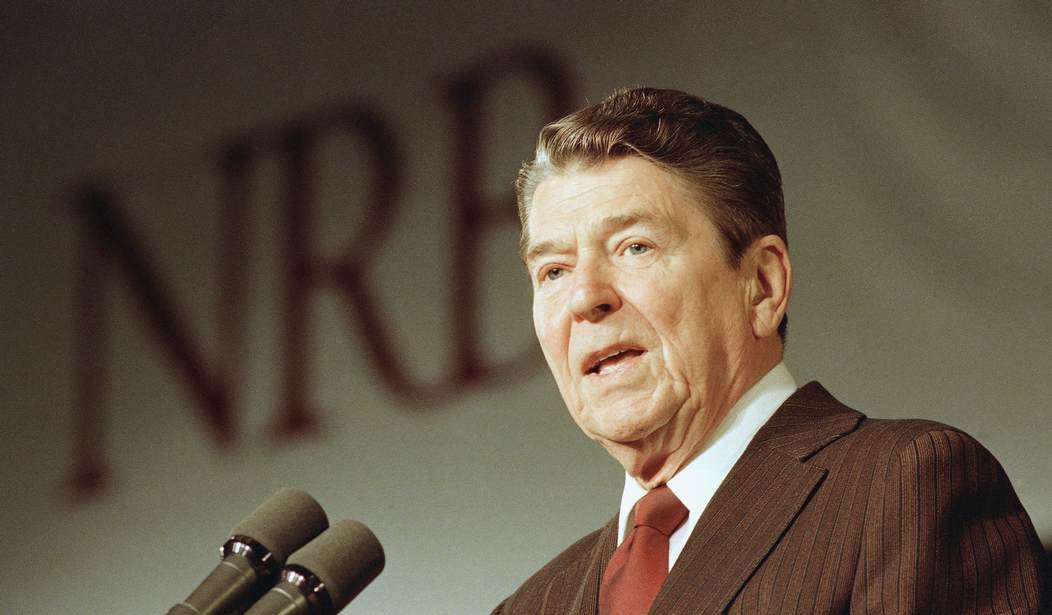
Four hours later, Reagan stood in the Rose Garden. A former union president himself, he defended private-sector strikes but drew a firm line around essential government services. Controllers who failed to report within 48 hours, he said, had forfeited their jobs.
PATCO expected its members' specialized skills to force the administration back to the table. Reagan and Transportation Secretary Drew Lewis had prepared another answer. Supervisors, nonstriking controllers, support personnel, and roughly 800 military controllers kept the system operating.
The FAA reduced traffic, prioritized safety, and canceled or delayed thousands of flights. About 35% of the nation's 14,200 scheduled commercial flights were grounded on the first day.
When the deadline expired on August 5, Reagan fired roughly 11,400 controllers. Appeals later returned 440 to the payroll, but the union had lost its wager. The Federal Labor Relations Authority decertified PATCO on October 22. Polling showed 59% approved of Reagan's handling of the showdown.
Reagan’s reaction to the PATCO (Professional Air Traffic Controllers Organization) strike was widely portrayed as harsh — not only did Reagan fire the controllers, he banned the government from ever rehiring them. The “ban for life” was rescinded by the Clinton administration, but not until 12 years after the strike.
But the public solidly supported Reagan’s action. Fully 59% of Americans approved of the way he was handling the issue, according to a Gallup poll conducted a few days after he fired the controllers. A Harris survey at about the same time showed that by 51% to 40%, more said they were in sympathy with the Reagan administration than with the air traffic controllers. Several months later, in January 1982, 50% said that Reagan’s treatment of the air traffic controllers was “about right.”
In many ways, the public’s reaction was predictable. While labor unions had much more support in the early 1980s than they do today, Americans clearly drew the line against strikes by government workers in essential occupations — including air traffic controllers. In the Gallup poll, just 28% said air traffic controllers should be permitted to strike while 68% said they should not. Even among those in households with a union member, just 40% said the controllers should be allowed to strike.
The short-term cost was real. Travelers faced months of reduced capacity, and remaining controllers carried a heavier burden. The FAA accelerated recruiting and training, but highly skilled controllers couldn't be produced quickly.
From the FAA:
The Federal Aviation Administration was confronted in 1981 with the challenge of rebuilding its core, technical, and highly-trained air traffic control specialist (ATCS) workforce following the PATCO strike. From late 1981 through mid-1992, the FAA rebuilt this critical workforce through a large-scale testing, screening and training program. By mid-1992, recovery of the controller workforce was complete, and it was no longer necessary for the FAA to conduct a large-scale hiring program. The six papers presented in this report represent the first major retrospective analysis of the complete data set describing the recovery of the FAA's en route and terminal ATCS workforce following the 1981 controller strike.
The first paper describes the personnel processes, focusing on recruitment and hiring programs for the en route and terminal options. The second paper presents a detailed description of the aptitude test battery used to evaluate over 400,000 applicants between 1981 and 1992. The third paper offers a definitive statistical portrait of the FAA Academy Screening programs as predictors of field training outcomes. On-the-job training (OJT) programs in en route and terminal facilities are described in the fourth paper. These four papers, taken together, provide a definitive description of the processes used to recruit, test, screen, and train persons for the ATCS occupation between 1981 and 1992. The fifth paper draws on FAA organizational survey data to describe controller perceptions of the organizational climate in which the workforce recovery occurred. The sixth paper analyzes current controller workforce demographics and technological trends in air traffic control to identify potential areas of future research.
Rebuilding the workforce continued until mid-1992, more than a decade after the strike.
The wider consequences reached beyond aviation. Employers had long possessed the legal power to hire permanent replacements during certain private-sector strikes, but many had avoided using it.
Reagan's victory removed much of the political fear. Major work stoppages averaged 269 a year from 1971 through 1980, then fell to 69 during the 1980s and 34 during the 1990s.
PATCO didn't cause every part of labor's decline, but it became the clearest warning that a strike could end with workers permanently losing their jobs.
Reagan also strengthened the presidency. Allies later argued that Soviet leaders saw a president willing to enforce a threat despite serious risk. Historians still debate how much Moscow cared about a domestic labor fight.
Americans didn't need historians to understand the message; Reagan had stated a deadline in public, absorbed the disruption, and followed through.
President Bill Clinton lifted the rehiring ban in 1993, but few strikers ever returned. PATCO's grievances didn't vanish, and Reagan's decision didn't solve every problem inside the FAA.
From the National Air and Space Museum:
At the time of the strike, Bill Taylor was facility representative for the Tucson Radar Approach Control and PATCO Western Regional representative. On August 5, Taylor, PATCO vice president Gary Eads, and thirty-seven others across the country were arrested on federal charges for the felony of striking against the federal government. Taylor was the first of this group to be convicted. He was sentenced to one year of probation, including the loss of his right to vote during that time.
PATCO was a union that refused to die. Eads, Taylor, and several other strikers moved to Washington, DC and formed the U.S. Air Traffic Controllers Organization (USATCO), which continued organizing and lobbying for an end to the government's ban on rehiring through November 1984, when it was disbanded for lack of funds. At that time, Bill Taylor initiated PATCO Lives, an organization "dedicated to the good and welfare of PATCO air traffic controllers and their families." PATCO Lives and its newsletter The Lifeline functioned as a network and resource for fired controllers.
Twelve years after the PATCO strike, in August 1993, President Clinton lifted the lifetime ban on rehiring PATCO controllers instituted by the Reagan administration. This largely symbolic gesture was bitterly opposed by the FAA and resulted in the rehiring of less than 1,000 of the 11,345 fired strikers by 2001.
The lasting lesson came from the collision between a union convinced it was indispensable and a president convinced the law could not bend.
PATCO bet Reagan would fold.
On August 5, 1981, he answered with 11,000 pink slips.