


Clay Travis put $10 million on the table, and the WNBA answered with silence. The Outkick founder challenged the defending champion Las Vegas Aces to play a boys' high school state championship team of his choice.
If Las Vegas wins, the Aces receive $10 million; if the boys win, Travis says he'll give them the same amount to divide among themselves, while pay-per-view profits would benefit the Tunnels to Towers Foundation.
The silence is understandable. The Aces have almost nothing to gain beyond the money, and the WNBA has almost everything to lose. A Las Vegas victory would be dismissed as grown professionals beating teenagers. A defeat would become the most replayed game in women's basketball history.
Las Vegas is no convenient weakling. The Aces swept the Phoenix Mercury in the 2025 Finals and won their third championship in four seasons. Aces forward A'ja Wilson captured league and Finals MVP honors.
Travis chose the best team available because his point collapses if he selects a soft target.
Important announcement: I am upping my offer, $10 million dollars for a head-to-head basketball game between the defending WNBA champion Las Vegas Aces and a boy's high school state title team of my choice. If the Aces beat my team, I will give them $10 million.
— Clay Travis (@ClayTravis) August 3, 2026
His challenge isn't an argument that women can't play basketball. WNBA players possess uncommon skill, discipline, and toughness — easily the toughest lesbians in professional sports.
The challenge tests a different claim: whether biological sex creates athletic differences large enough to justify separate competitive categories.
The WNBA has once again found itself embroiled in controversy, thanks in large part to the reaction from Sophie Cunningham's comments on male competition in women's sports.
When Cunningham said that transgender male athletes should not compete in women's sports, she echoed a position shared by 80% to 90% of the American public. And also one supported by the realities of biology and science considering the inherent physical advantages men have over women.
But her remarks set off a firestorm of criticism and backlash within the WNBA. Players, coaches, fans... all rushed to critique those comments, boo Cunningham whenever she touched the ball, or wear pointed clothing specifically in response to her statement. Several feigned ignorance of the science behind males in women's sports. One co-owner was even suspended after confronting a young Cunningham supporter.
n order to educate those curiously uninformed coaches, OutKick founder Clay Travis publicly posted an offer to the WNBA: have the Las Vegas Aces, the league's championship winning team, play a high school state title-winning boys' basketball team, with $10 million at stake. Beat the boys, get $10 million. For a team with an estimated annual revenue of $33 million, that's a substantial sum of money. Forbes even estimated the Aces were worth $300 million in 2025, meaning the $10 million prize would represent about 3.3% of the franchise's valuation.
Yet more than 24 hours later, there's been radio silence. Both from the league, from those coaches who are more than ready to jump in to defend left-wing politics whenever necessary, and from the Aces themselves.
Sports history has already offered a warning. In 2017, the U.S. women's national soccer team lost 5-2 to the FC Dallas under-15 boys academy during a training scrimmage.
It wasn't a World Cup match, and it doesn't prove every boys team would beat every elite women's team, but it does explain why women's leagues were created in the first place.
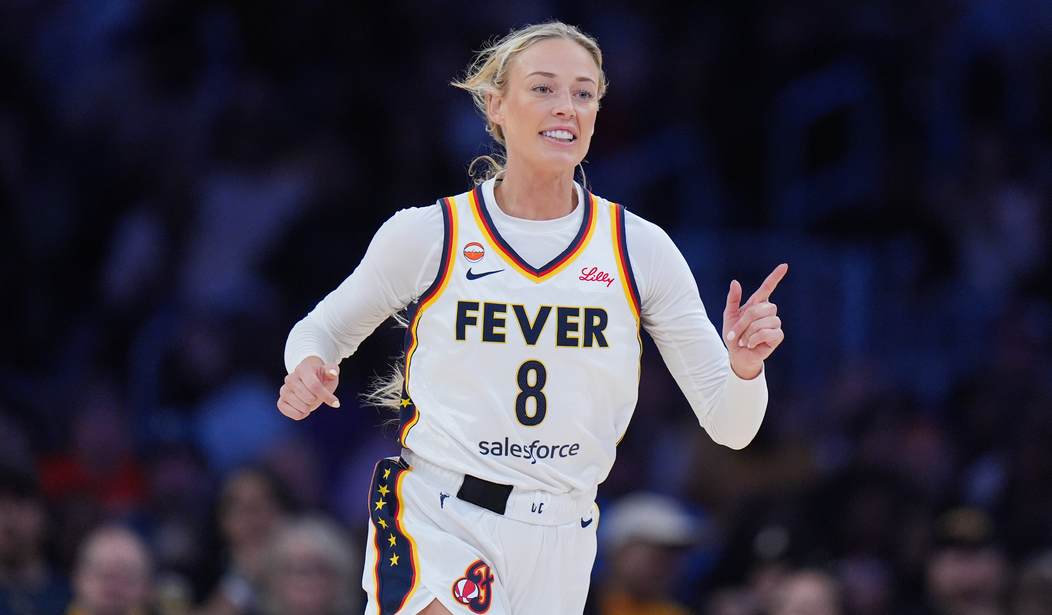
The WNBA's larger problem is cultural. A league that should be building around Indiana Fever guard Caitlin Clark has too often allowed her to become a target in somebody else's culture war. Clark entered August averaging about 21 points and nearly eight assists per game.
Fever head coach Stephanie White has also complained about rough plays and perceived cheap shots directed at her star.
White, whose Fever (10-8) lost for the third time in four games, said she talked to officials at halftime about both of the plays in question.
"Yet we still had 11 fouls in the fourth quarter to their two," White said. "They still shot 24 free throws in the second half."
White pointed out that two nights earlier, there were six technical fouls -- one issued to Clark -- and one ejection during Indiana's 86-77 win against Phoenix.
"(The officials) are coming in here aware of what happened two nights ago, and that s-- still happens," White said. "And the reckless closeout that they actually reviewed ... that wasn't upgraded. To me that's like a do-over on a test; how do you screw it up again?
"Absolutely disrespectful. We spent all offseason looking at officiating, and I still say the one thing that we keep asking for is consistency. (Clark) is not called the same way as everybody else is called. The fist in the throat is crazy. It's crazy. It's dangerous. ... When you have these things continue to happen time and time and time again, eventually it gets frustrating."
The league has spent years asking fans, investors, and media partners to take its financial future seriously. Its books remain private and disputed, but the WNBA now has a media rights package worth about $200 million annually while owners and players continue arguing over revenue, salaries, and claimed losses.
Ten million dollars is meaningful money, nothing to sneeze at.
Still, WNBA Commissioner Cathy Engelbert shouldn't accept Travis's offer; her job is to protect the league, not turn its champion into a public experiment. Declining the game is smart business.
Pretending the challenge has no force is something else. Travis found the contradiction the WNBA keeps trying to avoid. The league insists women's sports deserve their stage, while many of its loudest voices refuse to defend the biological boundary that makes the stage possible.
The Aces won't play, and everyone knows why. Travis didn't need a tip-off to call the WNBA's bluff. He only needed $10 million and a question the league can't honestly answer.