


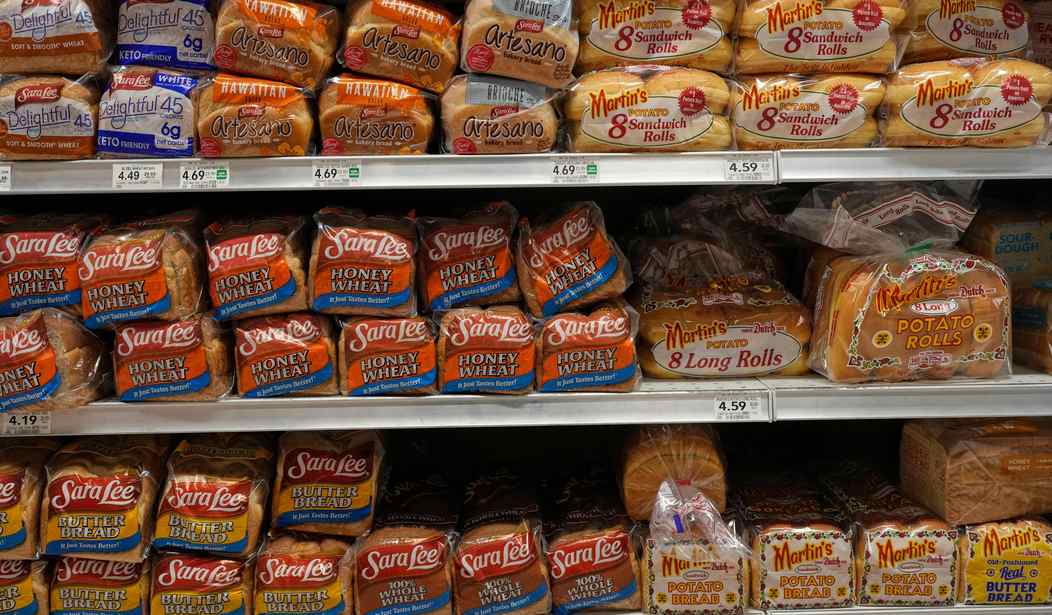
Otto Rohwedder gave America something so ordinary now that we barely notice it unless the loaf gets smashed on the ride home.
On July 7, 1928, his commercial bread-slicing machine began cutting bakery loaves into neat, even slices. The first machine was used at Bench's Bakery in Chillicothe, Mo., and suddenly breakfast had one less small battle built into it.
Before that, bread was hardly a novelty. People had baked, sold, carried, torn, cut, toasted, and blessed bread for centuries. But buying a loaf already sliced was different; it saved time, made sandwiches easier, and gave mothers one less knife job during the morning rush.
It also helped turn store-bought bread into a reliable household habit instead of a second-best choice behind the home-baked loaf. From Time:
While an advertisement touted it as “the greatest forward step in the baking industry since bread was wrapped,” customers were wary. According to the author of Why Do Donuts Have Holes?: Fascinating Facts About What We Eat And Drink, the loaves failed to fly off the shelves, partly “because they were sloppy looking.”
Aesthetics aside, sliced bread in the pre-preservative era also went stale faster than its intact counterpart. Rohwedder came up with a solution: U-shaped pins that held the loaf together, making it appear whole inside its packaging, according to the New York Times.
Still, some people were bewildered by the concept itself, according to the Smithsonian Museum, where Rohwedder’s second bread slicer resides. (The first fell apart after six months of heavy use.) “The idea of sliced bread may be startling to some people,” a 1928 story in the Chillicothe newspaper acknowledged. “Certainly it represents a definite departure from the usual manner of supplying the consumer with baked loaves.”
The funny part is that sliced bread needed selling. Early loaves could dry out faster, and some shoppers thought the slices looked messy. Rohwedder's answer was mechanical and practical: slice the bread, keep the loaf together, and wrap it well enough to survive the shelf. From the National Museum of American History:
The public loved the convenience of sliced bread and, by 1929, Rohwedder's Mac-Roh Company was feverishly meeting the demand for bread-slicing machines. By the following year, the Continental Baking Company was selling sliced bread under the Wonder Bread label. Having achieved success, Mr. Rohwedder reflected on his invention in the June 1930 issue of the Atlanta-based bakery trade journal, New South Baker: "I have seen enough bakers benefit in a big way from Sliced Bread to know that the same results can be obtained by any baker anywhere if he goes about the matter correctly. A good loaf, a proper presentation of Sliced Bread to the grocers and a truthful, clean advertising program based upon successful experiences and the baker can build his business far beyond what he could do without Sliced Bread. . . We are continuing our experimental and developmental work confident in the belief that the real possibilities of Sliced Bread have scarcely been scratched."
By the 1930s, big bakeries had turned sliced bread into a national convenience, and the phrase “the greatest thing since sliced bread” started sounding less like a joke than a fair review from a tired parent packing lunch.
America even learned how attached it had become when the federal government briefly banned sliced bread in 1943 as a wartime conservation measure. The goal was to save wrapping paper and control costs. The public response wasn't exactly patriotic silence.
The ban disappeared within weeks, which tells you plenty about the emotional bond between Americans and toast. From Time:
But, after a few improvements to the slicing machine, loaves became less sloppy-looking and sliced bread earned its place in hearts and homes across the country. By World War II, Americans were so hooked on the convenience that its disappearance—a wartime conservation measure meant to save the hundred tons of steel that went into slicing machines each year—created a nationwide crisis. According to TIME’s 1943 account, the ban on sliced bread provoked as much ire as gas rationing did.
In fact, the unpopular ban was lifted just two months after it went into effect. The New York Times heralded its removal with the headline, “Sliced Bread Put Back on Sale; Housewives’ Thumbs Safe Again.” It’s wasn’t long before Americans were using sliced bread as a point of comparison for greatness.
Sliced bread also belongs to a bigger American story. From 1925 forward, daily life filled up with quiet little revolutions that looked silly until everyone used them.
Clarence Birdseye's quick freezing method helped make frozen foods taste like food instead of punishment from the lack of an icebox. The Library of Congress credits him with inventing the quick-freezing method in 1924 that led to the frozen foods we know today.
Ruth Wakefield gave the country another staple in the 1930s with the chocolate chip cookie, first known as the Chocolate Crunch Cookie. Her 1938 cookbook carried the recipe that food historians treat as the first chocolate chip cookie recipe.
Imagine telling a child at a bake sale that the cookie in his hands once had to be invented. He'd look at you like you'd claimed someone invented breathing.
Then came the age of containers, trays, codes, and buttons. Earl Tupper invented the famous seal that helped bring Tupperware into American kitchens. Swanson TV dinner took hold in 1954 and turned frozen meals into a cultural icon. The ZIP code arrived in 1963 and gave every envelope a little numerical discipline. Percy Spencer's microwave work after World War II eventually made leftovers less tragic.
None of these things feels heroic when you're standing in the kitchen half awake. Sliced bread, frozen peas, chocolate chip cookies, plastic leftovers, TV dinners, ZIP codes, and microwave popcorn all became background noise.
But every staple had a first day; somebody had to build the machine, test the recipe, push the product, and convince Americans that convenience wasn't laziness. Sometimes progress arrives with speeches and flags.
And every so often it shows up as two slices of bread, already cut, waiting for peanut butter and jelly.
Editor's Note: Do you enjoy PJ Media's conservative reporting that takes on the radical left and woke media? Support our work so that we can continue to bring you the truth.
Join PJ Media VIP and use promo code FIGHT to receive 60% off your membership.






Join the conversation as a VIP Member