


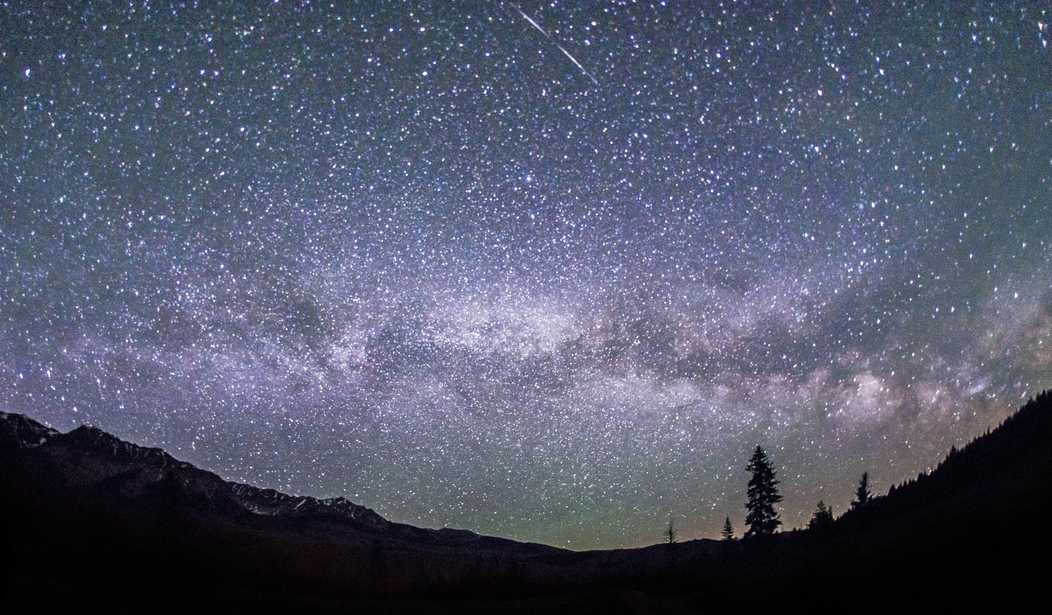
Asteroid Apophis is coming close enough in 2029 for much of Earth to look up and see a speck from deep space cross the sky. The important word is “safe.”
NASA says Apophis will pass Earth on April 13, 2029, at roughly 20,000 miles above the surface, closer than many geosynchronous satellites, with no impact threat for at least the next century.
New visibility work presented this month found that about 90% of the world's population lives in places where Apophis could be seen, weather and light pollution permitting.
Humanity is getting better at knowing what's coming. In 2004, Apophis briefly caused real concern because early calculations left open a possible 2029 impact. Better observations removed the danger. Now the same asteroid has become a science event, a public skywatching event, and a reminder that prediction is one of civilization's quiet victories.
Fear faded because patient measurement beat panic.
NASA is also planning for a telescope that may change how we search for life. The Habitable Worlds Observatory is being designed to study rocky, Earth-like planets around sun-like stars.
NASA's science page calls it the first telescope built specifically to search for signs of life on planets orbiting other stars. The harder engineering lesson is just as interesting: the observatory will have to be serviceable in space, likely with robots, while operating around 1 million miles from Earth. From Space.com:
NASA's new alien-hunting telescope, the Habitable Worlds Observatory (HWO), will be serviceable out in space (and it will have gamma-ray detectors, to boot).
Do you remember seeing NASA's space shuttle astronauts working on the Hubble Space Telescope out in space? Well, it will likely be robots this time around, but NASA is planning for HWO to be serviceable, which means that they will need to figure out a way to work on, repair, and maintain the observatory while it operates roughly a million miles (1.5 million kilometers) away.
"HWO will have to be serviceable to some extent," NASA's astrophysics division director Shawn Domagal-Goldman told Space.com during a session at the American Astronomical Society's (AAS) 248th meeting in Pasadena, California.
The telescope will need extreme precision. NASA's January planning materials said Habitable Worlds would require an optical system stable to within the width of an atom and a coronagraph thousands of times more capable than any space coronagraph flying now.
Search for life isn't a bumper sticker; it's metal, math, patience, failure, repair, and enough humility to build a machine that future engineers can fix.
Then came TESS with a surprise hidden in old data. NASA's Transiting Exoplanet Survey Satellite usually finds planets when they pass in front of their stars and dim the light.
This time, researchers found Gaia23bra b through microlensing, where gravity bends light in a way Einstein's work predicted. NASA says it's the first planetary system TESS has identified through ripples in space-time. From Space.com:
To understand what microlensing is, first we have to consider what general relativity says about the effect of objects with mass on space itself. Mass causes the very fabric of space and time, united as 4-dimensional spacetime, to warp. Gravity arises from that curvature. The greater the mass, the more extreme the warping and thus the greater the force of gravity.
Here is the cool part: light usually travels in a straight line, but when the very fabric of spacetime is curved, it has to follow that path. So when light from a background object passes a foreground object, the light bends around it. The bigger the mass and the closer to that mass the light passes, the more its path is curved. That means light from the same source can reach our telescopes at different times. This causes an amplification of the background source.
This phenomenon of gravitational lensing has been used to great effect to study ancient galaxies that would usually be too distant and faint to see when they are gravitationally lensed by foreground galaxy clusters.
The planet is a super-Jupiter orbiting far from an orange dwarf star, at a distance similar to Jupiter's distance from the sun.
Space also sent a visitor with a long memory. The interstellar comet 3I/ATLAS came from outside our solar system, and new work points to an ancient origin far from its parent star.
Isotopes are versions of atomic elements with different numbers of neutrons. For example, carbon-12 contains six protons and six neutrons, while carbon-13 contains six protons and seven neutrons. Meanwhile nitrogen-14 has seven protons and neutrons each, while nitrogen-15 has seven protons and eight neutrons.
These isotopes can form through subtly different processes, at different times and in different locations in the galaxy. The ratio of these isotopes in the gases released by comet 3I/ATLAS into its coma and tail as it neared the sun and grew warmer can therefore tell us much about its origin and history.
Consequently, interstellar objects such as 3I/ATLAS "are sort of fossils from a planetary formation process that happened very far away, but we get the chance to study from much closer," said astronomer Cyrielle Opitom of the University of Edinburgh in a statement.
Webb data and observations from the Very Large Telescope show unusual chemical ratios, including carbon and nitrogen clues unlike normal solar system comets.
Researchers say 3I/ATLAS may be 10 to 12 billion years old, more than twice the age of our solar system.
Four stories, one lesson: the universe keeps rewarding attention. A dangerous-looking asteroid becomes a safe close pass. A future telescope forces engineers to plan for repair before launch. An old spacecraft finds a planet by catching gravity at work. An interstellar comet carries chemistry from a place and time beyond our own birth.
Earth feels noisy because Earth is noisy. Politics, courts, wars, spending fights, scandals, and screens crowd the mind. Then a week like this arrives, and the sky quietly reminds us that wonder hasn't resigned.
We are small, yes, but not helpless. We can measure, build, look, and learn.
That's still one of the best things about us.