





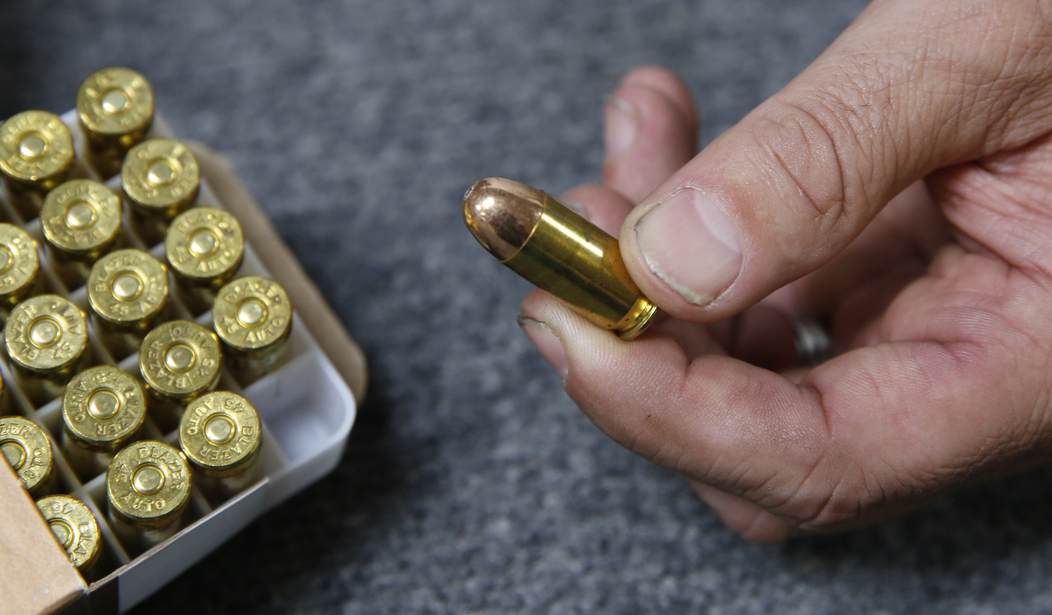
Idaho has decided the death penalty shouldn't depend on a drug company, a missing vein, or a supply chain nobody wants to talk about.
As of Wednesday, the state has now made the firing squad its primary method of execution. Lethal injection remains available as a backup, but Idaho has moved the rifle ahead of the needle because the old system has become slow, fragile, and legally tangled. From Newsmax:
The state spent more than $1 million on the project, including rifles for volunteer marksmen.
The move comes as states continue searching for alternatives after repeated problems with lethal injection and recent legal challenges involving nitrogen gas executions.
Idaho is now one of seven states that authorize firing squads under some circumstances, with state officials saying the method provides a reliable means of carrying out death sentences.
"The department will be prepared to carry out an execution order after July 1," the Idaho Department of Correction said in a statement. The agency added its procedures are designed "to ensure that any execution is conducted in a secure, orderly, and dignified manner."
Gov. Brad Little signed House Bill 37 in March 2025, giving the state plenty of time to prepare the execution chamber and procedures. Idaho now stands alone as the only state making the firing squad the first method rather than an option held in reverve.
The change didn't arrive from nowhere. Idaho tried to execute Thomas Creech by lethal injection on Feb. 28, 2024. The execution team couldn't establish an IV line after roughly an hour and multiple attempts.
Creech, one of Idaho's longest-serving death row inmates, had been sentenced to death for beating a fellow inmate to death in 1981. The warrant expired, and the state had to stop.
For supporters of House Bill 37, the lesson was blunt: a sentence imposed by a court shouldn't collapse at the edge of the death chamber because the state can't find a usable vein or obtain the right chemicals.
State Sen. Doug Ricks (R-Rexburg) sponsored the bill and argued the firing squad was more certain and less likely to end halfway through.
Opponents called the method brutal. State Sen. Daniel Foreman (R-Viola), a retired police officer and Air Force veteran, opposed the bill and warned lawmakers about the violence of gunfire.
Yet the other side of the argument carries weight, too. Lethal injection was sold for decades as clean, clinical, and modern. It also created hidden problems; drug makers resisted having their products used in executions.
States bought secrecy battles, courts reviewed products, medical questions piled up, and the method that was supposed to make capital punishment easier became one of the main reasons executions stalled.
Bree Derrick, director of the Idaho Department of Correction, now leads the agency responsible for carrying out the law. Idaho's death row page lists eight residents under sentence of death, with seven men at Idaho Maximum Security Institution south of Boise and one woman at Pocatello Women's Correctional Center.
The department says three executions have occurred since Idaho enacted its current death penalty statute in 1977.
Capital punishment will always force hard moral questions. A civilized society should wrestle with them rather than pretend they're easy. But if a state keeps the death penalty, it has to decide whether the sentence is real. Idaho has answered by choosing a method that removes the pharmaceutical chase and the medical theater around lethal injection.
Some will call the firing squad primitive, while others may call it honest. The firing squad strips away the soft language that built up around executions. It makes the final act harder to dress up.
It may be quicker and more reliable than a needle placed by a team struggling against old veins, collapsed access, and a system built on delay.
Idaho didn't simplify death; death is never simple. Idaho simplified the machinery around the death penalty because the state believes court-ordered punishment shouldn't depend on whether the supply chain cooperates.
The country can debate whether capital punishment should exist. Idaho has settled a narrower question for itself: if the law says death, the state will not let the needle become the escape hatch.
PJ Media is holding a New America 250 sale! 74% off with the promo code AMERICA250. If you want the stories, context, and sharp analysis legacy outlets keep trying to bury, now’s the time to join us and help keep independent conservative journalism alive.


Join the Conversation
VIP members get the ability to comment on articles.