


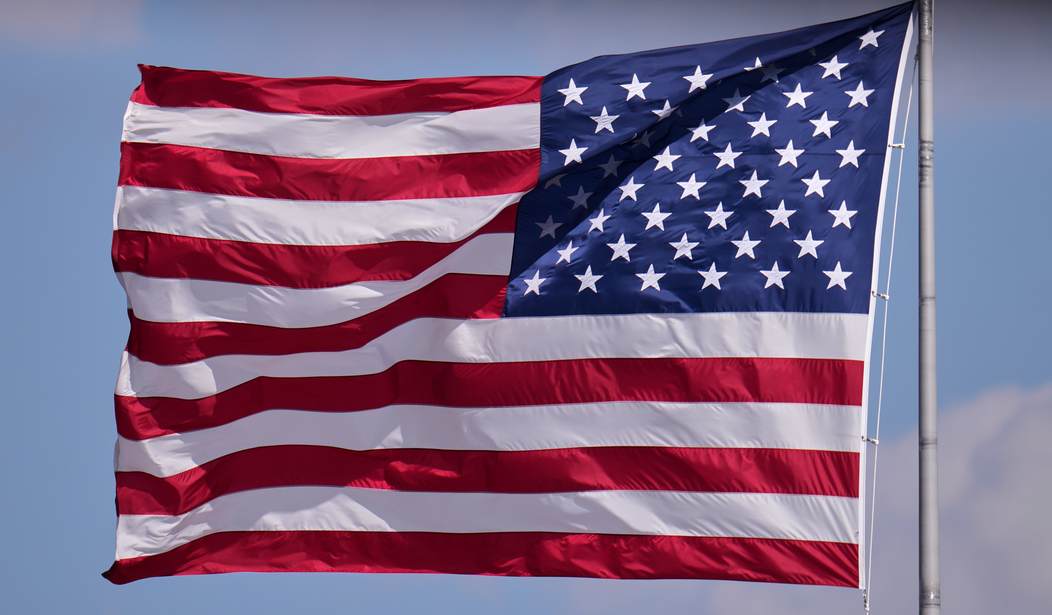
Young Americans finishing school right now have spent most of their lives hearing one steady message from classrooms, screens, major media, entertainment, and politics: America's flaws define it more than its greatness does.
Gallup's 2026 survey captures the result. Only 33% of U.S. adults now say they're “extremely proud” to be American. Add those who are “very proud,” and the number reaches only 53%.
Throughout the trend, Republicans have been more likely than Democrats and independents to say they are proud to be American. Even when Republican pride dipped during President Joe Biden's administration, Republicans remained the most likely of the three groups to express extreme pride.
This partisan divide persists and has been larger the past two years with Republican Donald Trump as president. Currently, 70% of Republicans, 28% of independents and 14% of Democrats say they are extremely proud to be American. Extreme pride has edged down seven points since last year among Republicans and six points among Democrats, but it is not statistically lower among independents.
Democrats’ and independents’ pride levels are at new low points for their respective groups. This drop among Democrats is similar to their shift during Trump's first administration. However, the percentage of Democrats who are extremely proud to be American has been lower in Trump’s second term than in his first, when it bottomed out at 22% in 2019.
The current 56-point gap between Republicans’ and Democrats’ reported extreme pride is similar to last year’s 57-point difference, the highest on record.
Both figures sit at record lows in Gallup's 25-year trend.
After 9/11, American pride was riding near 90% when Gallup combined “extremely proud” and “very proud” responses. When any public feeling reaches that height, some drop is expected.
Life moves on, war drags, scandals pile up, and generations change. But a fall from a post-9/11 unity to barely half the country feeling high pride is too large to wave away as normal drift.
Republicans now sit at 93% high pride, independents at 51%, and Democrats at only 27%. The partisan gap is 56 points; adults under 35, women, and people of color also showed some of the sharpest recent declines.
The cultural turn didn't begin with one speech, but the late 2000s gave it a public face. During the 2008 campaign, former First Lady Michelle Obama said, “For the first time in my adult life, I am really proud of my country.”
She said later that she meant pride in voter engagement and civic participation. Her “clarification” belongs in the record, but so does the original shock. Millions heard a message that sounded less like gratitude for America and more like relief that America had finally become worth praising.
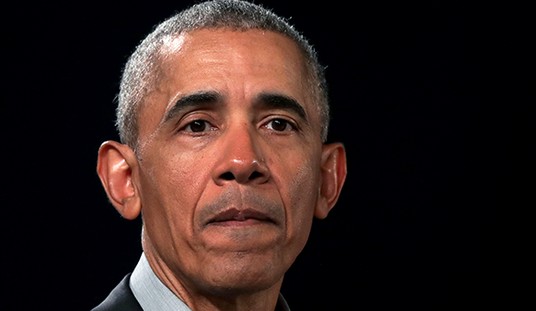
Former President Barack Hussein Obama carried a related tone overseas. His 2009 Cairo speech called for a “new beginning” between the United States and Muslims around the world and spoke of tensions fed by colonialism, proxy wars, and mistrust.
His supporters heard diplomacy; the rest of us heard an apology tour. Either way, the tone changed; America's leaders began talking about national fault in a way that often sounded louder than national achievement.
From there, national self-criticism became a full-time industry. Campuses, studios, major newsrooms, and political movements kept telling people that America's sins were the main story and its achievements were the footnotes. The government became the villain, the founders became suspects, the flag became complicated, the border became shameful, law enforcement became a symbol of oppression, and history became less a record of struggle and progress than a courtroom where the country was always on trial.
President Donald Trump's rise poured gasoline on the divide. Trump hatred didn't stay aimed at one man; it spread to his voters, his flags, his rallies, border enforcement, law enforcement, rural Americans, religious Americans, and anybody who still spoke of America with confidence rather than apology.
Trump derangement turned patriotism into a partisan warning label. Once love of country got coded as a political taboo, millions on the other side backed away from it. From the Associated Press:
Karla Galdamez — a 48-year-old Democrat who used to teach U.S. history — believes America has regressed under the Trump administration. While the Californian is not proud of Trump, she is pleased with how far the U.S. has come in 250 years.
“It’s a country that really wanted to be different and really wanted to be better,” she said. “Despite some of the very ugly history that we have of segregation and slavery ... if you look at the trajectory of the last 250 years, we’ve done nothing but get better and move toward a more egalitarian nation.”
Only 14% of Democrats and 28% of independents say they are “extremely” proud to be an American, according to Gallup’s new poll, compared with 70% of Republicans.
The AP-NORC poll found that Republicans are especially likely to be proud of the nation’s armed forces. About 9 in 10 Republicans say the military makes them “extremely” or “very” proud, compared with about 6 in 10 U.S. adults.
Samantha Fulks, a 40-year-old in San Antonio, Texas, says she’s proud to be an American and doesn’t hide it. The Texas Republican showcases that pride with an American flag in her front yard — as well as Trump flags in the back yard — and she plans to wear red, white and blue on the Fourth of July. Fulks comes from a military family, and while she believes the country’s involvement in Iran is unnecessary, she remains a proud supporter of the military.
“I still support our troops no matter what they do,” Fulks said.
Another survey shows the same fracture from a different angle. Only 28% of adults now say they have a lot of pride in how U.S. democracy works, down from 42% in 2017. Pride in U.S. history dropped 14 points over the same period, while pride in the armed forces fell 19 points. The Associated Press and the University of Chicago report only a third now believe the American Dream still exists, while half say it once held true but no longer does.
Only a third of the public feel the American Dream, the belief that if you work hard, you’ll get ahead, still holds true today. Half say that while the American Dream once held true, it does not anymore. Few, only 15%, say that the American Dream has never been true.
These findings are consistent with previous WSJ/NORC polls in which 31% of adults in 2025 and 34% in 2024 said the American Dream still holds true.
Not all adults are equally likely to believe that the American dream exists. Republicans are more than twice as likely as both independents and Democrats to believe that the American Dream still holds true (57% vs. 24% and 17%, respectively). Additionally, men are more likely than women (39% vs. 29%), and older adults are more likely than younger adults to believe it. Nearly half of adults 60 and older (46%) still believe in the American Dream compared with only a fifth of adults ages 18-29 (22%). White adults are more likely than Black adults to believe that the American Dream currently holds true (40% vs. 19%) while Black adults are more likely to feel that the American Dream has never been true (30% vs. 12%).
Adults born within and outside of the United States are similarly likely to believe that the American Dream still exists.
Americans’ views of the American Dream are closely tied to how they see their own economic prospects. Although few adults feel confident about their financial future, those who say the American Dream still holds true are more likely than others to feel confident they can find a good job, save enough for retirement, cover an unexpected medical expense, or buy a new home.
Those numbers don't come from nowhere; they come from years of teaching people to see inheritance as guilt and gratitude as ignorance.
America has sins, just like all nations do. The adult question is whether a country can face those sins without teaching its children to despise the inheritance that gave them the freedom to speak, worship, vote, build, protest, and correct old wrongs.
For 20 years, too many powerful voices chose contempt over correction. Now Gallup has counted the cost: a people force-fed national shame will eventually start calling shame honesty.
The poll didn't create the collapse in pride; it measured the harvest.
If you value direct, clear-eyed commentary that follows the numbers where they lead, support the work that keeps it coming. Subscribe to PJ Media VIP and use promo code FIGHT for the current discount.



Join the conversation as a VIP Member