


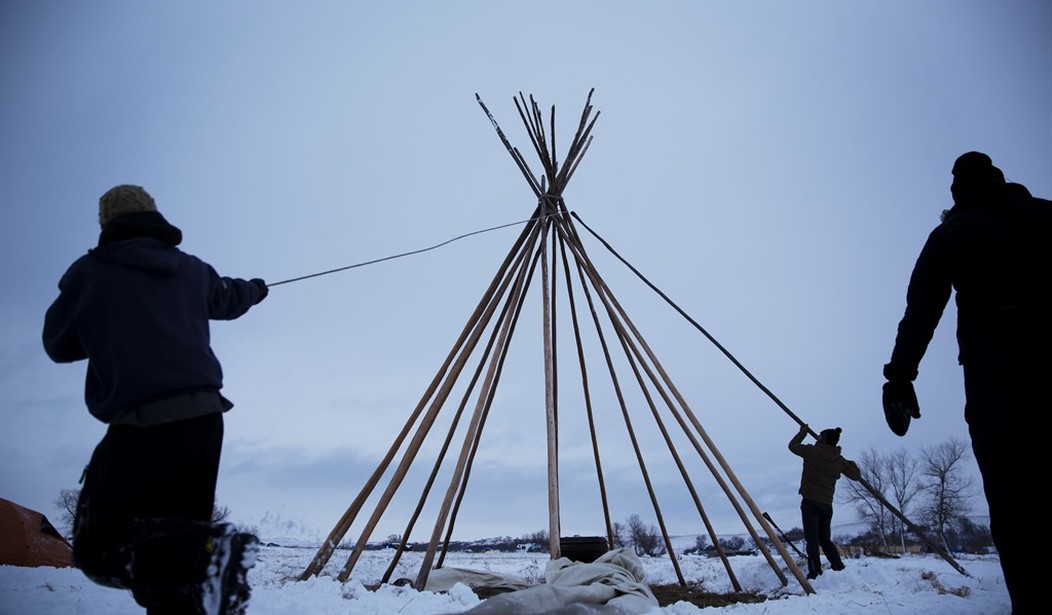
The village along the Little Bighorn River wasn't waiting for U.S. Army Lt. Col. George Armstrong Custer; it was living.
In Case You Didn't Know: I know, I thought he was General Custer, but I was wrong! Custer rose to major general of volunteers during the Civil War, but once the war ended, the volunteer forces were mustered out. In 1866, he returned to the Regular Army as a lieutenant colonel of the 7th U.S. Cavalry.
Families were there, along with children; Lakota, Northern Cheyenne, and Arapaho people had gathered near the river many knew as Greasy Grass. Some had left reservations for the hunt. Some came to be near Sitting Bull, the Hunkpapa Lakota leader and holy man whose Sun Dance vision strengthened the camp.
Crazy Horse, the Oglala Lakota war leader, was nearby. Gall, the Hunkpapa Lakota leader, was also there. Their village wasn't a target on a map. To them, it was a home.
The road to June 25, 1876, began long before Custer saw the lodges. The 1868 Treaty of Fort Laramie had promised the Great Sioux Reservation, including the Black Hills, to the Lakota.
Then gold was found in the Black Hills in 1874, and the promise cracked under the hunger for land, money, and control.
Washington tried to buy the sacred hills, and the Lakota refused.
The Commissioner of Indian Affairs ordered Lakota bands to report to reservations by Jan. 31, 1876, or be treated as hostile. Many were hunting far from agencies; some never received the order in any useful way; and others rejected it because they had not sold their country, and survival on the Plains didn't fit a bureaucrat's deadline.
Custer rode into that world with the 7th Cavalry, and his confidence became a weapon pointed at his men. He had been warned the village was large, yet he still divided his regiment. From the Library of Congress:
Six years later, Lt. Col. Custer, who had great career ambitions and was “reinventing himself as an Indian fighter,” reported that he found gold in the sacred Black Hills. In 1875, “a five-month scientific expedition was sent to confirm Custer’s report. Custer had given “exaggerated reports of the area, describing its suitability for settlement and indicating that engineers… had discovered gold”; these reports led prospectors and settlers to flood into the area “despite the army’s sporadic attempts to drive them out” (Wright, 82).
Custer, commanded by Major General Alfred Terry, was directed to lead his unit approximately 70 miles away on the Rosebud Creek, separated from the rest of Terry’s force, contradictory to Terry’s orders and military tactics (Wright, 106). There was a general lack of intelligence and insufficient planning; Custer was commanding the 7th Cavalry, with 750 soldiers and 31 Arikara and Crow scouts, yet he was outnumbered by as much as seven to one (Wright, 115). Regardless, Custer planned a surprise dawn attack for June 26 and thought he could “get through with them in one day,” only later revising his plan to attack in daylight on June 25 (Wright, 123).
However, the Lakota had been working to lead the U.S. soldiers to the Greasy Grass, a tributary of the Little Bighorn River, and were preparing for battle, as they knew the U.S. soldiers were doing. Sitting Bull, a holy man, statesman, and warrior of the Hunkpapa Lakota, had been praying in the days prior to the battle, and had a vision in which he saw soldiers falling like grasshoppers; a voice said to him, “I give these to you because they have no ears.”
The U.S. soldiers gave themselves away with a dust cloud rising up as they approached the Greasy Grass encampment. The Lakota, Cheyenne, and Arapaho warriors were quickly ready. Crazy Horse led as many as 1,000 warriors to flank Custer’s forces. Sitting Bull was older, so he sent his nephews White Bull and One Bull to fight; Crazy Horse, Rain-In-the-Face, Lame White Man, Black Moon, Wooden Leg, Big Road, He Dog, Inkpaduta and Gall took key actions as well. The Lakota, Cheyenne, and Arapaho warriors routed U.S. troops; 268 U.S. soldiers were killed, including Custer and all of the personnel in the five-company battalion under his immediate command. It’s difficult to say how many Indigenous people died; the most commonly cited figure is 100 men and women. The battle is remembered as a day of victory by their descendants.
Maj. Marcus Reno attacked from one direction, Capt. Frederick Benteen was sent scouting, and Custer kept five companies and moved toward the northern end of the village, hoping to strike before the camp could scatter. From the National Park Service:
The Lakota and Cheyenne village lay in the broad river valley bottom, just west of the Little Bighorn River. As instructed by Custer, Major Reno crossed the river about two miles south of the village and began advancing downstream toward its southern end. Though initially surprised, the warriors quickly rushed to fend off Reno's assault. Reno halted his command, dismounted his troops and formed them into a skirmish line, which began firing at the warriors who were advancing from the village. Mounted warriors pressed their attack against Reno's skirmish line and soon endangered his left flank. Reno withdrew to a stand of timber beside the river, which offered better protection. Eventually, Reno ordered a second retreat, this time to the bluffs east of the river. The Lakota and Cheyenne, likening the pursuit of retreating troops to a buffalo hunt, rode down the troopers. Soldiers at the rear of Reno's fleeing command incurred heavy casualties as warriors galloped alongside the fleeing troops and shot them at close range, or pulled them out of their saddles onto the ground.
Reno's now shattered command recrossed the Little Bighorn River and struggled up steep bluffs to regroup atop high ground to the east of the valley fight. Meanwhile, Captain Benteen had returned after finding no evidence of Indians or their movement to the south. He arrived on the bluffs in time to meet Reno's demoralized survivors. A messenger from Custer previously had delivered a written communication to Benteen that stated, "Come on. Big Village. Be Quick. Bring Packs. P.S. Bring Packs." An effort was made to locate Custer after heavy gunfire was heard downstream. Led by Captain Weir's D Company, troops moved north in an attempt establish communication with Custer.
Assembling on a high promontory (Weir Point) a mile and a half north of Reno's position, the troops could see clouds of dust and gun smoke covering the battlefield. Large numbers of warriors approaching from that direction forced the cavalry to withdraw to Reno Hill where the Indians held them under siege from the afternoon of June 25, until dusk on June 26. On the evening of June 26, the entire village began to move to the south.
It didn't scatter; warriors moved fast. Reno's attack broke, and he fell back to the bluffs. Benteen joined him there, while Custer's five companies were cut off and destroyed. More than 260 U.S. soldiers and attached personnel died, including Custer, his brothers Tom and Boston, and journalist Mark Kellogg. From the Associated Press:
Kellogg, 43, was embedded with Custer’s troops. He was reporting for The Bismarck Tribune and New York Herald — the AP circulated his reports across the country — when Custer underestimated the size of a Sioux village that he attacked.
Custer and his outnumbered men made a last stand on a hill. There, they were annihilated by Native American defenders. Kellogg’s scalped body was found not far away.
His last published dispatch read in part: “I go with Custer and will be at the death.”
It was more of an attempt at poetry than prophecy. “At the death” is a foxhunting term for the end of the hunt, suggesting Kellogg expected Custer to prevail.
For Lakota and Cheyenne families, the fight wasn't Custer's Last Stand; it was a defense of mothers, children, horses, lodges, and a life already under siege. The great village won the field because its warriors fought with speed, purpose, and knowledge of the ground.
Custer lost because he mistook movement for weakness and size for disorder.
The country reacted with shock, anger, and disbelief. News arrived as Americans were celebrating the nation's centennial. A republic telling itself a story of progress had just learned that Plains nations could still defeat one of its most famous soldiers.
The response wasn't humility; it was escalation. More troops came, and more pressure followed. Within months, many Native leaders faced surrender, flight, or reservation life. From the Library of Congress:
George Flanders was a soldier in a group arriving in Black Hills on June 26, 1876, a day after Custer's charge. Flanders buried his comrades that day and, years later, he heard an account of Custer's battlefield actions. In a Federal Writers' Project essay, George L. Flanders, he recounted the Cheyenne Indian tale that "Custer had received a wound in the hip and was unable to get up, but continued shooting until he had used all except one of his cartridges and with that last bullet shot himself."
Custer's death galvanized the military. In subsequent months, they tracked down Sioux and Cheyenne warriors and forced them onto reservations.
Military pursuit wasn't the only hunt of concern to Native Americans. Bison, then commonly called buffalo, was a prime resource for its meat and hide. The millions of animals roaming the plains in the 1860s virtually disappeared within two decades as hunters from across the United States and abroad drove the herds to near extinction.
Little Bighorn became a national legend because America preferred Custer as a tragic hero to Custer as a reckless officer who rode into a village he never understood. His widow, Elizabeth Bacon Custer, helped guard his image for decades. The old story made him gallant and doomed.
The fuller story leaves less room for romance.
On the 150th anniversary, the battlefield asks for a harder memory. Custer died there, and so did many men who followed him. Lakota, Northern Cheyenne, and Arapaho people also remember Greasy Grass as proof that their ancestors didn't simply vanish when Washington demanded obedience. They gathered, prayed, hunted, fought, and won.
Custer met the people he thought he could break; they weren't broken.