





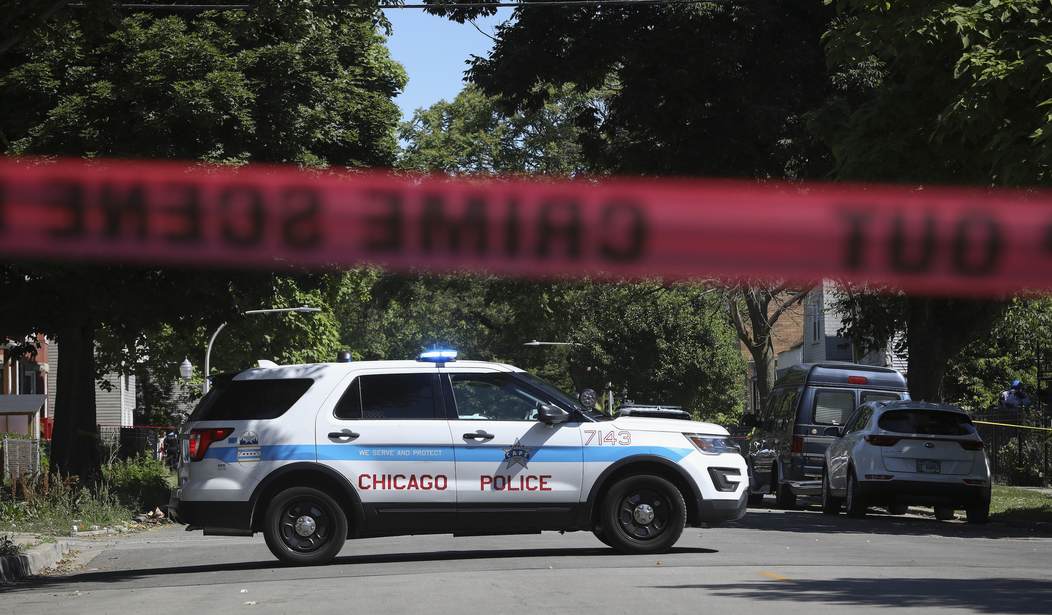
Seven Chicago families are making funeral calls because another summer weekend brought another round of gunfire.
Police said at least seven people were killed and 38 others were injured in shootings across the city after Friday evening. President Donald Trump saw the toll and put the question where it belongs, on Illinois Gov. JB Pritzker's desk.
Trump wrote Sunday morning that Pritzker should call him for help, adding that he could make Chicago safe in one month and among the safest cities in a year.
Pritzker has rejected Trump's calls for federal help before, including the use of National Guard troops. Chicago Mayor Brandon Johnson, meanwhile, called the Juneteenth weekend shooting “a horrific act of violence” after gunmen in an SUV fired into a crowd and wounded at least 12 people.
You know the season without checking a calendar; the warm weather arrives, the weekend stretches out, and Chicago's shooting numbers start showing up like grim weather reports.
Learn More: Chicago’s Spring Shooting Season Arrives Right on Schedule
The city has made progress since its worst pandemic-era years, and it's important to acknowledge those facts. Yet any progress loses its force when mothers still get calls from hospitals, fathers still stand outside police tape, and children still learn which blocks to avoid.
Through May, Chicago had recorded 167 homicides in 2026, up 6% from the same point in 2025. The city also had 546 shooting incidents and 664 shooting victims, both higher than last year's pace. May had fewer homicides than any May in nearly two decades, yet shootings and shooting victims still rose, proving that a city can walk and bleed at the same time. From WTTW:
According to the Chicago Police Department, there were 36 homicides throughout last month, two fewer than were recorded during May 2025, a year that ended with a historically low homicide total.
Last month’s total was fewer than any other May in Chicago since 2007, when there were 35 homicides recorded, per CPD data. But the number of shootings (127) and shooting victims (165) in May were up 1% and 4%, respectively over last year.
Last month also included Chicago’s first homicide-free Memorial Day holiday weekend reportedly for the first time in at least a decade, though 36 people were shot over that three-day span.
Through the first five months of 2026, Chicago has recorded 167 homicides, an increase of 6% compared to the same time last year, while shootings (546) and shooting victims (664) totals have similarly risen.
According to CPD figures, the number of robberies (25%), armed robberies (32%) and burglaries (14%) are all down this year compared to last, while violent crime on the CTA train and bus lines is down 20%
Police officers also recovered 1,195 firearms in May, bringing the 2026 total up to 4,291, per CPD data.
It's just as important to take a peek at the longer view. Chicago ended 2025 with 416 murders, its lowest total since 1965. In 2024, the city had 587 murders, 2,274 shooting incidents, and 2,797 shooting victims.
By 2025, shooting incidents had dropped to 1,471, while shooting victims fell to 1,847. From ABC 7 Chicago:
Chicago police said the preliminary data could change slightly, but violent crime overall is significantly down in Chicago.
Police Superintendent Larry Snelling says there are many factors involved.
"Our partnerships, everyone working together, across the board, internally within the Chicago Police Department, top-down leadership, intelligence-driven policing," Snelling said.
A University of Chicago Crime Lab analysis of this year's crime statistics found violent crime was down, not just in Chicago, but in many other big cities, too.
"The honest answer is we don't know exactly why crime is down. There has been a lot happening in the last few years, as we're all aware, a lot of economic, social, institutional factors. They're all changing at the same time," said Kim Smith, with the University of Chicago Crime Lab.
The study suggested that Chicago's decline in violent crime may not be due to specific things happening locally. But violence prevention groups believe their efforts are helping make a difference.
"One shooting, or one, you know, murder is one too many. But when you think about over a 10 years, a concerted effort to reduce violence, it's moving in the direction that we expect," said Domonique McCord, with Metropolitan Peace Academy.
Pritzker and Johnson can point to those gains, but they can't point to them as a shield against every fresh body.
The question Trump raised is blunt because it matches the carnage. If the governor believes federal help would fail, he should explain why his answer is better. If he believes the city and state already have enough tools, he should explain why seven people still died and dozens more were wounded over one weekend.
Leadership can't live forever inside press statements, task forces, and carefully chosen statistics.
Pritzker may not like Trump, while Johnson may not be a fan of the optics of federal help, but Chicago families living with the sound of gunfire don't have the luxury of political pride. They need fewer shooters on the street, faster arrests, stronger prosecutions, and leaders who treat every killing as a failure of government rather than a talking point for the next election.
PJ Media is still covering the stories the legacy press would rather soften, spin, or ignore. Join PJ Media VIP today and use promo code FIGHT to unlock the current discount. Your support keeps independent conservative journalism alive when it’s needed most.
Join the Conversation
VIP members get the ability to comment on articles.