


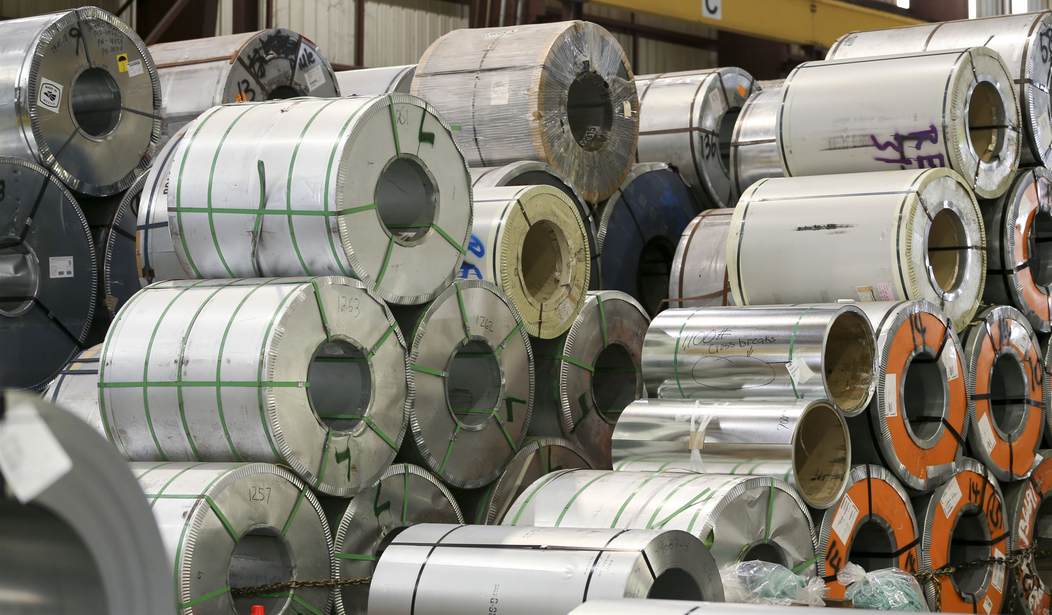
Aluminum's latest scare didn't begin with panic on a trading screen. It began with a narrow waterway, damaged Gulf smelters, scarce raw material, and managers trying to keep furnaces alive.
The Iran war shook a market already short of comfort, yet the bigger story isn't China: it's the work done in ports, trucks, warehouses, and control rooms to keep metal moving when the easy routes start closing. From gCaptain:
The Iran war caused one of the biggest supply shocks to ever hit the aluminum market, but the runaway price surge that many were bracing for has been blunted by the ingenuity of producers from the Middle East to China.
When the conflict began, market watchers warned that unless the Strait of Hormuz reopened quickly, smelters were likely to run out of raw materials within weeks, potentially forcing widespread shutdowns that would plunge the global market into crisis and send prices to record highs above $4,000 a ton.
Those fears escalated dramatically when Iran targeted smelters in the region in missile strikes, and there was broad agreement that aluminum looked set to be one of the worst-hit commodity markets outside of oil and gas.
However, in recent weeks Middle Eastern smelters have carried out a series of complex logistical operations — including daring voyages through the strait — to replenish reserves of alumina and other raw materials, helping to avert widespread closures in a region that accounts for nearly 10% of global supply. And outside the Gulf, smelters in China and Indonesia have been instrumental in keeping the global market in check as buyers wait for exports to rebound.
The shortage has been years in the making. Aluminum smelting needs huge, steady supplies of power, and high-energy costs have pushed capacity offline in the U.S., Europe, and elsewhere.
Inventories on the London Metal Exchange once topped 5 million tons early last decade. By April, registered stocks had fallen below 400,000 tons, with another 100,000 tons sitting off warrant.
The immediate price shock from the Gulf crisis drove LME three-month aluminium to a four-year high of $3,545.50 per metric ton last week.
Now, the secondary shock is travelling down the physical supply chain.
Japanese buyers initially baulked when global producers offered a premium of up to $250 over the LME price for second-quarter deliveries, a 28% increase on first-quarter terms.
They are now snapping up a revised offer of $350 for what serves as a benchmark for other Asian buyers.
The premium for duty-paid aluminium in Europe has surged to $450 per ton over the LME cash price, its highest level since late 2022.
And there's more pain for U.S. buyers, already reeling from the impact of 50% import duties imposed last year. The Midwest premium is now trading on the CME at $2,400 per ton over the LME.
Some stock still on paper is Russian metal, which many Western buyers can't easily use because of sanctions. From Reuters:
The alumina market was under pressure even before the outbreak of the Iran war.
The London Metal Exchange (LME) price , which settles against S&P Global Platts' assessment of the Australian fob price, has been hovering around the $300 per metric ton level since the start of the year.
That is a far cry from the frenzied rally of 2024, when prices surged to above $800 on a series of supply hits.
The market has since shifted to oversupply, thanks to continued expansion of production capacity in China and Indonesia.
Macquarie Bank assessed the global surplus at 2.54 million tons last year and in December was forecasting another surplus of 1.26 million tons in 2026.
The bank has just upped its 2026 oversupply estimate to 2.2 million tons as Gulf-bound shipments are redirected into the seaborne market.
How long the Strait remains closed to shipping will determine everything.
The Gulf shock hit because the region has become too important to lose. The Middle East accounts for about 9% of global aluminum production, and the share is much larger when China is left aside.
Gulf smelters also rely on imported alumina, the refined material made from bauxite before it becomes metal. The region has six smelters but only two alumina refineries, and one Emirates Global Aluminum refinery at Al Taweelah was damaged during the conflict. From Reuters:
Just over 150,000 tons of LME-warranted metal has been cancelled in preparation for physical load-out since the start of this month.
The action has largely played out in Malaysia's Port Klang, which is significant since this is the primary LME storage point for Indian-brand aluminium.
Stocks of Russian metal at the South Korean port of Gwangyang have been left largely untouched, meaning that a significant part of what remains in the LME storage system is now metal that many Western buyers can't or won't take.
Nor is there much metal left in LME off-warrant storage. These shadow stocks have been steadily draining away over the last year and at 108,000 tons are down by 52,000 tons since the start of 2026.
The squeeze is visible in time spreads. The benchmark cash-to-three-months spread has inverted from contango to backwardation, where spot supplies command a premium over future deliveries, a classic signal of acute near-term shortage.
But the current cash premium of $18 per ton is modest relative to physical market premiums, which provides little incentive for fresh deliveries from an already strained supply chain.
While the rise in oil and gas pricing has understandably grabbed the headlines since the start of the war in Iran, the risks to the aluminium market are equally acute.
Maybe even more so, since the Iran war is revealing just how dependent Western buyers have become on the Middle East's primary aluminium smelters.
The problem for buyers of Gulf aluminium is that there aren't many alternative sources of metal to plug the widening supply gap.
China is the world's largest producer, but the country's giant aluminium sector is geared towards exporting semi-manufactured products — bars, rods and tubes — rather than primary metal. Reuters:
It's more competitor than saviour for Western manufacturers looking to source primary metal.
Moreover, China's smelter system has little spare capacity, running close to Beijing's mandated annual capacity cap of just over 45 million tons.
Russian supply has already pivoted to Asia in the wake of U.S. and European sanctions following the invasion of Ukraine in 2022.
Indeed, Russia has become a major supplier of primary aluminium to China as Chinese production growth grinds to a halt.
Once the Strait of Hormuz became dangerous, the bottleneck moved both directions. Finished aluminum had trouble getting out, and alumina had trouble getting in. Some ships carrying alumina moved through the strait with tracking systems off.
Other cargos were unloaded in Oman and then hauled by truck to Gulf smelters. Those dark transits and hard inland miles helped restore Gulf alumina imports to pre-war levels in May.
Prices showed how close the market came to a deeper break. London aluminum touched $3,707.50 a metric ton on June 1, matching the highest level since March 2022.
The spike was fueled by fears of wider Gulf outages, low exchange stocks, and the risk of forced smelter cuts if raw material tanks ran dry. Later, prices eased near $3,400 as emergency logistics, Asian supply, and hidden inventories bought time.
The short-term outlook is less dire than it looked a few weeks ago, but still fragile. The market avoided a full physical freeze because operators found routes, drew down private stocks, and squeezed more supply out of Asia. Those fixes aren't the same as strength; they're buffers, and buffers get used up.
Longer term, the choke point is power as much as metal. Idle smelters can't restart with speeches or purchase orders. They need affordable electricity, long contracts, and confidence that war, sanctions, or tariff fights won't make the numbers impossible.
Wood Mackenzie has warned of a global deficit as high as 4 million metric tons, while other analysts see a faster balance if Indonesian production ramps and China keeps running hot.
Bauxite and alumina will shape the next chapter. Guinea now accounts for about 40% of global bauxite output and 70% of seaborne exports. Its push to build refining capacity, along with Indonesian expansion, could move more value closer to the mine and change where future shortages appear. From Reuters:
The West African country of Guinea has grown to be the world's largest supplier of bauxite, the raw material ultimately transformed into aluminium.
It's now looking to use this newfound dominance to exert greater control over both price and industry structure, just as Indonesia has done in nickel and the Democratic Republic of Congo is attempting to do in cobalt.
All three resource giants are struggling to rein in mining sectors that have grown too big too fast, swamping global markets and crashing prices.
Indonesia is using mining quotas, the Congo export quotas, and Guinea looks minded to implement a mix of both as a way of stopping operators exporting more than their mining quotas allow them to produce.
For Conakry, it's also a chance to emulate Indonesia by capturing more of its resource value by moving from bauxite mining to alumina refining.
More alumina supply helps smelters, but every new refinery and smelter runs into the same hard question: who can deliver cheap, reliable power?
Aluminum stayed alive through dark ships, rerouted cargos, truck convoys, and stock draws. The market bent because people improvised; it didn't break because enough workers, traders, ship crews, and plant operators refused to let one narrow waterway dictate the fate of metal needed for cars, cans, aircraft, buildings, and power lines.
The lesson is plain: supply chains survive shocks through human skill first, and policy wisdom second. Right now aluminum has more of the former than the latter.