


President James Madison signed the war declaration against Great Britain on June 18, 1812, and the young republic stepped into its first declared war.
The United States had won independence less than 30 years earlier, but Britain still acted as if American sovereignty could be bent, delayed, or ignored, while American sailors were seized through impressment. From the USS Constitution Museum:
In Britain’s effort to control the world’s oceans, the British Royal Navy encroached upon American maritime rights and cut into American trade during the Napoleonic Wars. In response, the young republic declared war on Britain on June 18, 1812. The two leading causes of the war were the British Orders-in-Council, which limited American trade with Europe, and impressment, the Royal Navy’s practice of taking seamen from American merchant vessels to fill out the crews of its own chronically undermanned warships. Under the authority of the Orders in Council, the British seized some 400 American merchant ships and their cargoes between 1807 and 1812. Press gangs, though ostensibly targeting British subjects for naval service, also swept up 6,000 to 9,000 Americans into the crews of British ships between 1803 and 1812. Some of the impressed sailors were born in British possessions but had migrated to the United States, while many others had attained citizenship that was either in question or simply could not be documented.
With only 16 warships, the United States could not directly challenge the Royal Navy, which had 500 ships in service in 1812. Instead, the new nation targeted Canada, hoping to use the conquest of British territory as a bargaining chip to win concessions on the maritime issues. Most Americans assumed that the conquest of Canada would be, in the words of former president Thomas Jefferson, “a mere matter of marching.” The United States enjoyed a huge population advantage over Canada—7.7 million to 500,000—and it was widely believed in America that U.S. troops would be welcomed as liberators. But events did not play out as Americans expected. Waging war at the end of extended supply lines over the vast distances of the North American wilderness was no easy task. The British and their allies from indigenous nations in North America proved a formidable foe.
American trade was trapped between Britain's Order in Council and Napoleon's continental system. On the frontier, many Americans believed British agents were helping native resistance against western settlement. Madison took those grievances to Congress, and Congress chose war.
The war began with more confidence than competence; American leaders expected Canada to quickly fall. It didn't. The first campaigns were uneven, confused, and sometimes humiliating. The army was small, the militia was inconsistent, and Washington discovered what many young nations learn the hard way: wanting respect and being ready to command it are two different things.
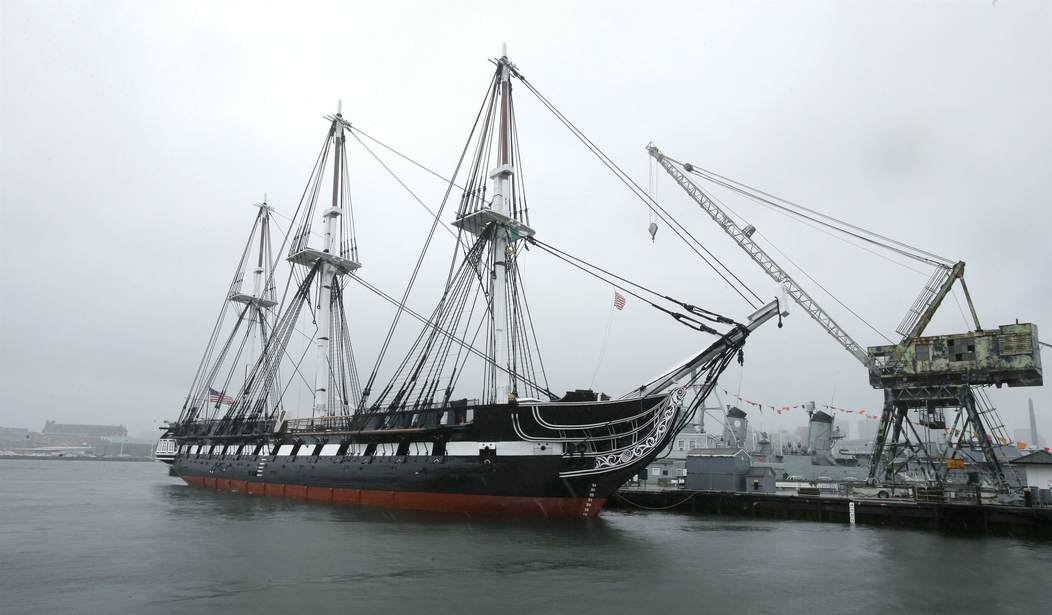
Yet the Navy gave Americans early pride. The USS Constitution defeated HMS Guerriere in August 1812 and earned the name “Old Ironsides,” a moment that cracked the image of Britain's untouchable navy. From the National Park Service:
As the ships closed, the Guerriere’s outgunned commander nevertheless pronounced that he would take the Constitution within thirty minutes. The veteran Royal Navy was renowned as the world’s most powerful, while the small American navy consisted of fewer than two dozen ships. British sailors expected to get the best of every engagement they fought.
As the Constitution came within range, Captain Hull ordered his gunners to hold their fire until their ship came directly alongside the Guerriere. Once abeam, Hull gave the order to fire the broadside. The effect of the barrage made a wreck of the Guerriere and a legend of the Constitution. As a British 18-pounder ball bounced harmlessly off the Constitution’s live oak frame, one crew member remarked: “her sides are made of iron!” Though the victory had little strategic effect on the war, the battle provided the U.S. Navy with proof that it could match the Royal Navy’s experienced commanders, and gave Americans their first famous warship: “Old Ironsides.”
By 1814, the war turned darker. After defeating Napoleon in Europe, Britain could send more troops and ships across the Atlantic. British forces entered Washington, D.C., in August 1814 and burned the capitol, the President's House, and other public buildings.
First Lady Dolley Madison fled the President's House, and staff members helped save important items before the fire. The capital burned, but the government didn't collapse. A nation still learning how to stand took a terrible blow and kept its feet. From the White House Historical Association:
After seeing to the safety of the full-length portrait of George Washington, Dolley Madison left the President's House, making her way to Bellevue (Dumbarton House) to await the arrival of her husband. She received word that his plans had changed and that he would not be able to join her, but would simply meet her on the other side of the Potomac. After a failed attempt to link up with him at the Georgetown Ferry, the first lady traveled north to the Chain Bridge near the Little Falls and crossed into Virginia. She traveled up the very steep Falls Road and turned off for Rokeby where she spent the fiery night of August 24. The following morning Dolley stopped briefly at Salona before making her way further inland to Wiley's Tavern on the Alexandria & Leesburg Road, where she spent the night. On August 26, Dolley headed back toward the still smoldering capital city, but remained in Virginia at Minor's Hill, the highest point in the area. She spent two nights there, before leaving the morning of the 28th, to return to Washington City. The President's House was totally destroyed by the fires, so she went to the home of her sister Anna and her husband, former Congressman Richard Cutts, on F Street.
Weeks later, Baltimore became the test. British ships bombarded Fort McHenry through the night of Sept. 13 and into Sept. 14, 1814. Francis Scott Key, a Maryland lawyer, watched from a ship after helping secure a prison release.
At dawn, he saw the American flag still flying over the fort and wrote the poem that became “The Star Spangled Banner.” The country didn't get the anthem from a parade or a speech; it came from smoke, fear, endurance, and one flag still visible after the rockets stopped.
The Treaty of Ghent was signed on Dec. 24, 1814, and the war officially ended after ratification in February 1815. The treaty largely restored the prewar boundaries, which has led some to call the war a draw.
On paper, that's fair. On the ground, the story was larger. The Battle of New Orleans, fought on Jan. 8, 1815, after the treaty had been signed, but before the news arrived, gave Americans one of their great early victories. General Andrew Jackson's mixed force beat a larger British army and turned the war's ending into a national memory of defiance.
The War of 1812 didn't make America powerful overnight; it exposed weak planning, political division, and military limits. It also carried a painful cost for native nations, whose wartime alliances and resistance were crushed as American expansion pushed farther west. Any honest memory of the war has to include that price: nations grow through victory, but they also grow through what they choose to remember and what they try to forget.
Still, June 18 belongs on the American calendar; the war forced the United States to act less like an experiment and more like a country. It defended maritime rights, hardened national identity, strengthened the case for a professional military, and reminded Britain that independence hadn't been a temporary arrangement.
The Revolution gave America birth, and the War of 1812 proved the republic intended to live.