


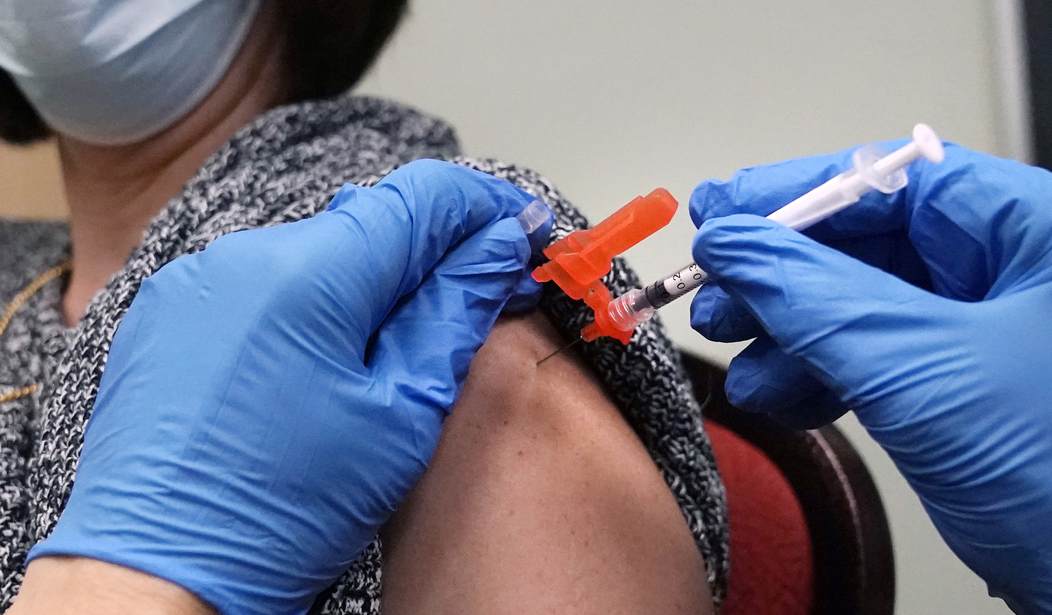
Sen. Ron Johnson (R-Wis.), chairman of the Permanent Subcommittee on Investigations, released an interim report on April 29 that landed like a dropped file cabinet in a silent federal hallway. From the report's executive summary:
Documents produced by the Department of Health and Human Services (“HHS”) to the Permanent Subcommittee on Investigations (“PSI” or “the Subcommittee”) show that beginning in early 2021, Dr. Ana Szarfman, who at the time was a senior medical officer and safety data mining developer at the Food and Drug Administration (“FDA”), used an updated data analysis technique that identified dozens of statistically significant safety signals for adverse events associated with the COVID-19 vaccines.
She immediately shared her findings with other FDA officials, including officials responsible for COVID-19 vaccine safety surveillance, but they largely ignored her and eventually told her to stop her data analyses.
Specifically, on March 26, 2021, Dr. Szarfman, who worked in the FDA’s Center for Drug Evaluation and Research (“CDER”), shared a data mining analysis of COVID-19 vaccine adverse events using a newer methodology that reduced masking.
Masking is a known data limitation with FDA’s current data mining method that can inhibit the detection of safety signals for adverse events.
Dr. Szarfman’s analysis—which was done in collaboration with Dr. William DuMouchel, the then-Chief Statistician at Oracle and inventor of the data mining algorithm that supported FDA’s current data mining system—found “49 examples of extreme masking” with over twenty of those examples of adverse events now showing a statistically significant safety signal when adjusted for masking.
In other words, by using a methodology that accounted for the masking limitation, Dr. Szarfman and Dr. DuMouchel uncovered approximately 25 statistically significant safety signals for adverse events associated with the COVID-19 vaccines that were not previously detected by FDA’s current methodology, including sudden cardiac death, Bell’s palsy, and pulmonary infarction.
Dr. Szarfman shared similar findings with other senior officials at the FDA in this instance and at least three other times in April 2021, May 2021, and July 2021 when her and Dr. DuMouchel’s analyses yielded even more statistically significant safety signals with higher values for adverse events, including acute myocardial infarction associated with the Moderna and Pfizer-BioNTech (“Pfizer”) COVID-19 vaccines, non-site specific embolism and thrombosis associated with the Janssen (“Johnson & Johnson”) and Pfizer vaccines, dementia associated with the Pfizer vaccine, and “Death and sudden death” associated with the Moderna and Pfizer vaccines.
However, rather than warn the public or hold distribution of the vaccines for further investigation, records appear to indicate that Biden health officials ignored the statistically significant safety signals uncovered through the new methodology and were more concerned about Dr. Szarfman’s efforts rather than her troubling findings. In April 2021, after Dr. Szarfman emailed a data mining analysis apparently underscoring the limitations of FDA’s current system, one senior FDA official wrote to his colleagues, “[b]efore we potentially reach out to Ana, we should meet internally – many considerations not suited to email…”
The report says Biden health officials knew the government's VAERS safety monitoring system had weaknesses, including an older data mining method that could miss serious warning signs tied to COVID vaccines.
One missed signal involved sudden cardiac death.
VAERS, the Vaccine Adverse Event Reporting System, doesn't prove causation by itself. The CDC and FDA say the system collects reports after vaccination, and those reports need investigation before anyone can say a vaccine caused an injury.
That's a fair point. A warning light doesn't diagnose the engine; it tells the driver to open the hood before smoke billows from the motor.
VAERS was built to find patterns early, not to sit politely in the corner while officials repeat approved slogans.
Johnson's report says that Dr. Ana Szarfman, a senior medical officer and data mining developer at the FDA's Center for Drug Evaluation and Research, worked with William DuMouchel, chief statistician at Oracle and creator of the algorithm behind the FDA's system.
Their updated method found roughly 25 safety signals the older system missed. The report says the list included sudden cardiac death, Bell's palsy, pulmonary infarction, and other serious problems.
Did we hear about their work? Nope, the CDC and FDA worked together to hide their work so they could sell Americans on the safety of the shot that we had to have.
The report doesn't prove COVID vaccines caused a wave of athlete deaths, but the stronger point is the clearer one: the public was told not to ask obvious questions while federal officials had private reasons to know the safety system deserved a harder review.
Americans weren't asked to wait for evidence; many were scolded for noticing patterns at all.
The myocarditis question was never a conspiracy theory. The CDC says myocarditis and pericarditis have rarely been observed after COVID vaccination, most often among adolescent and young adult males within seven days after the second mRNA dose.
Of course, we know undoubtedly that the CDC had our best interests in mind and would never lie to us. Amirite?
Vaccine recipients, especially males ages 12 to 39, are supposed to be told about the rare risk. Once heart inflammation entered the public record, questions about athletes were reasonable. Athletes push their hearts harder than almost anybody else.
Buffalo Bills safety Damar Hamlin became the national image of sudden cardiac arrest when he collapsed during Monday Night Football in January 2023. Doctors later identified his event as commotio cordis, a rare arrest caused by a blow to the chest at a precise moment in the heartbeat cycle. Hamlin, thankfully, survived, returned to football, and the Bills re-signed him to a one-year deal on March 27.
His case may not be a vaccine case; it still showed how quickly the conversation snapped shut when people wanted every angle examined.
A 2024 Oregon review didn't find support for a link between mRNA COVID vaccination and sudden cardiac death among previously healthy people ages 16 to 30.
The study also had limits; it examined Oregon deaths from June 2021 through December 2022 and focused on deaths within 100 days of vaccination.
So the public record now holds two facts at once: one study didn't support a link, and Johnson's report says federal officials knew their safety tools could miss signals.
America should be able to hold those facts without panic and without censorship. Families who lost young athletes deserve more than a pat on the head from officials who prefer tidy narratives. Doctors deserve room to ask questions without career fear. The public deserves leaders who investigate warning signs instead of burying them under bureaucratic fog.
Johnson's report doesn't end the debate; it reopens the door Washington tried to bolt shut. How can I know that?
How well do you remember the release of his preliminary report in April? The cabinet that fell in a silent federal hallway was also inside an empty building, hundreds of miles from the nearest news outlet.
The question now is simple: can we finally talk about the healthy athletes who collapsed, the heart risks officials acknowledged, and the safety signals hidden from the public?
The people who asked hard questions about COVID vaccine safety were mocked, censored, and treated like cranks. Now Sen. Ron Johnson’s interim report says federal officials knew safety signals were being missed while the public was told to stop asking. Join PJ Media VIP today and use promo code FIGHT to get 60% off. Support the work that keeps asking the questions Washington wants buried.





Join the conversation as a VIP Member