


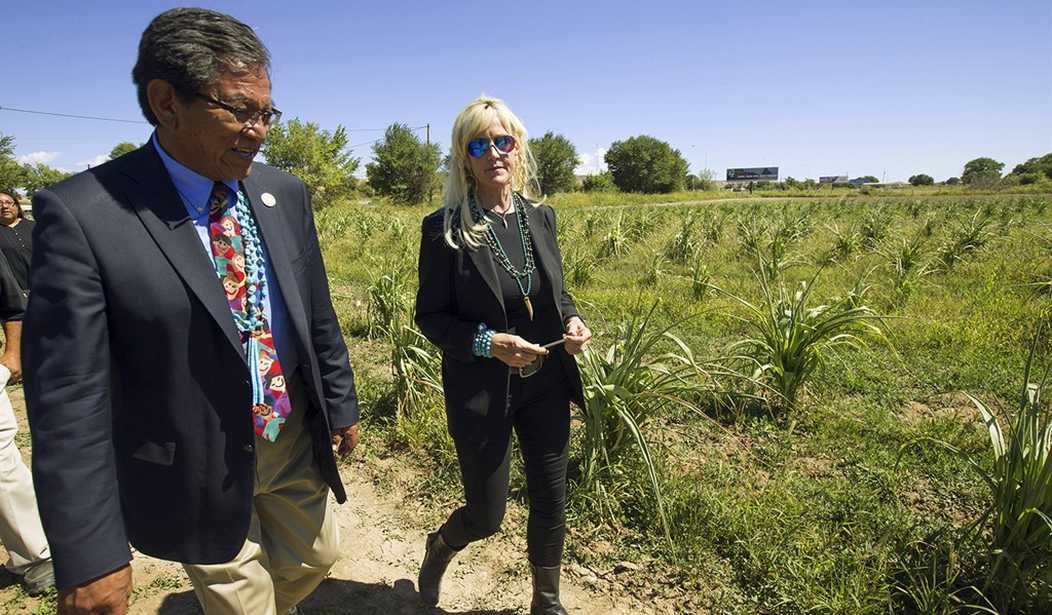
Erin Brockovich, the environmental advocate whose name still carries weight in fights over water, pollution, and local accountability, has stepped into the AI data center debate with a new national reporting map.
Her project lets residents flag concerns about nearby data centers, including water use, power demand, noise, e-waste, air quality, and pressure on the local infrastructure.
The map tracks operational facilities, projects under construction, proposed sites, and community-reported locations. The site's latest update was on May 11.
The project began publicly on April 28 when Brockovich launched the map as a way to gather local reports from people watching these projects arrive near their homes.
It's a simple enough setup: Give people one place to share what they're seeing before isolated complaints disappear into township minutes, utility hearings, and corporate paperwork.
A crowd-sourced map doesn't prove allegations, and nobody serious should think otherwise. But if reports pile up from communities across the country, public officials and companies should treat the pattern as evidence worth checking instead of treating them like mosquitoes buzzing around their ears.
By early May, Brockovich's statistics page showed 1,840 total reports, 845 unique ZIP codes, 47 states represented, and 1,750 reports in the most recent 30-day period listed on the site.
Those numbers don't lead to convictions for the entire industry, but they do show fast-growing concern that reaches far beyond one angry neighborhood meeting. People keep asking the same practical questions: how much water will the facility use, who pays for grid upgrades, how loud will the operation become, and whether local families learned about the deal before permits were already moving.
The water issue deserves special care because it's easy to wave away until the bill comes due. The Environmental and Energy Study Institute notes that large data centers can consume up to 5 million gallons of water per day, roughly equal to the daily use of a town with 10,000 to 50,000 people. The EEISI broke down some specifics of water usage.
Data centers' water usage depends on various factors, including location, climate, water availability, size, and IT rack chip densities. In hotter climates, like in the southwest United States, data centers need to use more water to cool the building and equipment. With the increasing number of centers supporting AI requests, chip density is also growing, which leads to higher room temperatures, necessitating the use of more water chillers at the server level to maintain cool temperatures. Most data centers use a combination of chillers and on-site cooling towers to avoid chip overheating.
Cooling data centers is a complex operation. At the server level, water chillers cool IT rooms to maintain optimal temperatures and prevent damage to chips. This can be achieved through air cooling using water evaporation, which is an open-loop and more water-intensive method, or through server liquid cooling. Server cooling is a more expensive approach that delivers the liquid coolant directly to the graphics processing units (GPUs) and central processing units (CPUs). Direct-to-chip liquid cooling and immersive liquid cooling are two standard server liquid cooling technologies that dissipate heat while significantly reducing water consumption. During immersive cooling, water or specialized synthetic liquids flood the chips, absorbing the heat. The difference between direct server liquid cooling and air cooling through evaporation can be compared to the difference between drip irrigation and flooding in agriculture.
In areas with limited water availability, server liquid cooling is the best choice, as it requires minimal water consumption. Conversely, in areas with a strained power grid, an evaporative air cooling tower is a suitable building design, as it requires minimal power usage.
The institute also highlighted that a medium-sized data center can use about 110 million gallons per year for cooling.
Those figures explain why people in water-stressed areas don't hear “innovation” and immediately reach for a party hat.
EPA Administrator Lee Zeldin has already moved the federal discussion toward water reuse, launching Water Reuse Action Plan 2.0 on April 16. The EPA framed the plan around AI infrastructure, manufacturing, agriculture, and public health protections, while focusing on reducing pressure on freshwater supplies. From the Wall Street Journal.
EPA Administrator Lee Zeldin described the water reuse plan as “a big win for the MAHA Agenda” because reusing water preserves freshwater, which reduces the amount of wastewater that enters the environment. This follows an announcement earlier this month that the EPA also aligned with the Make America Healthy Again movement, when the regulator added microplastics, certain pharmaceuticals and other contaminants to a drinking water watchlist. The MAHA movement has butted heads with the environmental regulator at times over chemical rules.
The EPA made the latest water announcement alongside companies and groups including the U.S. Chamber of Commerce. Suzanne Clark, president and chief executive of the Chamber, said the effort “advances industry-led approaches to secure a reliable water supply.”
Zeldin pointed to companies including Google, Meta and Microsoft that he said frequently reference their water demands, and their desire to reuse water for data centers.
Good.
Reused water, better cooling systems, clearer reporting, and stronger local disclosure should be basic expectations, not heroic concessions after people start raising Cain.
Recommended: Dr. Oz Fires Back After Joy Behar’s TrumpRx Meltdown
A fair look cuts both ways. Data centers support banking, health records, logistics, cloud storage, national defense, online commerce, and the AI tools now moving into daily work.
Americans can't lead in AI while pretending the machine runs on fairy dust and good intentions. Local communities also shouldn't have to absorb water strain, higher utility pressure, nighttime noise, and weak public notice while politicians celebrate investment totals and companies discuss the future like nobody lives next door.
Brockovich's map sharpens the argument; AI infrastructure can grow in America, but growth needs sunlight, numbers, and accountability before officials start cutting ribbons.
People deserve honest water estimates, real power plans, enforceable noise rules, drought safeguards, and clear answers about who pays when the infrastructure bends under the load.
Brockovich's project gives people a place to document those concerns, and in a debate that's moving as fast as AI, documentation may be the first defense ordinary people have.
Stories like this deserve more than lazy cheerleading or automatic panic. PJ Media VIP keeps independent coverage alive, and right now you can use promo code FIGHT for 60% off.







Join the conversation as a VIP Member